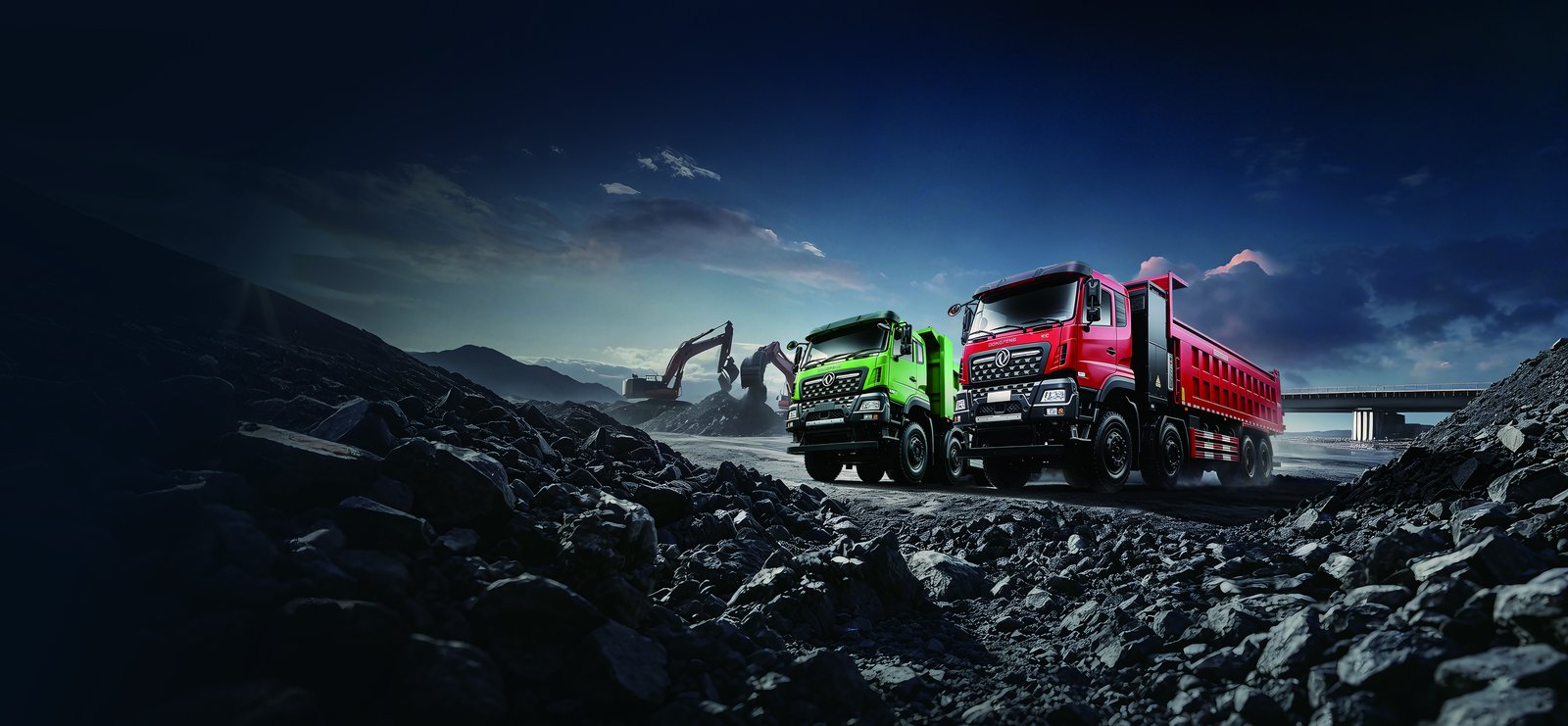
Kazakhstan is Central Asia's largest economy and its most credible EV truck market. The fundamentals are unusual in the best way: abundant, cheap coal-and-gas-fired power (with a growing renewables share), diesel fully at market price, a government that has signalled EV-favourable import treatment within the EAEU framework, and a logistics geography dominated by two anchor cities — Almaty and Astana — whose distribution networks run exactly the fixed, depot-based radial routes that electric trucks are engineered for. We have covered the KTH1 for Uzbekistan and the broader CIS; this article is the Kazakhstan deep dive, built around the Dongfeng KTH3 8x4 electric cargo truck (CATL 350 kWh, 31 t) for the Almaty metropolitan distribution layer and the Almaty–Astana trunk corridor.
| Parameter | KTH3 Specification |
|---|---|
| Configuration | 8x4 rigid electric cargo truck |
| GVW | 31 t |
| Battery | CATL LFP 350 kWh, liquid-cooled |
| Drive | LvKong electric axle, 240–300 kW class |
| Range (regional duty) | 250–320 km |
| Charging | Dual-gun DC 120–240 kW; 10–100% in 60–90 min |
| Pack warranty | 8 years / 4,500 cycles |
| Indicative FOB | USD 95,000–125,000 |
For Almaty city distribution and the 250–400 km regional legs to Shymkent, Karaganda or the Kyrgyz border, the 350 kWh pack sizes correctly: full-day duty on one night charge for city work, one midday top-up for the longer regional runs. Fleets running the full Almaty–Astana trunk (~1,200 km) should think in terms of charging stops at Karaganda or use the corridor for the diesel-free future rather than day one — the KTH3's role in the first phase is the metropolitan and regional layer, which in Kazakhstan represents the large majority of rigid-truck duty.
Almaty winters hit −20 °C; the northern steppe goes lower. Can an LFP electric truck work there? Yes — with the right discipline, and the physics is worth understanding:
Our separate cold-weather line-haul analysis (TE8L in Central Asia) covers the detail; the summary is that Kazakh winter is an engineering discipline problem with known solutions, not a blocker.
Assumptions: 45,000 km per truck per year, diesel at USD 0.85/L equivalent, depot charging at USD 0.05–0.08/kWh (Kazakh industrial tariffs), 31 t GVW mixed city/regional duty:
| Annual cost per truck | Diesel 8x4 rigid | KTH3 |
|---|---|---|
| Fuel / energy | USD 10,700–13,300 | USD 1,400–2,600 |
| Engine & aftertreatment maintenance | USD 4,200–5,200 | USD 1,200–1,700 |
| Brakes | USD 1,100 | USD 450 |
| Annual saving per truck | — | USD 11,800–14,900 |
| 20-truck fleet annual saving | — | USD 236,000–298,000 |
| 8-year fleet saving | — | USD 1.9–2.4 million |
Kazakhstan's exceptionally cheap power makes it one of the strongest TCO cases in our entire export map — the energy line alone falls by 80–87%. Against a per-unit premium of roughly USD 40,000–55,000 over a comparable diesel 8x4, single-truck payback runs 3–4 years even before any future EV incentive. Charging infrastructure (USD 250,000–400,000 for a 20-truck depot) is the main incremental item, and Kazakh industrial sites typically have the transformer headroom to make it straightforward.
Routes into the country: rail container or ro-la via Khorgos/Altynkol from Xi'an (days, cheap, our default for Kazakh orders); sea-rail via Aktau for Caspian-side delivery to Atyrau and the west; or road transport via the Khorgos crossing for small lots. Documentation: EAEU customs declaration through a Kazakh broker, EAC conformity marking under the union's technical regulations (we supply the certification file including UN 38.3 battery summaries and MSDS), and full CO paperwork. Payment terms are typically 30/70 T/T or LC via Kazakh banks with active China desks. Landed cost typically runs 20–35% above FOB across duty, VAT, rail freight and customs clearance.
One Kazakh-specific note: tenge/dollar movement matters. Fleets should fix the purchase in USD early and, if possible, negotiate the local-currency diesel baseline for their TCO tracking so the comparison is honest about FX exposure — electricity priced in tenge against diesel priced at import parity is itself a currency hedge.
Kazakhstan has the cheapest truck-charging energy of any market we serve, fully liberalised diesel, a direct land border with China's manufacturing base, and duty cycles that fit the KTH3's envelope. The winter is manageable with known discipline, and the 8-year CATL pack warranty covers the entire payback period. For Kazakh distribution fleets, the electric question has already crossed from "whether" to "how fast" — and the answer for most is: start with the city layer this year.
Almaty is the entry market, but the Kazakh map has a second act. Astana's construction boom — a decade of sustained government-backed development — generates the same aggregates, cement and building-materials radial flows as any capital city, on a compact 60–150 km geometry that suits the KTH3 precisely. The northern climate is harsher than Almaty's (expect −30 °C design weeks rather than −20 °C), which pushes the winter-discipline file harder: shore power becomes non-negotiable, heat-pump maintenance joins the inspection cadence, and the P95 route plan carries a fatter derating. None of this changes the conclusion — the steppe city's diesel alternative suffers its own, heavier winter penalties — but it changes the engineering detail, and our deployments in comparable Mongolian conditions provide the template.
The regional layer between the two capitals deserves its own mention. Karaganda sits almost exactly midway on the Almaty–Astana axis and anchors a coal, steel and agricultural region with heavy short-haul demand; Shymkent and Turkestan in the south run distribution duty into a denser population belt than the north; and Aktau and Atyrau on the Caspian serve oil-field services and port logistics with strong captive power — the cheapest charging energy in the country, frequently co-located with the fence lines the trucks return to. Each of these is a KTH3-scale market in its own right, and each has grid characteristics that make depot charging straightforward.
The strategic point for a Kazakh fleet operator: the electrification decision is not one national bet but a portfolio of city-scale bets, each with its own duty data, tariff structure and winter profile. Start where the arithmetic is friendliest — Almaty's density, Aktau's captive power, Astana's construction volume — and let the verified results walk the model east and west along the corridors. Kazakhstan's size, which looks like an obstacle to any infrastructure story, is in fact an advantage here: the distances that frustrate through-haul electrification simply do not apply to the metropolitan and regional radial duty where the KTH3 earns its living.
Ready to electrify your fleet? Contact Shaanxi Fenghan Trading — authorized Dongfeng EV truck exporter. WhatsApp: +86 153 1943 1311 | Email: sales@fenghan-trade.com | dongfengevtrucks.com
🌐 Our Network: Fenghan Trade (SAGMOTO/SHACMAN Truck Export) · SAGMOTO cargo truck flatbed box stake