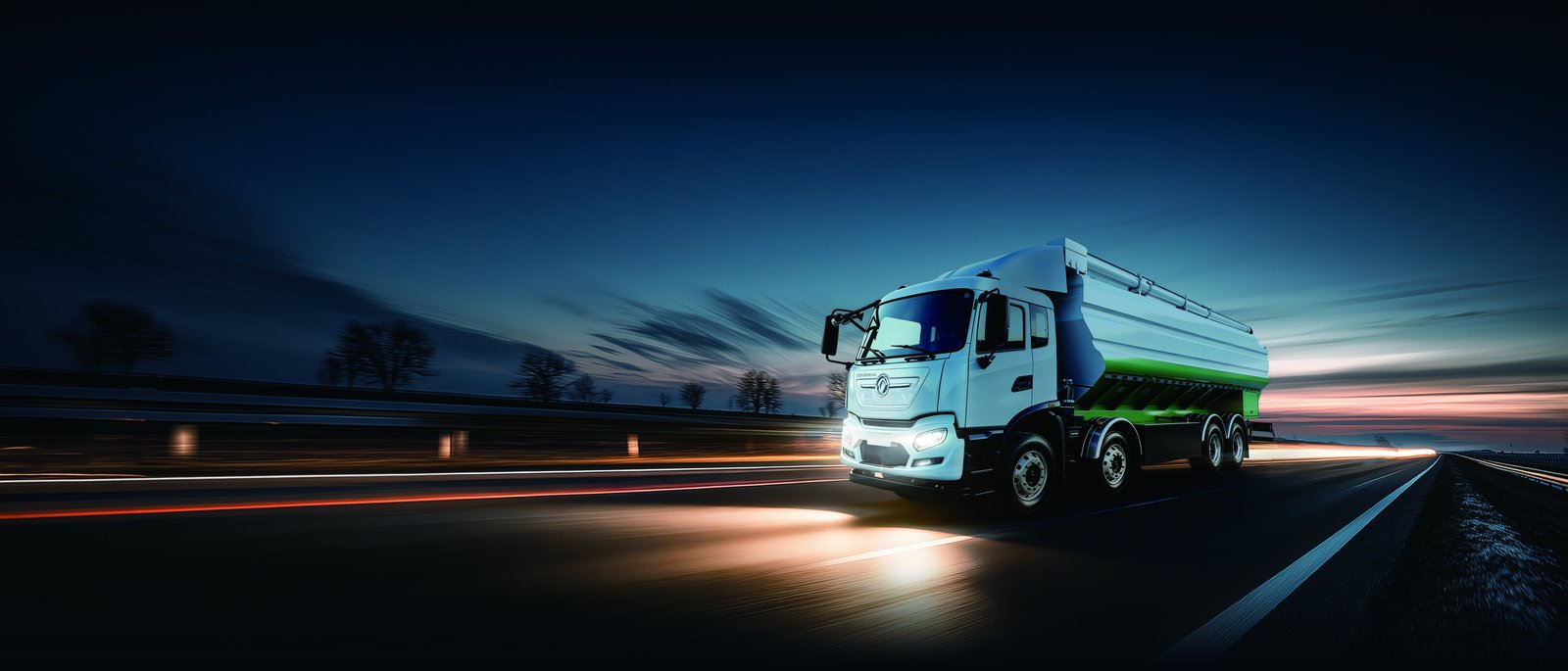
Carbon reporting has moved from marketing to contract requirement, and an electric truck is the simplest way to cut it. This guide covers emissions accounting for a KT5J electric cargo truck fleet in Kazakhstan. See the KT5J electric cargo truck page and our Kazakhstan electric truck guide.
A growing share of freight buyers now ask their carriers and suppliers to report emissions, and some set contractual reduction targets. For a fleet in Kazakhstan, an electric KT5J is the simplest way to cut reported scope-1 and scope-3 emissions, because a zero-tailpipe truck with documented renewable charging has a carbon footprint a fraction of diesel. This is no longer only a branding exercise — it is increasingly a condition of doing business.
The carbon saving depends on the grid. In Kazakhstan, where power is relatively clean, an electric KT5J emits far less CO2 per kilometre than a diesel even when charging from the grid, and near-zero when charged from solar. We provide a per-vehicle emissions model that uses the local grid factor so Kazakh fleets can report an accurate, defensible figure rather than a generic marketing number.
| Specification | KT5J value |
|---|---|
| Configuration | 6x4 electric cargo truck |
| Battery | CATL LFP 282-350 kWh |
| Drive motor | LvKong PMSM 310 kW (2,100 Nm) |
| Real-world range | 240-280 km |
| DC charge | 20-80% in 45-60 min |
| Capacity | payload 15-20 t |
| Battery warranty | 8 years / 4,500 cycles to 70% SOH |
| FOB China price | US$82,000-102,000 |
Verified emission reductions can have a monetary value. Depending on the market and the certification scheme, the CO2 saved by an electric fleet can be turned into carbon credits or used to access green finance at preferential rates. For Almaty, Astana and Karaganda operators, this can offset part of the capital cost. We help Kazakhstan customers identify whether their operation qualifies and how to document the reductions so they stand up to verification.
Large shippers are increasingly scoring their logistics partners on ESG performance. A fleet that can demonstrate a lower carbon intensity per tonne-kilometre wins tenders that a diesel-only competitor cannot. The KT5J gives Kazakh operators a measurable, reportable advantage in exactly those tenders, and the documentation we supply makes the environmental claim credible rather than aspirational.
Most of a shipper’s footprint sits in its supply chain, which means the pressure to decarbonise flows down to the transport provider. For Kazakhstan fleets serving export or multinational customers, the question is not whether they will be asked for emission data, but when. Electrifying with a KT5J is the most direct way to answer that question and to keep the contract when the customer sets a zero-emission transport target.
The strongest position is evidence, not adjectives. Keep charging records, the grid or solar energy source, mileage and the KT5J pack documentation together so that any emission claim can be traced to data. For Almaty, Astana and Karaganda fleets, we help assemble this dossier, because a decarbonisation story that survives an auditor’s questions is worth far more commercially than a slogan.
The conditions that make an electric truck viable are all present in Kazakhstan. vast distances, cheap coal power and a net-zero 2060 target. Freight demand concentrates in and around Almaty, Astana and Karaganda, where routes are short and predictable and the depot is never far away. Fuel logistics add cost and delay that a fleet charging its own vehicles simply avoids. For a KT5J electric cargo truck on a mining and grain corridor logistics duty cycle, this is not an experimental technology but a practical replacement for diesel, and the operators moving first are the ones who lock in the lowest cost per kilometre before their competitors do.
Electrifying a fleet in Kazakhstan is a project, and running it in phases is what keeps it manageable. Phase one is a site and route audit: list every duty cycle, measure real daily distance and load, and map the depot power supply. Phase two is a pilot of two to five KT5J units on the most predictable routes, with chargers installed and drivers trained. Phase three is measurement — energy cost per kilometre, uptime, maintenance hours. Phase four is scaling what the data supports. Each phase de-risks the next and keeps the capital commitment matched to proven performance rather than optimism.
A KT5J electric cargo truck carries a CATL LFP pack of 282-350 kWh and delivers a working range of 240-280 km, which fits a mining and grain corridor logistics duty cycle in Almaty, Astana and Karaganda with margin. The drive motor produces 310 kW (2,100 Nm), and DC charging takes the pack from 20% to 80% in the time shown in the specification table above. FOB China pricing for this configuration is US$82,000-102,000, and the landed cost depends on the destination tariff and duty position, which we confirm before quotation. Against diesel, the decisive lines are energy cost per kilometre, maintenance cost per kilometre, and price certainty across the life of the truck.
Within the KT5J range there are choices that matter more than cosmetics. The 6x4 layout suits the axle load and traction pattern of your duty cycle. Battery capacity of 282-350 kWh should be sized to the longest realistic daily route plus a safety margin, not to the biggest number on the brochure. Body and equipment specification — tipper, box, reefer, tank or compactor — should be matched precisely to the job in Kazakhstan. Getting these four decisions right at order stage is far cheaper than modifying a truck after it lands.
Buying an electric commercial vehicle from China is not the same as buying a diesel truck. The exporter must understand high-voltage shipping requirements, battery transport regulations, charging compatibility with the destination grid, and the spare-parts and service picture in Kazakhstan. Shaanxi Fenghan Trading has exported Dongfeng EV trucks across Africa, the Middle East, Central Asia and Latin America, and every shipment includes commissioning support, translated operator documentation and a starter spares package. For Kazakh customers, that support is the difference between a truck that works on paper and one that works on site.
Ready to electrify your fleet? Contact Shaanxi Fenghan Trading — authorized Dongfeng EV truck exporter. WhatsApp: +86 153 1943 1311 | Email: sales@fenghan-trade.com | dongfengevtrucks.com
🌐 Our Network: Fenghan Trade (SAGMOTO/SHACMAN Truck Export) · SAGMOTO cargo truck flatbed box stake