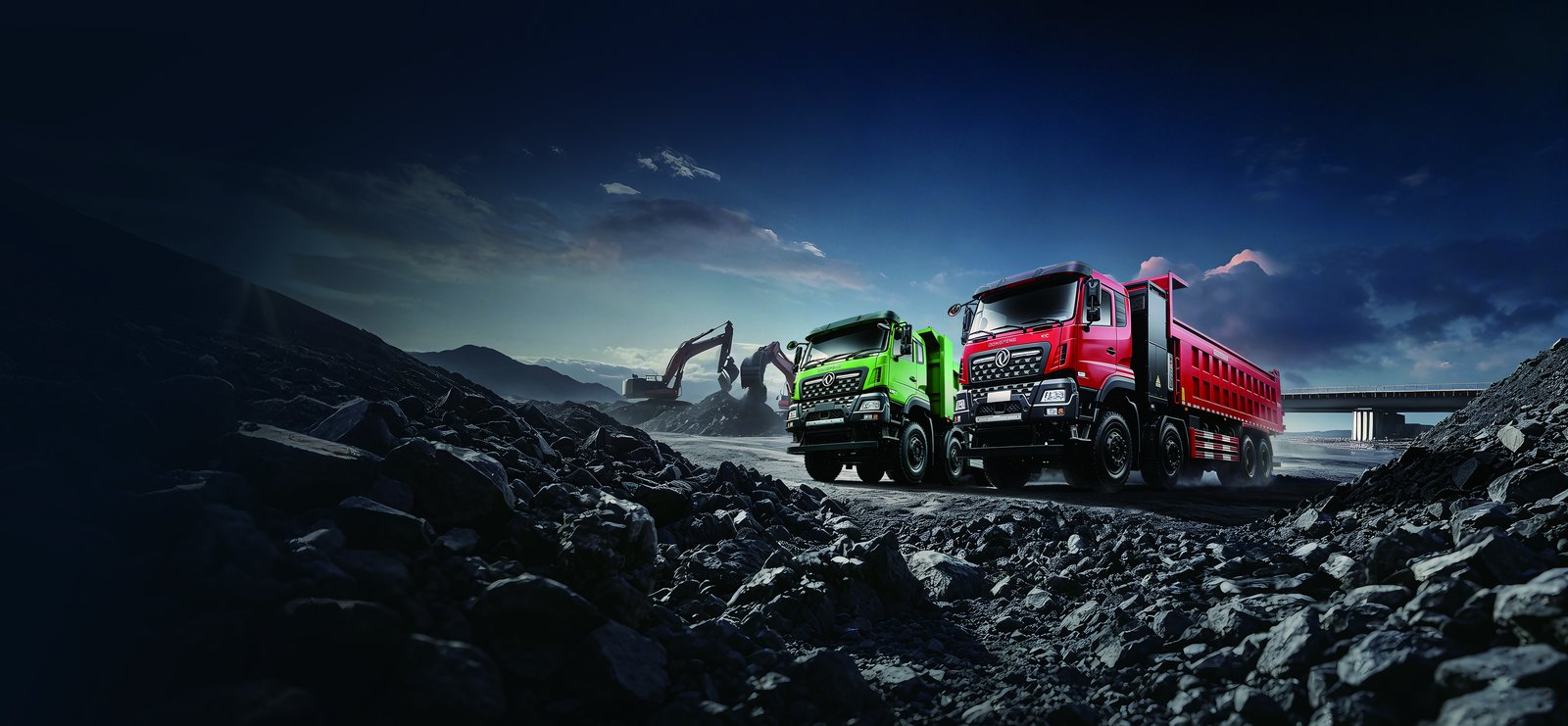
Kalimantan remains one of Southeast Asia's great wood baskets: plantation acacia, eucalyptus and rubberwood moving from concessions to pulp and sawn timber mills, and finished lumber, plywood and pellets moving onward to the island's ports — Balikpapan, Samarinda's Mahakam River docks, Tarakan and the new industrial complexes around the Nusantara region. The timber truck's life is defined by laterite haul roads, river-crossing bridges with strict axle limits, and a duty cycle of low-speed torque that destroys diesel drivetrains. That same duty cycle is where electric drivetrains are at their structural best. This piece sets out the electric forest-products fleet: the KTH3 8x4 electric cargo truck on log and lumber trunk hauls and the KT5M electric box truck on finished wood and supply distribution. National import and subsidy context is in the Indonesia market guide.
Forest-products logistics in Kalimantan runs three linked moves:
The second and third moves electrify immediately. The first — the log leg — is Phase 2 territory once a concession hosts a charger at its landing, which several of the larger pulpwood operators are our network are already studying.
Laterite haul roads in the wet season are the tyre and clutch graveyard of Indonesian trucking. The KTH3's electric drivetrain attacks the problem at its root:
| Wear item | Diesel 8x4 on laterite | KTH3 electric |
|---|---|---|
| Clutch | Wheelspin launches cook clutches; replacement every 12–18 months | No clutch — single-speed reduction drive |
| Wheelspin | Driver-dependent, throttle-driven | Electronically torque-limited at the motor controller |
| Brakes | Frequent service on loaded descents | Regenerative braking carries most deceleration duty |
| Driveline | Shock loads through the gearbox | Smooth, controlled torque delivery |
On comparable laterite duty in Sumatra and Kalimantan operations, electric 8x4s run maintenance costs 45–55% below their diesel equivalents. On a 45,000 km/year log-and-lumber cycle that is a USD 5,000–6,500 per-truck annual saving on maintenance alone, before energy.
Kalimantan's industrial electricity sits near USD 0.07–0.09/kWh, and the diesel that reaches the island's interior retails at a premium over Java prices because of the distribution cost of getting it there — a premium electric energy does not carry. For the mill-to-port leg:
Kalimantan's mills are the natural charging hosts of the corridor. A pulp or sawn-timber mill is a major industrial power customer with substation capacity, security, maintenance staff and a strong interest in a green supply chain story for the international paper and furniture brands it sells to. The build we recommend:
That circularity is more than a story: Indonesian forest-products exporters face the same European sustainability-audit pressure as every other supplier to global brands, and a mill that can document electric truck logistics on renewable energy holds a defensible position in those audits.
Around the mill complexes and the ports, the lighter work — camp supply, pellet delivery to domestic industrial users, lumber distribution to local fabricators — runs on the KT5M platform: CATL 262/310 kWh, 18 t GVW, box or curtain bodies, and 300 km of rated range that covers any urban or port-adjacent loop on the island with a single overnight charge. These units share the mill chargers, so the marginal infrastructure cost of adding distribution electrification is close to zero.
Kalimantan-bound units ship to Balikpapan or Samarinda-area terminals in 12–16 days from Chinese ports, or via Surabaya/Jakarta transhipment for scheduled lines. Import handling follows the Indonesian package — type registration support, customs entry with EV incentive documentation where applicable, LHD as standard, Bahasa Indonesia materials and driver training. Two Kalimantan-specific items in our spec: the tropical corrosion package (IP68 HV connectors, sealed enclosures, e-coated chassis) for the humidity, and a bridging kit of critical spares held at the operator's mill rather than a distant city depot — a timber fleet cannot wait on a spare part ferried upriver.
Timber hauling is a marginal business won on cost per cubic metre per kilometre, and Kalimantan's combination — expensive interior diesel, cheap mill power, brutal duty that punishes diesel drivetrains — tilts the arithmetic toward electric faster than almost any other sector we serve. The mill groups that put KTH3 units on their concession-to-port lanes this season will set the hauling rates everyone else has to chase.
Ready to electrify your fleet? Contact Shaanxi Fenghan Trading — authorized Dongfeng EV truck exporter. WhatsApp: +86 153 1943 1311 | Email: sales@fenghan-trade.com | dongfengevtrucks.com
🌐 Our Network: Fenghan Trade (SAGMOTO/SHACMAN Truck Export) · SAGMOTO cargo truck flatbed box stake