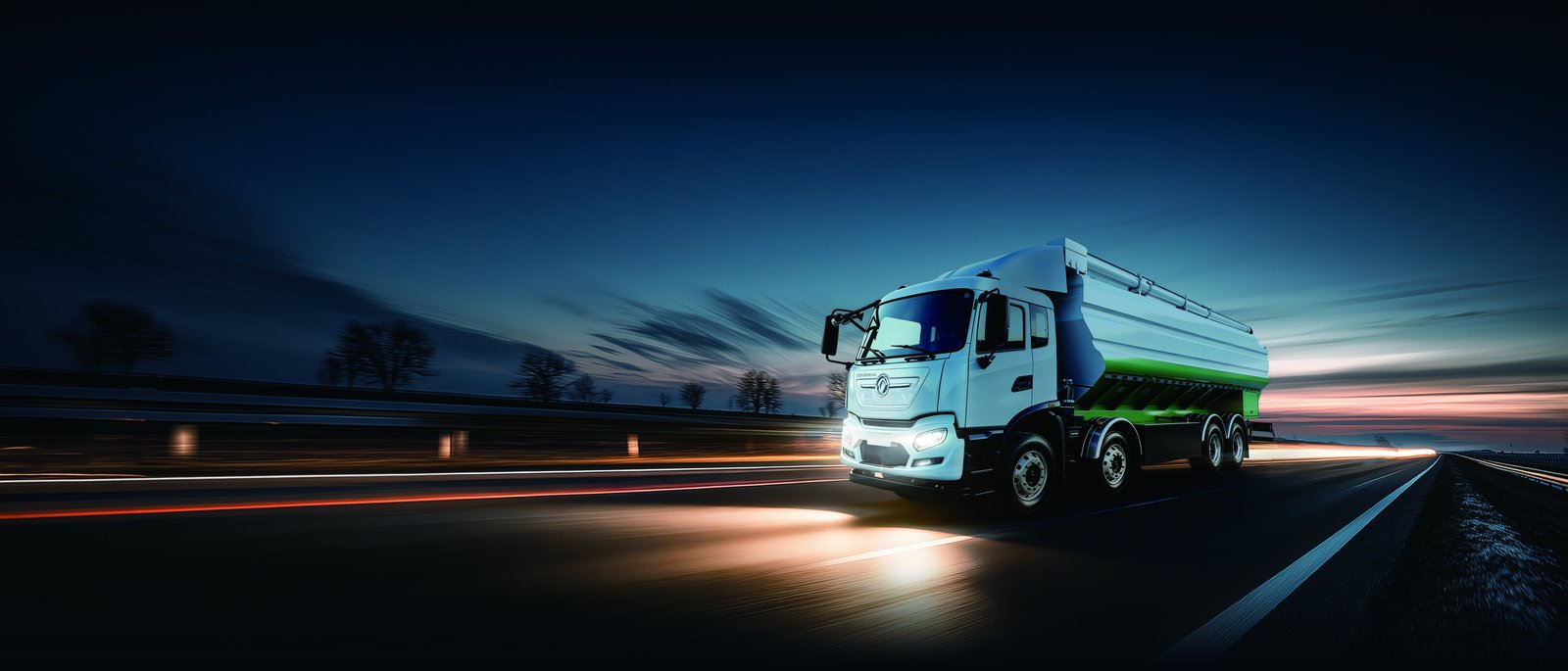
Indonesia's TKDN (Tingkat Komponen Dalam Negeri, or domestic component level) rules are the single most important variable for any company planning to sell an EV truck in the archipelago at scale. The government uses TKDN to push local manufacturing, and for electric vehicles the threshold and the calculation method decide whether you import a finished unit, a semi-knocked-down kit, or a fully localised assembly. This guide explains the 2026 TKDN position for electric trucks, how the score is built, and what it means for importers versus CKD assemblers. We connect it to the TZ5E electric dump truck and the Indonesia electric truck market guide.
TKDN is the percentage of a product's value, or in some methods its manufacturing labour and processes, that originates in Indonesia. For vehicles the calculation blends the local cost of materials, the local labour, and the local value of the manufacturing process, then divides by the ex-factory value. A finished imported EV truck starts near zero TKDN, which exposes it to the highest duty and the weakest access to any government or state-owned procurement preference. A CKD kit assembled in Indonesia with local labour, local tyres, glass, wiring harness, and eventually local pack assembly, can climb to 35% to 60% TKDN depending on the depth of localisation.
The policy signal is clear: Jakarta wants bodies, harnesses, and eventually cells made or finished onshore. Importers who treat Indonesia as a pure CBU market will pay the full duty and miss tenders that require a TKDN score.
The table below summarises the indicative 2026 position for commercial electric vehicles. Exact figures move with ministerial regulation, so confirm with a Jakarta customs and trade adviser before committing a shipment.
| Entry mode | Typical TKDN | Duty position | Access to tenders | Best for |
|---|---|---|---|---|
| CBU import | 0% – 5% | Highest | Limited | Small pilot fleets |
| SKD kit | 20% – 35% | Reduced | Partial | Mid-volume |
| CKD assembly | 35% – 60% | Lowest | Strong | Volume players |
| Local pack line | 60%+ possible | Lowest | Strongest | Long-term |
Beyond duty, a higher TKDN can unlock preferential access to state-owned enterprise procurement, mining and plantation logistics tenders, and various fiscal incentives tied to investment. For a fleet buyer serving the resource sector, the assembler with a credible TKDN score is the safer long-term supplier.
CKD assembly in Indonesia means shipping the chassis, pack, and major modules as kits and completing body build, harness routing, and final commissioning at a local plant. The TZ5E electric dump truck, a 400 kWh 6x4 urban and resource dump platform, is a strong CKD candidate because its body and tipping gear are straightforward to localise while the pack and motor arrive as sealed modules. A Jakarta or Surabaya assembly partner can reach a defensible TKDN in the 35% to 50% band within the first year by sourcing tyres, glass, seats, harness, and paint locally.
The trade-off is lead time and capital. CKD needs a bonded facility, a technical-transfer agreement, and a slower first shipment while the line is qualified. For importers moving fewer than 50 units a year, SKD is the better middle ground; above that, CKD pays for itself through duty and tender access.
The mistake importers make is assuming the battery, the most expensive component, can be counted as local just because it is shipped in. Under current method it is the local manufacturing process and local-sourced value that score, not the imported cell. Plan the localisation around the items that genuinely add Indonesian value.
Keep the cost ledger clean from day one. The TKDN audit is document-driven, and a sloppy ledger is the fastest way to lose points you have actually earned.
For buyers not ready to assemble, a CBU TZ5E electric dump truck still makes sense for pilot and plantation duty where the duty premium is dwarfed by the diesel it displaces. The Indonesia electric truck market guide covers Jakarta and Surabaya clearance, the bonded-zone options, and which tenders require a TKDN certificate. Importers should decide the entry mode before the first shipment, because the HS classification and the documents differ by mode.
Indonesia's TKDN rules reward commitment, not a one-off import. The 2026 play is to start CBU or SKD to prove the duty cycle, then move to CKD assembly as volume justifies the facility, building a TKDN score that unlocks tenders and duty relief. The Indonesia electric truck market guide adds clearance, bonded-zone, and tender detail. Shaanxi Fenghan Trading supplies Dongfeng EV trucks with CKD-ready kits and the technical-transfer support Indonesian assembly needs, so request a 2026 TKDN plan and a landed-versus-assembled cost model before you choose your entry mode.
| Item | Specification |
|---|---|
| Battery | CATL LFP 350 kWh, swap-ready architecture |
| Traction motor | LvKong permanent-magnet motor, 400 kW peak |
| Real-world range | 260 km fully loaded, duty-cycle dependent |
| Charging | DC fast charge 20-80% in 45-90 min; battery swap in 5-6 min where stations exist |
| Battery warranty | 8 years or 4,500 cycles, 70% state-of-health guarantee |
| FOB price guide | $90,000-$140,000 depending on specification and options |
Charging an electric truck is a depot discipline, not a public-network gamble. A 350 kWh pack working a 260 km day typically returns with 25 to 35 percent in reserve, so overnight demand is about 210 kWh per truck. On a 120 kW DC charger the pack climbs from 20 to 80 percent in roughly 105 minutes; on 240 kW that falls to about 52 minutes, which lets two trucks share one charger on staggered shifts.
Size the site transformer for your busiest shift plus 30 percent headroom, keep cable runs under 30 metres to limit voltage drop, and meter each charger separately so energy cost per truck stays visible. In Indonesia, grid connection lead times of three to nine months are common, so apply for the connection the day you sign the truck order, not the day the ship arrives. Shaanxi Fenghan Trading includes a charger layout drawing and load calculation with every EV truck quotation, so your electrician can price the civil works before the truck lands.
A comparable diesel heavy electric truck burns about 0.38 litres per kilometre in mixed duty; at $0.95 per litre that is roughly $0.36 per km. The electric equivalent consumes about 1.15 kWh per km fully loaded; at an industrial tariff of $0.10 per kWh the cost is near $0.12 per km, and overnight or solar-coupled charging can push it below $0.08. Over 70,000 km a year the saving is about $17,000 per truck, before any carbon or low-emission-zone benefit.
The gap widens in stop-start duty, where regenerative braking returns 15 to 25 percent of traction energy instead of burning it as brake dust. In Indonesia, where diesel quality and price both fluctuate, locking in an electricity tariff also removes a major budgeting variable from the fleet P&L.
The Dongfeng EV truck has roughly one moving drivetrain part where a diesel has hundreds: no engine oil, no DPF, no turbocharger, no clutch, no multi-gear transmission service. Scheduled maintenance lands near $0.035 per km against $0.11 per km for a diesel equivalent, a saving of more than $5,000 a year at typical utilisation. Brake pads last two to three times longer because the motor does most of the deceleration.
Uptime matters more than parts cost. Fleet data from Chinese operators running the same e-axle platform shows 96 to 98 percent availability once drivers are trained, versus 92 to 94 percent for diesel trucks of the same age. Keep a small stock of filters, coolant, brake pads and 12V batteries on site; Shaanxi Fenghan Trading quotes a two-year consumables kit with every truck so the first service interval never waits on freight.
Ready to electrify your fleet? Contact Shaanxi Fenghan Trading — authorized Dongfeng EV truck exporter. WhatsApp: +86 153 1943 1311 | Email: sales@fenghan-trade.com | dongfengevtrucks.com
🌐 Our Network: Fenghan Trade (SAGMOTO/SHACMAN Truck Export) · SAGMOTO heavy duty diesel trucks