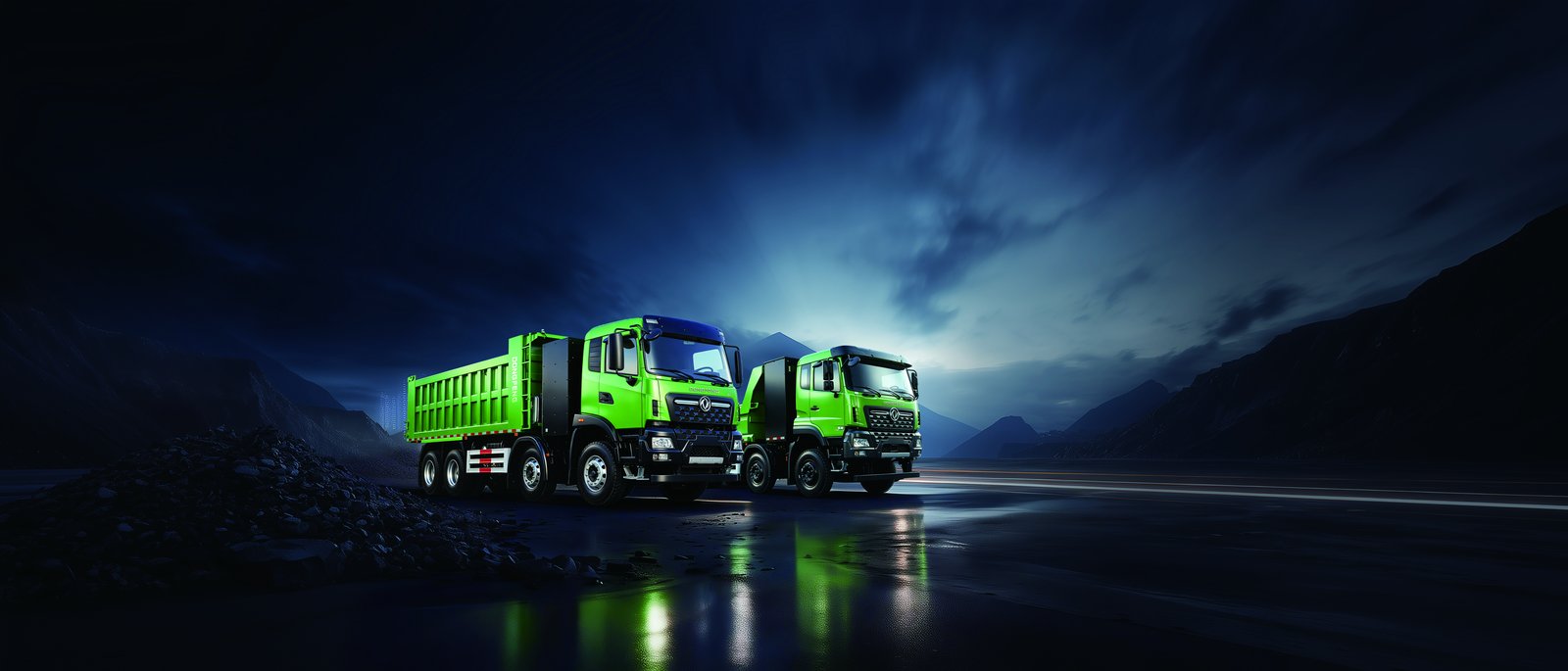
Guatemala City is building faster than at any point in the past two decades. Ring-road extensions, the expansion of the Ciudad Cayalá corridor, private mid-rise housing projects, and aggregate quarries on the edges of the Valle de la Ermita all need dump trucks — lots of them, moving short, repetitive hauls of sand, gravel, and demolition spoil. That duty cycle, not long-haul freight, is precisely where an EV truck beats a diesel one on cost. In this guide we look at why the TZ3Z electric dump truck fits Guatemala's construction fleet so well, what the numbers look like in quetzales, and how Central American buyers — like their counterparts further north covered in our Mexico market guide — are structuring their first imports from China.
Most aggregate hauls in the capital region run between 15 and 40 km each way: from quarries around San Miguel Petapa, Chinautla, and Fraijanes to concrete batching plants and project sites inside the city. A truck on this cycle completes 8–14 loaded round trips per shift, spends long minutes idling in traffic on the CA-1 and Calzada Aguilar Batres, and climbs a persistent 1,500 m altitude gradient from the valley floor to the southern quarries.
Every one of those characteristics punishes a diesel engine and rewards an electric drivetrain. Idling burns fuel with zero output; an electric dump truck simply draws nothing from its CATL LFP pack while stationary. Stop-start traffic is where regenerative braking recovers the most energy — typically 15–25% of consumed charge on urban duty cycles. And the altitude that thins air and derates a diesel turbocharger has almost no effect on an electric motor's torque output. Guatemala City's terrain is, in effect, a best-case scenario for electric haulage.
The TZ3Z is a 6×4 electric dump truck designed for exactly this class of work — urban construction, road projects, and quarry-to-plant shuttles. The headline numbers:
| Specification | TZ3Z Value | What It Means in Guatemala |
|---|---|---|
| Battery | CATL LFP, up to ~400 kWh | 200+ km real-world range, a full quarry shift |
| Motor | LvKong central drive, up to 360 kW | Full torque from 0 rpm on valley climbs |
| Payload | ~20–25 t class | Matches local tipper permit norms |
| Charging | DC 240 kW, 1–1.5 h 20–80% | Top-up during lunch break |
| Warranty | 8 years / 4,500 cycles on cells | Outlasts a typical 5-year fleet plan |
At Guatemala's commercial electricity tariff of roughly USD 0.18–0.22/kWh, a TZ3Z consumes about 1.2–1.5 kWh per km loaded, or roughly USD 0.25/km in energy. An equivalent diesel tipper burns 30–38 L/100 km on the same cycle, which at current pump prices near USD 1.05/L works out to USD 0.32–0.40/km. On a 250 km/day truck, that is USD 20–40 of daily savings before you count oil changes, filters, and engine overhauls that simply do not exist on an electric truck.
Central American buyers importing an electric truck from China typically ship to Puerto Quetzal on Guatemala's Pacific coast or to Santo Tomás de Castilla on the Atlantic side. Roll-on/roll-off is the most economical option for single units; flat-rack works for chassis-cab units with locally sourced tipping bodies. Transit from Shanghai or Lianyungang runs 28–35 days.
Under the Central America–Dominican Republic framework the region has no free-trade agreement with China, so importers pay standard tariff lines. The practical sequence for a first-time Guatemalan buyer looks like this:
Guatemalan fleet owners we work with raise three concerns consistently. First, resale value. The honest answer: Latin American secondary markets for EV trucks are young, but the 8-year cell warranty transfers the battery risk away from the operator, and battery health certificates at resale are becoming a standard instrument. Second, charging in a city with occasional grid stress. Many operators pair the first trucks with a 200–300 kWh buffer battery or solar canopy so that charging happens overnight at low tariff windows rather than at peak. Third, driver acceptance — which in our experience is the easiest box to tick. Drivers assigned to electric tippers rarely want to go back; the absence of gear shifts, engine noise, and diesel fumes on a 10-hour city shift is a retention tool in a market where experienced tipper drivers are scarce.
For a Guatemala City contractor moving aggregates for a mix of private housing and public road projects, a sensible first fleet is three trucks, not ten: two TZ3Z units on quarry duty and one KTA1-class lighter unit for demolition spoil and inner-city material delivery. That trio shares one 240 kW charger on overnight cycles and one shared spare battery strategy. The capital outlay — roughly USD 150,000–200,000 FOB China for the pair of TZ3Z units plus charger and installation — typically pays back against diesel operating savings in 2.5–4 years depending on utilisation, after which the trucks run at a structural cost advantage of 25–35% per kilometre. Contractors financing through Central American leasing houses increasingly find that EV assets qualify for green credit lines at 100–200 basis points below standard equipment finance.
Guatemala is the logical beachhead for electric construction haulage in Central America: dense short-haul demand, high fuel prices, and a construction sector that bids aggressively on operating cost. The TZ3Z was built for exactly this profile. If you are evaluating a first electric dump truck fleet for Guatemala or anywhere in the region, our export team will share full specifications, reference deployments, and a landed-cost model built for your quarry-to-site distances.
The capital question in Guatemala is usually not whether the savings exist — any operator who runs the table above accepts them — but how to fund the transition without straining working capital. Three practical paths have emerged from the regional deals we have structured. The first is direct purchase with staged delivery: two trucks and a charger first, a third truck funded from six months of realised fuel savings. This staged path is the most common because it converts scepticism into capital discipline — the second tranche is approved on the first tranche's own data. The second is local leasing: Guatemalan leasing houses active in construction equipment increasingly recognise electric trucks as a leaseable asset class, particularly when the CATL 8-year cell warranty is written into the schedule as residual-value support. The third is supplier credit on the charging infrastructure, which several charger vendors now offer bundled with installation, effectively spreading the depot cost across the same payback window as the trucks themselves.
Whichever path is chosen, the working-capital detail that surprises new operators is fuel prepayment — or rather its disappearance. A diesel fleet of three tippers carries tens of thousands of dollars of tied-up fuel inventory, financed through the month and exposed to theft and price movement. An electric fleet pays for its energy in arrears, on a utility invoice, at a price that moves slowly. We have watched more than one contractor discover that electrification quietly returned a month of working capital to their balance sheet — an effect nobody puts in the brochure but every owner notices in the cash account.
Finally, a note on timing. Guatemala's construction cycle rewards operators who price aggressively in the wet season build-up and deliver through the dry season peak. An electric fleet ordered in Q3 typically lands, clears, and commissions before the December–April push — which is exactly when diesel queues, fuel price adjustments, and round-the-clock site schedules hit diesel fleets hardest. The calendar is part of the business case, and it favours whoever ordered early.
Ready to electrify your fleet? Contact Shaanxi Fenghan Trading — authorized Dongfeng EV truck exporter. WhatsApp: +86 153 1943 1311 | Email: sales@fenghan-trade.com | dongfengevtrucks.com
🌐 Our Network: Fenghan Trade (SAGMOTO/SHACMAN Truck Export) · heavy duty mining dump truck 6x4 8x4