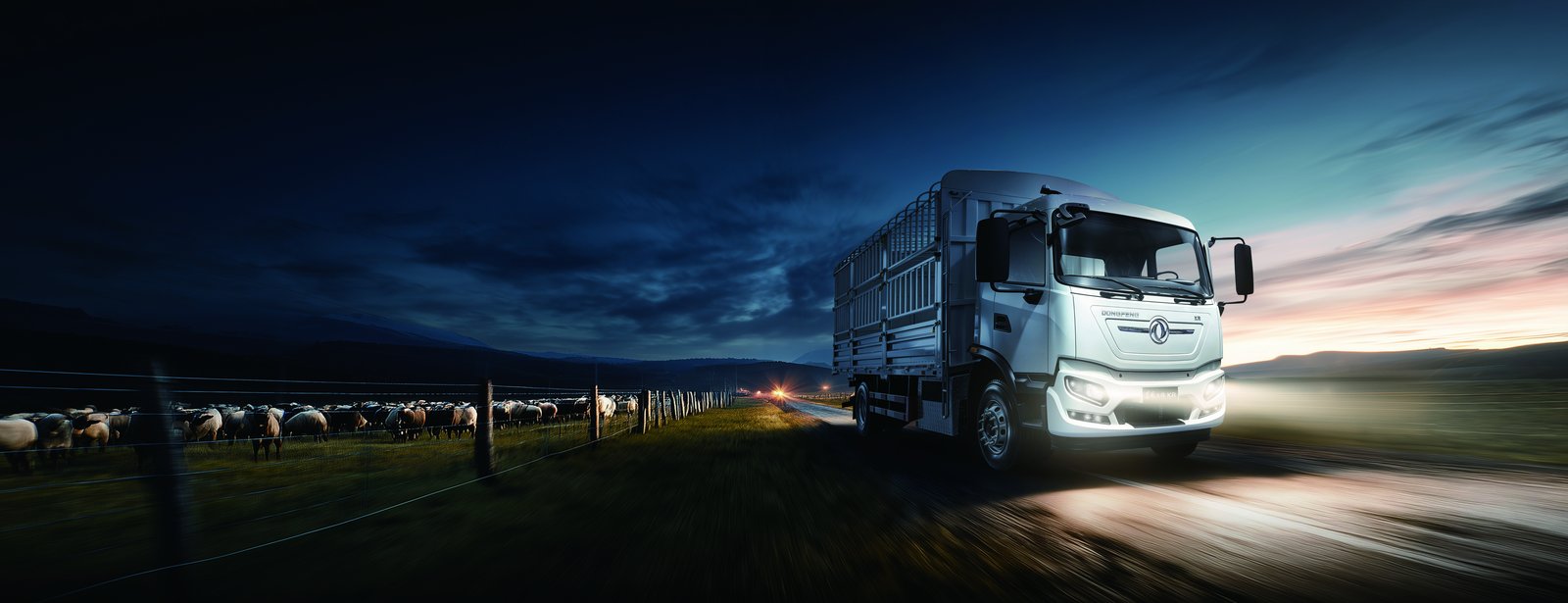
Governments procuring an electric truck fleet need specifications that protect public money and guarantee uptime. A weak tender invites low-ball bids that fail on battery life or after-sales support. This guide gives procurement officers a clear template: set a battery kWh floor, lock warranty terms, define charging infrastructure, and require local service capacity. Use it for sprinkler, cargo, dump, or tractor EV truck purchases across municipal, port, and defence-adjacent fleets of any size.
The single most abused loophole in EV truck tenders is unspecified battery size. Always state a minimum usable kWh matched to duty cycle. For urban sprinkler and municipal work, a CATL LFP pack of at least 262 kWh is a sensible floor; for line-haul tractor or heavy dump work, specify 350 to 600 kWh. The Dongfeng KT3F electric sprinkler truck runs a mid-size LFP pack sized for shift-long dust-control duty without mid-day charging, which is exactly the profile a city tender should target for continuous public-service operation.
A public buyer should never accept a vague "battery covered" clause. The specification must state the 8-year or 4500-cycle battery warranty explicitly, with a state-of-health threshold (commonly 70 to 80 percent retention) at which replacement triggers. Also require a spare-parts price list valid for the contract term so lifecycle cost is predictable and future budgets are not held hostage by a single supplier who can raise prices once the fleet is locked in.
| Spec Item | Recommended Minimum | Why It Matters |
|---|---|---|
| Battery warranty | 8 years / 4500 cycles | Protects residual value of public asset |
| Motor warranty | 5 years / 300,000 km | LvKong PMSM is durable; match it |
| State-of-health floor | 70 percent at end of term | Defines replacement obligation |
| Spare parts SLA | Critical parts in 15 days | Minimises fleet downtime |
| Local service | Accredited workshop in-country | Enables fast repair |
The truck is only as good as the depot that charges it. Your tender should require the supplier to provide a charging plan: number of DC stations, power rating (120 to 360 kW typical), and grid or solar input assumptions. For the Ethiopia electric truck market, where grid reliability varies, specify hybrid solar-plus-genset fallback so the fleet is not stranded by a power cut, and require the supplier to model the energy draw against the local tariff so the operating budget is realistic from year one.
Procurement that ignores local capability creates stranded assets. Mandate that the winning bidder train government technicians and stock critical spares locally. Require a driver training program aligned with eco-driving and regenerative braking so the public fleet realises the 0.9 to 1.8 kWh/km consumption band rather than wasting energy through poor habits. Insist on a local parts depot or bonded stock as a contract condition, not a letter of comfort, and audit it quarterly during the warranty period.
Score bids on life-cycle cost, not just sticker price. Weight the 8-year energy savings, the battery warranty, and local service heavily. A Dongfeng EV truck quoted at FOB USD 45,000 to 130,000 depending on body type should be compared on total cost of ownership over the warranty window, including the avoided diesel and maintenance spend that an EV truck delivers from the first litre of fuel not burned.
A specification built on these pillars produces a defensible award and a fleet that actually stays on the road, while shielding the procuring entity from the audit criticism that follows a price-only tender that fails in service and forces an expensive early replacement programme.
Beyond the written specification, procurement officers should plan the post-award phase as carefully as the bid. Require a phased delivery with acceptance testing at each batch, so a defective first shipment cannot silently propagate across the whole fleet before anyone notices. Insist on a digital handover package: workshop manuals, spare-parts catalogues, and the battery passport data discussed earlier, because a public fleet has a duty to account for the asset for its entire life. Build a small cross-functional team of operators, mechanics, and finance to score bids against the template together, which prevents any single department from optimising its own line item at the expense of the whole. Finally, publish the evaluation scores (with commercially sensitive numbers redacted) so the process withstands public scrutiny and the winning supplier knows exactly why it won and what it must deliver. Done well, a tender written on these lines does more than buy trucks; it builds a local EV ecosystem of trained technicians, stocked parts, and confident operators that outlasts the original contract and makes the next procurement simpler and cheaper.
A few practical drafting notes will save procurement officers grief. First, define acceptance criteria in measurable terms: state-of-health at delivery, charging time achieved, and range demonstrated on a named route, rather than vague promises of performance. Second, require the supplier to nominate a local service partner in writing with contact details and a stocked initial parts kit, because a tender award without local support is a liability the public will eventually notice. Third, phase payments against milestones, releasing a portion only after vehicles pass acceptance testing, which protects the public purse if a batch underperforms. Fourth, keep the evaluation weights transparent and consistent so a losing bidder cannot credibly allege favouritism. And fifth, plan for end-of-contract transfer of data and spare tooling so the asset remains serviceable whoever operates it next. These small clauses are the difference between a tender that looks good on paper and one that delivers a working, supported, accountable electric truck fleet that justifies the public investment and stands up to the scrutiny that public money always attracts.
Finally, write the specification in plain, testable language and have a technical reviewer confirm every number against the actual model on offer. Tenders fail when they specify a pack size or charge rate that no available truck meets, or when they copy another jurisdiction's values without checking local duty cycles, and the resulting late changes erode both timelines and credibility. Tie each requirement to a verification method: how will you confirm the kWh floor at delivery, the warranty start date, the local parts stock, the training completion? Bidders respect a specification they can actually meet and prove, and evaluators can score it without argument. Keep the document version-controlled and published to all qualified suppliers simultaneously so no one claims information asymmetry, and allow a structured clarification window so ambiguities are resolved before bids lock. Procurement is ultimately a writing exercise, and the care you put into the words determines whether the electric trucks that arrive are the ones you intended, supported the way you promised, and accountable to the public that paid for them.
Lastly, align the tender with any national or regional electric-mobility strategy so the purchase attracts available grants, tax treatment, or carbon credits rather than sitting outside them. Many governments now tie funding to locally assembled content, to emissions thresholds, or to local job creation, and a specification that quietly satisfies those criteria can unlock budget that would otherwise be unavailable. Coordinate with the relevant ministry before publication so the two documents speak the same language, and reference the strategy explicitly in the evaluation notes so reviewers can award the synergy credit it deserves. The result is a tender that is not only technically sound but politically and financially supported, which is the strongest position from which to defend the expenditure and to scale it into a multi-year fleet renewal programme.
Ready to electrify your fleet? Contact Shaanxi Fenghan Trading — authorized Dongfeng EV truck exporter. WhatsApp: +86 153 1943 1311 | Email: sales@fenghan-trade.com | dongfengevtrucks.com
🌐 Our Network: Fenghan Trade (SAGMOTO/SHACMAN Truck Export) · SAGMOTO heavy duty diesel trucks