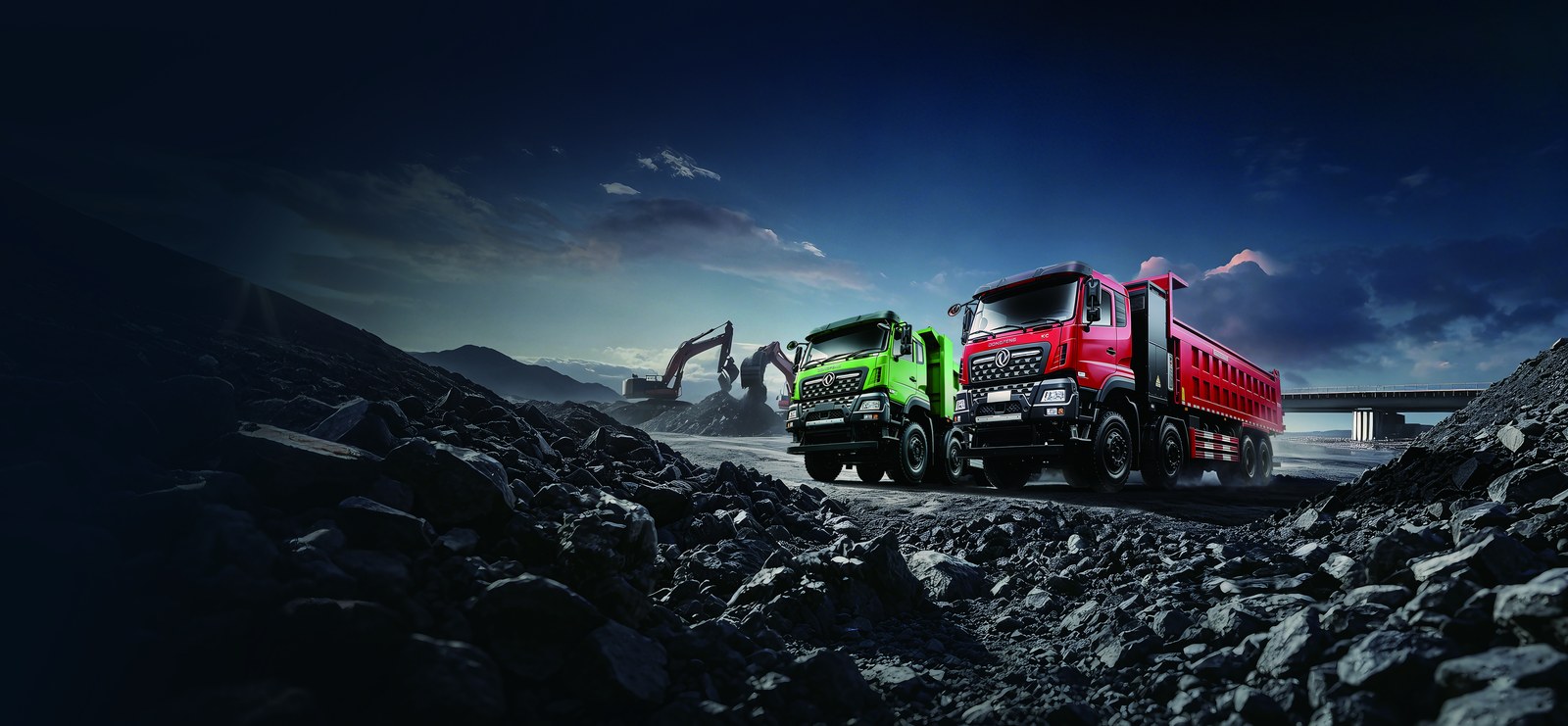
Every traffic stop, every quarry ramp descent, every red light on a delivery route is energy a diesel truck burns as heat in its brake drums and an EV truck partially puts back in its battery. Regenerative braking is one of the quiet advantages that makes electric commercial vehicles cheaper to run than their spec sheets suggest — but "how much you recover" is one of the most inflated numbers in the business. Vendors quote 30%; fleets in flat corridors see 8%. This article gives fleet planners the honest ranges by duty cycle, explains the physics limits, and shows the driver-behaviour levers that swing recovery by a quarter — drawn from deployment data on platforms like the KTA1 electric dump truck working quarries from Peru to West Africa.
Recovery is bounded by what the truck carries downhill and how it stops. A 40-tonne combination descending 100 m has about 10.8 kWh of gravitational potential energy available; a loaded tipper dropping into a 300 m open pit has 30+ kWh on the ramp — roughly 10–15% of its pack. But three factors claw that back: the electric motor accepts regen current only up to its rating (excess speed means blending friction brakes), the battery absorbs charge only as fast as its C-rate and temperature allow (a nearly full pack recovers little), and every conversion between wheel and cell loses 10–20%. The result: real fleets recover 10–30% of consumed energy depending on terrain and driving style, with hill-heavy quarry and urban duty at the top of that band and flat motorway haulage at the bottom.
| Duty cycle | Typical recovery (% of consumed energy) | Why |
|---|---|---|
| Quarry, loaded descents each cycle | 20–30% | Heavy mass + long ramps, every trip |
| Urban delivery, 30+ stops/day | 18–25% | Constant stop-start, moderate speeds |
| Port/terminal shuttle | 15–22% | Gate stops plus short loaded runs |
| Undulating regional haul | 10–15% | Fewer, longer stops; aero losses dominate |
| Flat motorway line-haul | 5–10% | Almost no braking events at cruise |
Two practical corollaries. First, regen is the reason electric dump trucks shine in pits and why a TZ3V working a 300 m deep copper mine posts energy numbers that shock diesel-fleet managers. Second, regen is why flat-corridor buyers should size their range expectation on consumption, not on brochure range — a tractor on the flat recovers little and needs every kWh it carries.
Energy recovery is only half the value. Every kWh regenerated is brake friction not converted to heat and dust. On heavy urban and quarry duty, we routinely see friction-brake life extend two to threefold versus diesel equivalents — a set of drums and pads that lasted 60,000 km lasts 150,000+. For a fleet of 20 tippers that each consume two brake jobs a year, that is real money annually, plus the downtime avoided, plus the safety margin of brakes that stay cooler and truer for longer. Quarry operators also report measurably cleaner rims and brake compartments — no black dust film — a small but genuine occupational-health point for site crews.
The same truck, the same route, two drivers: recovery spread of 5–8 percentage points is common, and the difference is technique. The habits that maximise regen:
Fleets that train and coach on these habits — the telematics dashboard makes regen percentage per driver visible, which is usually all the motivation a competitive driver needs — recover 20–25% more energy than the same fleet before training. That is often the difference between a one-charge day and a lunchtime top-up, which is to say: training pays back in weeks.
When evaluating any electric truck, ask for three regen numbers, not one: blended-braking behaviour at full regen (does the pedal feel natural to drivers?), the motor's sustained regen power rating (a 360 kW drive unit should absorb a meaningful share of that in deceleration, with thermal sustain), and the pack's charge-acceptance at the state-of-charge levels your duty cycle will actually see. We publish these curves for our platforms and build duty-cycle recovery models for buyers — because the honest answer to "how much will we recover?" is always "on your routes, here is the number," and any vendor who won't compute it for your terrain is guessing with your money.
A persistent myth deserves direct treatment because it distorts fleet planning: the idea that a loaded descent can somehow return more energy than the climb consumed — perpetual motion by quarry. The physics is straightforward. Every kilometre driven costs energy; regen recovers a fraction of the braking events' energy, never the whole, because motor limits, battery acceptance, and conversion losses each take their share. What a loaded descent genuinely delivers is substantial — the 300 m pit ramp pays back 20–35% of the energy the loaded climb spent — and what it never delivers is a free ride. Buyers should treat any vendor's recovery claims above the ranges in this article's table as a request for a demonstration, and demonstrations are easy: instrument a truck on your route for a week, read the regen counter, divide by consumption. The counter is on the dashboard; the arithmetic is a phone calculator.
The payload dimension of regen works the other way round from the myth — heavier loads raise both consumption and recovery, and the net effect on hilly duty is usually favourable. A fully loaded tipper descending to the crusher carries more gravitational energy than an empty one, so the same ramp returns more charge; fleets with significant loaded-descent duty therefore see their best recovery numbers precisely on their heaviest routes. The planning consequence: quarry and mining fleets should model their range on the loaded cycle including regen (the honest number), while flat-corridor fleets should model range on consumption alone, because their regen contribution is genuine but small. The error to avoid is universal — applying a brochure's "up to 30%" to a flat motorway route and then discovering the truck needs a mid-route charge the plan never contained.
The last expectation to set is with drivers, not planners: regen feels different. The first week of one-pedal technique invites over-slowing until the foot relearns; the second week converts sceptics; the third week produces the drivers whose energy numbers carry the fleet average. The training hour pays for itself in a month, which is why regen coaching is standard in our commissioning rather than an optional module.
Ready to electrify your fleet? Contact Shaanxi Fenghan Trading — authorized Dongfeng EV truck exporter. WhatsApp: +86 153 1943 1311 | Email: sales@fenghan-trade.com | dongfengevtrucks.com
🌐 Our Network: Fenghan Trade (SAGMOTO/SHACMAN Truck Export) · SAGMOTO heavy duty diesel trucks