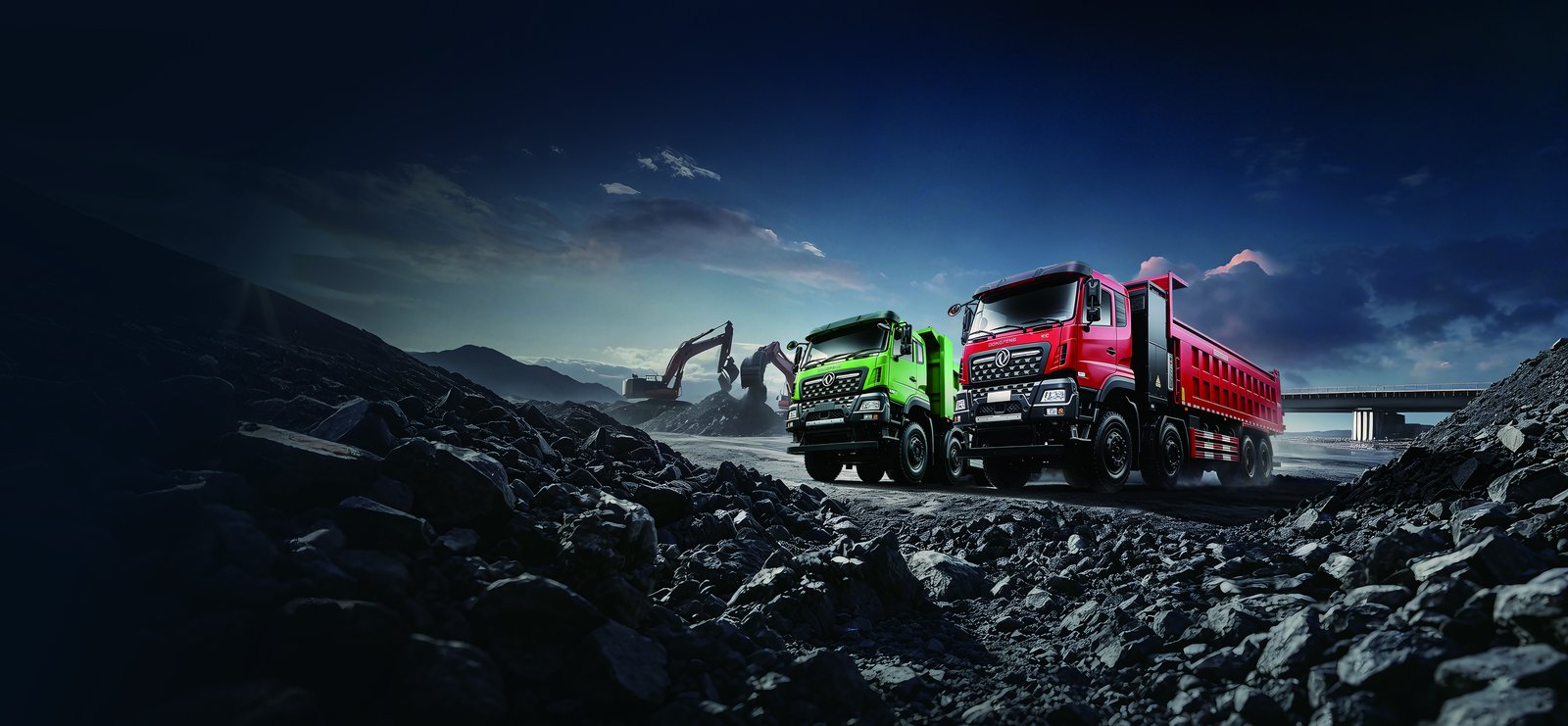
When a TZ5E-class dump truck finishes year eight and its pack sits at 78% state of health, that "worn" battery still holds 300+ kWh of usable capacity — several times the daily energy need of a mid-size African mine office, a cold store, or a village micro-grid. The electric truck industry is quietly building one of the largest storage-hardware streams in emerging markets: heavy LFP packs engineered for 4,500 cycles and road-vibration survival, retiring into applications that value exactly the ruggedness and chemistry safety they were built with. For fleet buyers, second life is not CSR garnish — it is a line in the residual-value model and, increasingly, an energy-security asset for the same site the trucks serve. This article explains the engineering, the economics and the project structures around repurposing retired EV truck batteries.
Three properties make heavy-truck LFP packs the premium feedstock of the second-life industry. First, chemistry: LFP's thermal stability and tolerance of partial-state cycling are the same traits that made it the mining-truck standard, and they translate directly into stationary safety — LFP's failure modes are benign relative to NMC, which is why stationary second-life projects underwrite it at sensible premiums. Second, engineering: a truck pack is already liquid-cooled, IP68-sealed, structurally reinforced for 80-tonne vehicle duty and BMS-networked — the expensive parts of a stationary battery enclosure already exist in the retired unit. Third, documentation: packs that lived their first life in our export fleets carry full cycle histories, SOH certificates and serialised module data, which removes the grading uncertainty that plagues anonymous second-life supply. A documented 600 kWh pack at 75-80% SOH is a bankable 450 kWh of stationary capacity; an undocumented one is a risk management exercise.
| Value path for a retired 600 kWh pack (78% SOH) | Indicative value | Notes |
|---|---|---|
| Scrap/recycling route | USD 4,000-8,000 | Materials recovery only |
| Second-life sale (graded, documented) | USD 25,000-45,000 | Roughly $55-95/kWh of usable capacity |
| Repurposed in-house (self-consumption asset) | Displaces new BESS at $150-250/kWh | Best value when the site needs storage anyway |
The gap between the scrap route and the second-life route is the residual-value dividend our fleet clients bank at fleet-refresh time: on a 20-truck fleet, documented packs retiring into second-life sale or site reuse return USD 500,000-900,000 that an undocumented fleet forfeits. This is the concrete financial answer to the "what happens after year eight" question every board asks — and it is why we build serialisation and SOH certification discipline into the maintenance programme from day one.
Repurposing is an engineering project, not an unboxing. The pack's vehicle BMS is replaced or bridged by a stationary EMS that handles the new duty (shallower cycles, different charge curves, no vibration); the liquid-cooling loop is plumbed to a simple dry-cooler or site water loop; enclosure, fusing and earthing follow IEC-style stationary storage practice; and the SOH is re-baselined module by module so weak modules are weeded out rather than dragging the string. Fire protection for LFP stationary installations is well-established practice — detection, venting and suppression specified to the enclosure — and the certification file we hand over with retired packs (UN 38.3 heritage, cycle history, cell chemistry declaration) maps directly onto what insurers and inspectors ask for. Our engineering team packages the repurposing kit — EMS bridge, cooling adaptation, grading protocol — for clients who want to run the conversion with their own technicians, and the maintenance crews we train at fleet commissioning are typically the same crew that runs the retired-pack buffer a decade later.
For fleet buyers, the practical takeaway is contractual: specify at purchase that pack serialisation, SOH data and repurposing rights travel with the pack. In lease and BaaS structures, clarify who holds the second-life value — it is a real number now, and it belongs in someone's model deliberately rather than in nobody's by default. For energy project developers in the markets we serve — the mining jurisdictions of South Africa, the DRC copperbelt, the West African and Southeast Asian agro-corridors covered throughout this blog — the deal structure that works is aggregated sourcing: as the Dongfeng EV truck installed base grows across our export regions, the retirement stream becomes a predictable, documentable storage supply line, and the developers who contract for it early will hold the cheapest bankable storage in their markets. The trucks electrify the mine; the batteries outlast the trucks; the site ends up with both mobility and storage from one supply chain. That is the full circle, and it is now priced.
Whether a fleet's packs retire as assets or as scrap is decided in the purchase contract, years before the first pack comes out of a truck. The lines that matter:
Fleets that sign these lines bank USD 25,000-45,000 per retired pack; fleets that do not discover at year eight that their battery value needed paperwork they never wrote. The optionality is cheap at signing and priceless at retirement.
Ready to electrify your fleet? Contact Shaanxi Fenghan Trading — authorized Dongfeng EV truck exporter. WhatsApp: +86 153 1943 1311 | Email: sales@fenghan-trade.com | dongfengevtrucks.com
🌐 Our Network: Fenghan Trade (SAGMOTO/SHACMAN Truck Export) · SAGMOTO heavy duty diesel trucks