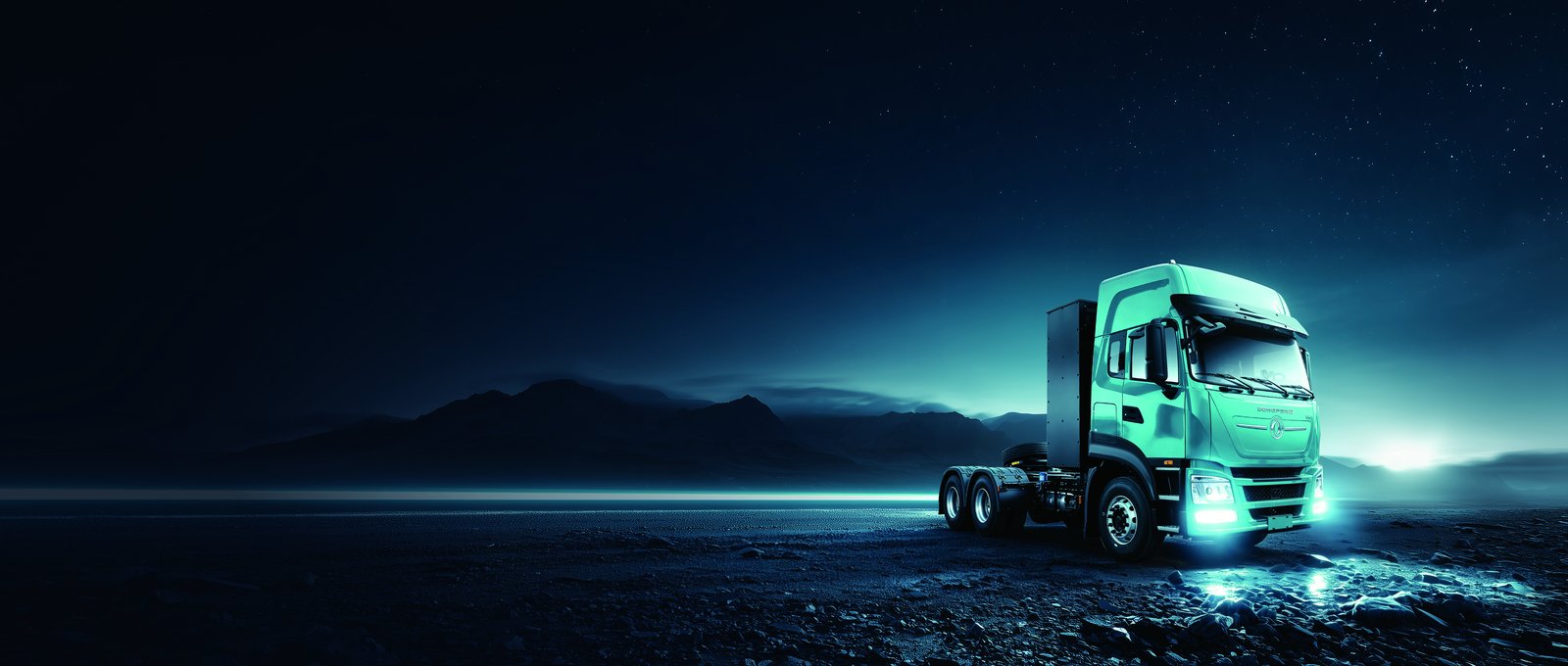
An electric truck has always carried a quiet penalty: the battery. A diesel tractor and an electric tractor may look identical on the forecourt, but the battery pack adds roughly 1.5–2.5 tonnes that a diesel tractor does not carry, and under the old EU mass rules that weight came straight out of payload. The 2026 revision of the EU Weights and Dimensions Directive changes that arithmetic. For the first time, zero-emission trucks receive a dedicated allowance of up to 2 tonnes of extra mass, raising permitted combinations toward 44 tonnes for ZE vehicles while keeping the standard framework for diesels. This article explains what the rule actually says, why it matters for payload parity, and what it means for fleets running EU-linked corridors and for North African exporters serving EU clients.
The Weights and Dimensions Directive sets the maximum weights and dimensions a truck may run at on EU roads. The 2026 revision, building on the earlier 2015 cabin-aerodynamics allowance, introduces a technology-neutral zero-emission allowance: a battery-electric or hydrogen truck may exceed the conventional maximum authorised mass by up to 2 tonnes to compensate for the mass of its energy storage. For a standard 40-tonne rigid and 44-tonne articulated combination, that means a ZE tractor may legally operate at 42t/46t in markets that transpose the allowance, and crucially the allowance is applied where it helps most — at the drive axle and the gross combination weight, not the trailer. The practical effect is that an electric tractor truck like the Dongfeng TE9L can recover most or all of the payload it lost to its 420–500 kWh CATL LFP pack.
Payload is the only number a fleet operator is paid on. A diesel 4x2 tractor weighs about 6.5–7 tonnes; the same-class electric tractor with a 420–500 kWh pack weighs 8–9.5 tonnes before the payload is loaded. Under a fixed 40t gross limit, that 1.5–2.5t difference was pure lost revenue. The table below shows the before-and-after for a representative 44t EU combination:
| Configuration | Tractor mass | Gross limit | Available payload |
|---|---|---|---|
| Diesel 4x2 tractor | 6.8 t | 40 t | 33.2 t |
| Electric tractor, old rule | 8.8 t | 40 t | 31.2 t |
| Electric tractor, +2t allowance | 8.8 t | 42 t | 33.2 t |
The third row is the headline: with the allowance transposed, the electric truck matches the diesel payload at 33.2 tonnes. For a fleet running 200 km regional distribution, that 2-tonne recovery is the difference between an EV business case that works and one that does not. It is worth stressing that this is not a subsidy paid in cash — it is a regulatory permission to carry the same freight the diesel carries, which is the more durable kind of advantage because it does not expire with a budget cycle. Fleets should therefore treat the allowance as a permanent structural input to their payload model, not a temporary incentive.
The Dongfeng TE9L carries a 420–500 kWh CATL LFP battery and a LvKong permanent-magnet motor rated 350–420 kW, delivering 280–350 km of real-world range on a single charge. At 8x4 or 6x4 tractor configuration with the 2t allowance, the TE9L recovers full diesel-comparable payload on 44t combinations while keeping its battery-swap option (5–6 min) for depot turnarounds. DC charging takes the pack from 20% to 80% in 35–60 minutes. Battery warranty is 8 years / 4,500 cycles to 70% SOH. For operators who previously dismissed electric tractors on payload grounds, the 2026 allowance removes the last structural objection for regional haulage. The motor’s flat torque curve also helps at low speed with a full 33-tonne payload, so the recovered mass does not come at the cost of pulling power on ramp grades.
Three groups gain immediately. First, logistics operators inside the EU running 40–44t combinations on regional and intermodal corridors, where the allowance restores payload and the CO2 HDV standards make the TCO case stronger every quarter. Second, operators on the TIR corridors linking the EU to the Western Balkans, Turkiye and the Caucasus, where transposition is under active discussion. Third — and this is the export angle — North African suppliers serving EU clients, who run the long empty-leg or part-load leg to EU borders and benefit from parity on return freight. Each of these groups shares one trait: their trucks cross a border where the mass rule matters, so the allowance follows the freight rather than staying inside one country.
Morocco is the clearest case. As a hub for automotive and agri-export supply chains feeding Southern Europe, Moroccan fleets increasingly run EU-bound corridors where the same truck must satisfy EU mass rules at the border and domestic rules at home. A Moroccan operator buying the TE9L today gets a truck that is payload-competitive on both sides of the Strait once the allowance is in effect, and the battery-swap capability suits the long Mediterranean crossing turnarounds. Algerian and Tunisian contractors on EU-linked construction and port work see the same benefit. The strategic read: the 2t allowance is not a European-only subsidy, it is a standard that follows EU-bound freight, and exporters who spec their fleets to it now are ahead of the transposition curve. Egyptian and other Mediterranean exporters on EU automotive and textile corridors gain the same way, because the rule is about the truck and the border, not the flag.
Beyond the EU border, the allowance changes how export-minded manufacturers price electric trucks. When the EV payload penalty disappears, the only remaining objections are range and charging — both already solved for regional duty by packs like the TE9L’s 420–500 kWh unit. That means a Moroccan or Turkish fleet can quote EU clients the same per-pallet cost as a diesel fleet, removing the last commercial friction in the decarbonisation conversation. For Chinese exporters like Dongfeng, the allowance also smooths type-approval positioning, because the truck can be homologated at the higher mass without a special derogation. The net effect is a smaller, faster-moving gap between diesel and electric in exactly the duty cycles where volumes are largest.
The 2026 Weights and Dimensions revision is the single biggest structural win for electric truck payload since the cab-aero allowance a decade ago. For EU-corridor operators and North African exporters alike, the message is the same: the EV truck payload gap is closing by regulation, and the TE9L is already built to use it.
Ready to electrify your fleet? Contact Shaanxi Fenghan Trading — authorized Dongfeng EV truck exporter. WhatsApp: +86 153 1943 1311 | Email: sales@fenghan-trade.com | dongfengevtrucks.com
🌐 Our Network: Fenghan Trade (SAGMOTO/SHACMAN Truck Export) · 4x2 6x4 tractor truck prime mover