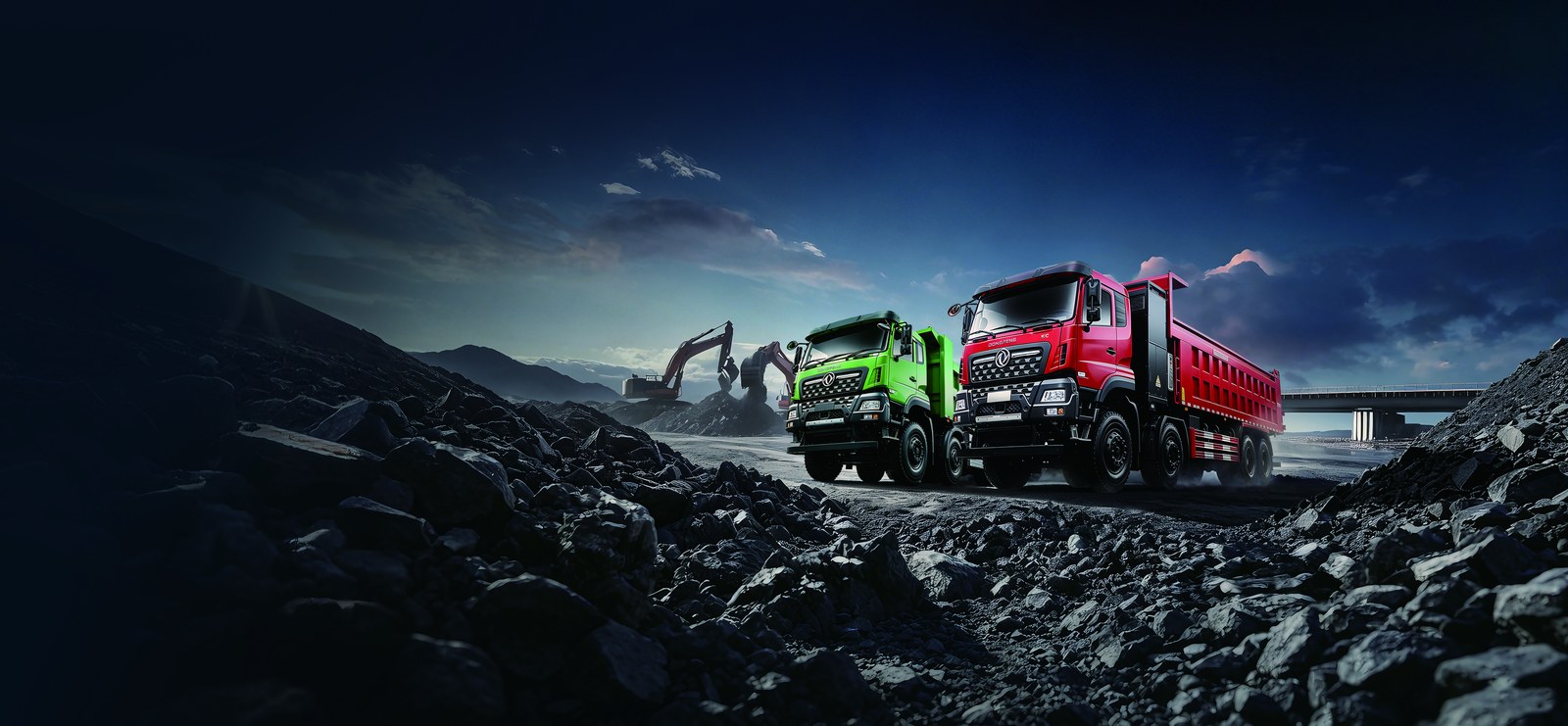
Erbil is the commercial heart of Iraqi Kurdistan and the hub of a corridor reaching toward the border crossings, the Mosul plain and the wider northern Iraq distribution network. For the 3PLs and distributors serving it, the electric truck is now a credible diesel replacement for the heavy outbound and inbound haul — if sized and charged on the corridor’s fixed, dense lanes. This article covers the Dongfeng KTH3 heavy electric cargo truck for northern Iraq, the corridor TCO, a charging model, and a deployment path for Erbil-based operators linking to the Iraq market context.
Northern Iraq generates enormous, predictable outbound and inbound tonnage: construction materials, consumer goods, agricultural produce and fuel-adjacent logistics. The movement is mostly fixed-route: Erbil → border → distribution park, or Erbil → Mosul → return. Fixed routes, known masses, and a single controlling operator make this a strong EV truck case — the same logic that wins in mining and bulk haul. The corridor also gives operators the land and power headroom to build depot charging that an urban 3PL could not, which is the gating factor for heavy electric freight. A few lanes move most tonnage, so shared charging works and the infrastructure cost spreads across the fleet.
The KTH3 heavy electric cargo truck is the right-size heavy unit for the 18–25 t GCW duty serving Erbil and the corridor.
| Parameter | KTH3 Specification |
|---|---|
| GVW (payload class) | 18 – 25 t |
| Battery | CATL LFP, 262 – 350 kWh |
| Drive motor | LvKong permanent-magnet, 282 – 350 kW |
| Real-world range | 200 – 280 km (loaded) |
| DC fast charge (20–80%) | 45 – 60 min |
| Battery warranty | 8 years / 4,500 cycles to 70% SOH |
| FOB price (China) | US$70,000 – 98,000 |
The 262–350 kWh LFP pack covers the Erbil → Mosul → return cycle with margin; the 282–350 kW LvKong motor holds the loaded climb out of the corridor in peak heat. LFP chemistry keeps the pack safe through the regional climate and the frequent partial charging a distribution fleet sees.
The right model is a 240–350 kW DC depot post at the Erbil hub plus a second at the border cross-dock, each paired with on-site solar plus container storage. The KTH3 tops up during mandatory documentation and driver rest, turning dead time into free energy. Because the hub controls its own power, the marginal energy cost can fall toward US$0.09–0.12/kWh, which is the lever that makes heavy electric haulage beat diesel in northern Iraq. Site the post where the truck already stops so charging is dead time, not waiting time, and stagger trucks on a timed roster so none queues.
A 22 t diesel cargo truck burns ~32 l/100 km over ~45,000 km/year — 14,400 l. Iraqi diesel at ~US$0.60/l is ~US$8,640. The KTH3 at ~1.4 kWh/km draws 63,000 kWh; at hub solar US$0.11/kWh that is US$6,930. Energy saving ~US$1,710/year, plus ~US$3,500 maintenance (no engine, no DPF, regen brakes) — ~US$5,210 annual advantage per truck. Against CIF plus duty on a US$85,000 unit, payback lands inside 38–52 months at fleet scale, faster with two-shift operation and on-site solar. The longer the annual km, the stronger the case.
One KTH3 on the Erbil–Mosul lane, 45,000 km/year, draws ~63,000 kWh. At hub solar US$0.11/kWh that is US$6,930; the diesel equivalent at US$0.60/l and 14,400 l costs US$8,640 — a US$1,710 annual energy gap before maintenance. Add ~US$3,500 maintenance avoidance and the unit returns ~US$5,210/year against a US$85,000 FOB step, payback ~42 months at fleet scale. The hub solar array is the lever: without it the energy cost rises and payback slips, so the power plant belongs on the same purchase order as the truck. For a two-shift operator running 70,000 km/year the annual advantage climbs above US$7,000 and payback shortens materially.
The lowest-risk rollout is a pilot of two KTH3 units on the Erbil–Mosul lane for 120 days, with kWh/km and tonne-km telemetry, then a scaled order. Build the hub and cross-dock chargers first so the pilot never waits. Because the corridor is fixed and dense, the model replicates lane by lane once the first wave proves out. Hold a spare inverter and motor module at the Erbil workshop to keep availability above 95%. Train drivers on single-pedal control and SOC-aware routing before the first long run, and keep a charging log so the KTH3 trades at a premium at renewal.
Iraq’s import process for fully-built EVs is workable via the conformity route, and the Iraq electric truck market guide details Erbil and Umm Qasr clearance, the conformity path, and depot charging layout. For Kurdistan-corridor operators, the KTH3 is the EV truck that turns a fixed, heavy lane into a defensible
The Kurdistan corridor’s defining feature is the border, and the KTH3 deployment has to plan for it. The border cross-dock is the natural charge node: the truck stops anyway for documentation, so the 20–80% charge happens during dead time while paperwork clears. Build the 350 kW post at the cross-dock, not at a remote site, and the Erbil–Mosul–border loop becomes a seamless electric relay. Keep the R100 battery certificate, the UN38.3 summary and the CoC in the vehicle file so the crossing is routine rather than an inspection event, and align the commercial invoice, packing list and bill of lading to the cent to avoid a re-value.
Documentation discipline protects uptime. A missed certificate turns a five-minute border stop into a day of demurrage, and an electric truck stranded at the line is no different from a diesel one in that moment. Train the cross-dock crew on high-voltage isolation so a roadside event on either side of the border is handled correctly, and hold a spare motor and inverter at the Erbil workshop so a fault never grounds more than one tractor. The LFP pack’s passive thermal management also helps in the summer heat on both sides of the frontier, where an actively cooled pack would add complexity and failure points.
The corridor rewards operators who scale in waves. A pilot of two KTH3 units on the densest lane for 120 days proves kWh/km and tonne-km, then the next wave is specified from real data. Because the lanes are fixed and concentrated, the model replicates lane by lane once the first wave pays back, and the border node anchors the whole network. For Erbil-based operators, the KTH3 turns a fixed, heavy cross-border lane into a defensible low-carbon cost line that diesel cannot match on total cost.
low-carbon cost line. Shaanxi Fenghan Trading supplies the KTH3 with a corridor-grade build and an Erbil-lane TCO model per annual tonne.Ready to electrify your fleet? Contact Shaanxi Fenghan Trading — authorized Dongfeng EV truck exporter. WhatsApp: +86 153 1943 1311 | Email: sales@fenghan-trade.com | dongfengevtrucks.com
🌐 Our Network: Fenghan Trade (SAGMOTO/SHACMAN Truck Export) · SAGMOTO cargo truck flatbed box stake