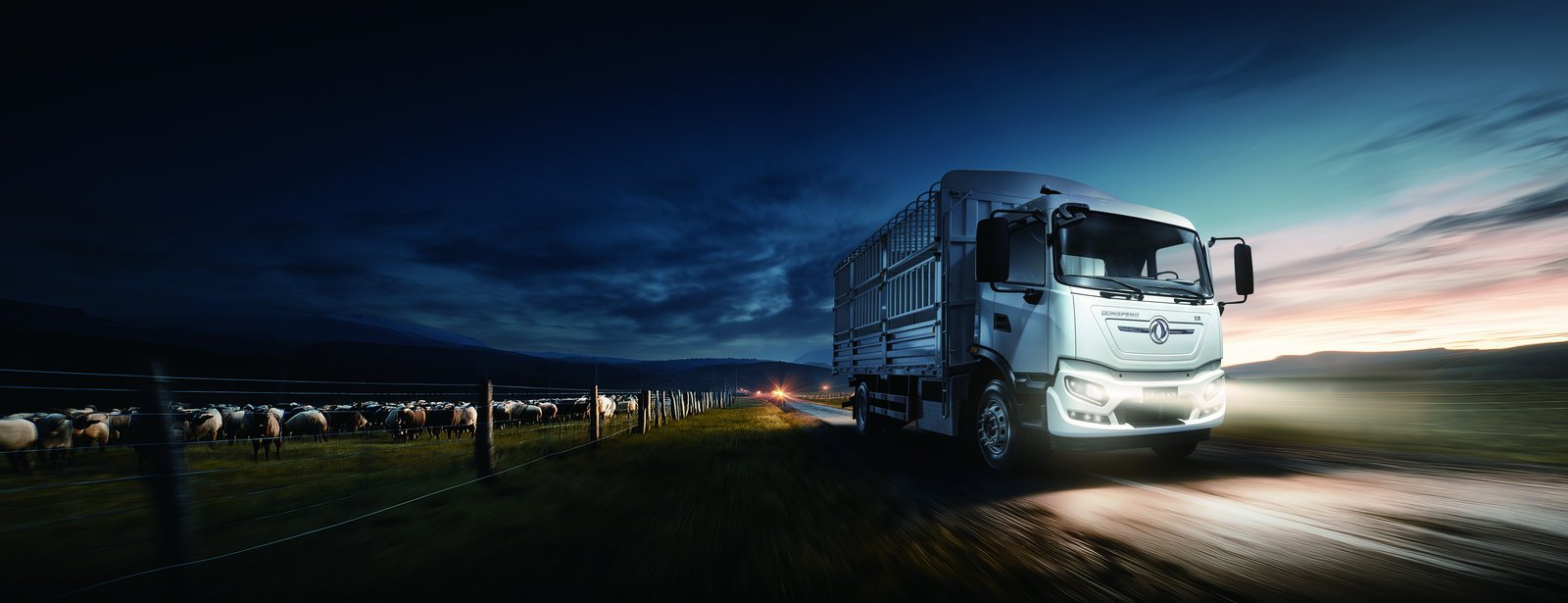
Pakistan operates one of the largest compressed natural gas (CNG) commercial fleets on the planet, so when a logistics manager looks at the new TE8L electric tractor the first instinct is to compare it against the CNG prime movers already in the yard. The electric truck is no longer a science project here: Dongfeng's 422 kWh CATL LFP pack and 510 kW peak drive system deliver 280-330 km of real range per charge, which covers most regional distribution and port shuttle work without ever touching the long-haul CNG network. The decision for a fleet owner comes down to four numbers — cost per kilometer, downtime, maintenance, and five-year residual risk — and this article models all four against a comparable CNG 6x4 tractor.
CNG has been the default clean-fuel choice in Pakistan for two decades because the national gas network is mature and retail stations sit on almost every trunk route. Fleet financiers know the residual curve, drivers know the refuel routine, and workshops stock the service parts. That familiarity is exactly why the arrival of a mature battery-electric tractor matters: for the first time the operating cost gap has closed enough that total cost of ownership, not just sticker price, favors a rethink. Importers weighing an order should treat CNG as the incumbent benchmark and ask where the electric option quietly wins.
The TE8L is built on the same heavy 6x4 platform Pakistani buyers already spec for 40 t combination weights, so the comparison is apples to apples on payload and axle law. The difference is the powertrain: instead of a 380-420 hp gas engine and a 12-speed automated box, the EV carries a liquid-cooled CATL LFP battery and a 510 kW peak motor that delivers full torque from standstill — a real advantage in hilly upcountry lanes around Peshawar and Quetta where CNG engines lose torque with altitude.
The single number that decides most fleet bids is energy cost per kilometer. In Pakistan CNG retails at roughly PKR 110-130 per kg (about USD 0.39-0.46 per kg at 2026 exchange rates), while a heavy 6x4 tractor consumes approximately 0.33-0.38 kg of CNG per kilometer under a 40 t gross combination weight load. That places CNG operating cost at USD 0.13-0.17 per kilometer before any driver behavior variance.
The TE8L draws 1.28-1.51 kWh per kilometer from its 422 kWh pack. At a commercial grid tariff of USD 0.13-0.16 per kWh the electric operating cost lands at USD 0.17-0.24 per kilometer. However, fleets that install depot charging on a captive or off-peak industrial rate of USD 0.08-0.10 per kWh cut that to USD 0.10-0.15 per kilometer, which undercuts CNG on pure energy. The table below summarizes a 120,000 km per year duty cycle.
| Metric | CNG 6x4 tractor | TE8L electric tractor |
|---|---|---|
| Energy unit cost | USD 0.39-0.46 / kg | USD 0.08-0.16 / kWh |
| Consumption | 0.33-0.38 kg / km | 1.28-1.51 kWh / km |
| Cost per km (energy) | USD 0.13-0.17 | USD 0.10-0.24 |
| Annual energy (120,000 km) | USD 15,600-20,400 | USD 12,000-28,800 |
| CO2 per km (well-to-wheel) | ~0.21 kg | ~0.05 kg (grid mix) |
CNG tractors refill in 8-12 minutes at a station and carry 400-600 km of range on twin tanks, which is why they dominate irregular long-haul routes where the next charger may not exist. The TE8L's 280-330 km range suits fixed regional loops, port drayage, and distributor runs where the truck returns to a depot nightly. DC fast charging at 120/240/360 kW returns 20-80 percent state of charge in 45-90 minutes, and most depot operators schedule charging during idle windows so it never competes with driving time. For a fleet that already runs predictable routes, the charging window is a planning input, not a roadside stop.
This is where the electric truck pulls clearly ahead. A CNG engine still requires oil changes, spark plugs, air and gas filters, and periodic valve service, with a typical heavy service every 20,000-30,000 km. The TE8L removes the engine entirely: no oil, no belts, no exhaust aftertreatment, and regenerative braking that extends foundation brake life past 200,000 km. Scheduled EV service is largely tires, suspension, coolant, and a BMS health check every 40,000-60,000 km.
| Service item | CNG tractor (5 yr) | TE8L electric (5 yr) |
|---|---|---|
| Engine / drivetrain service | Every 20,000-30,000 km | None (no engine) |
| Brake servicing | 2-3 sets | 1 set (regen) |
| Annual maintenance cost | USD 3,800-4,800 | USD 1,200-1,800 |
| 5-year maintenance total | USD 19,000-24,000 | USD 6,000-9,000 |
CNG tractors have a deep used market in Pakistan, so a five-year residual around 30-35 percent of landed cost is realistic. The electric truck is newer to the secondary market, but the CATL LFP pack carries an 8-year / 4,500-cycle warranty and LFP chemistry holds roughly 80 percent state of health after that cycle count, which protects residual value better than first-generation NMC packs did. Buyers should budget a slightly lower EV residual (25-30 percent) and weigh it against the stronger battery guarantee and the growing list of corporate buyers who will only tender electric tenders.
Modeling ten tractors at 120,000 km per year over five years, landed costs in Pakistan (FOB plus roughly 25 percent duty, freight, and compliance) put the CNG unit near USD 95,000-120,000 and the TE8L near USD 140,000-170,000. The EV starts behind on depreciation but recovers through energy and maintenance. The table shows the blended result.
| 5-year cost (per truck) | CNG | TE8L EV |
|---|---|---|
| Landed purchase | USD 95,000-120,000 | USD 140,000-170,000 |
| Energy (600,000 km) | USD 78,000-102,000 | USD 60,000-144,000 |
| Maintenance | USD 19,000-24,000 | USD 6,000-9,000 |
| Residual (credit) | -USD 30,000-42,000 | -USD 35,000-51,000 |
| Net 5-year cost | USD 162,000-204,000 | USD 171,000-272,000 |
The band is wide because it swings on two variables: the electricity rate you negotiate and whether EV import incentives apply. A fleet with depot solar or off-peak charging plus current EV duty relief lands at the favorable end and can beat CNG outright on a like-for-like lane.
Two practical levers move the verdict. First, Pakistan's evolving EV policy offers reduced duty and toll relief on certified electric commercial vehicles, which directly narrows the landed-price gap shown above. Second, depot readiness — a 240 kW DC charger, a metering plan, and a driver charging checklist — turns the TE8L's overnight window into a cost advantage rather than a constraint. Fleets that already own yard space and a three-phase supply are 80 percent of the way to electric readiness before the first truck arrives.
Switching a CNG-experienced yard to electric is as much a people task as a hardware task. The TE8L's single-speed drive removes gear-shifting and engine-braking habits, so drivers initially over-use the brake pedal out of instinct; a half-day coaching session on regenerative braking recovers range immediately. Pakistani operators report that the quiet cab and instant torque improve driver retention on urban loops where CNG tractors are harsh. Training should also cover depot charging etiquette: plug in on arrival, never queue at the pump, and read the dashboard SOC the way drivers once read a fuel gauge. A small incentive tied to kWh-per-km scorecards turns the data into a habit within a month.
Pakistan's grid varies in voltage and suffers outages, so a TE8L depot needs more than a socket. A step-down transformer sized to the charger load, surge protection, and a basic power-quality logger protect the 422 kWh pack's liquid-cooled charging circuits. Many operators pair the depot with a small solar array and battery buffer to ride through load-shedding, which also lowers the effective tariff. The key planning rule is to size the supply to the overnight window, not the fastest possible blast, because the truck has eight to ten hours idle at the depot and only needs a full charge by departure. Done right, charging becomes invisible to operations.
For regional distributors, cement and container shuttle, and any operation with a home depot and predictable daily mileage, the TE8L electric tractor delivers lower lifetime cost and a far smaller maintenance footprint. For sparse long-haul lanes without charging, a CNG tractor remains the safer tool today. Importers should also track the Pakistan electric truck market as new charging corridors and incentive schedules change the math quarterly. The honest verdict: electrify the loops you can control, keep CNG for the lanes you cannot.
Ready to electrify your fleet? Contact Shaanxi Fenghan Trading — authorized Dongfeng EV truck exporter. WhatsApp: +86 153 1943 1311 | Email: sales@fenghan-trade.com | dongfengevtrucks.com
🌐 Our Network: Fenghan Trade (SAGMOTO/SHACMAN Truck Export) · heavy duty trucks export China