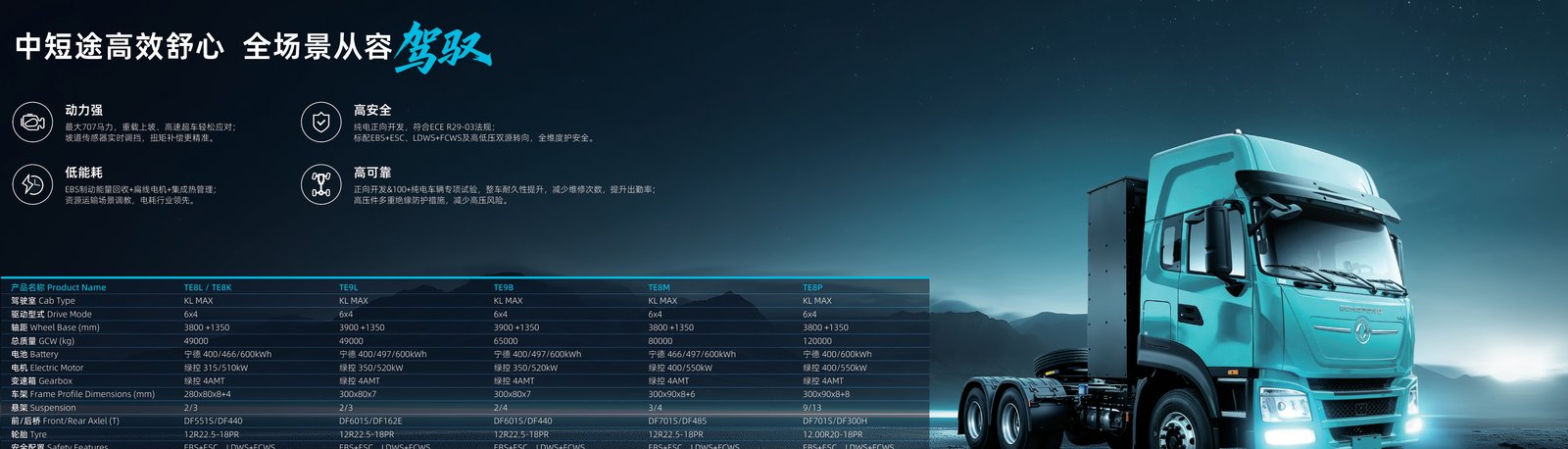
Regenerative braking is the single feature that makes an electric truck dramatically more efficient than its diesel cousin on hilly terrain, and on a mine or mountain haul it can recover 15 to 25 percent of the energy that a diesel truck would simply burn off as heat. The TZ3V electric dump truck is a clear example, returning meaningful charge on every descent, and the same physics rewards operators in the Peru electric truck market running the Andes, where gravity is both a cost and an opportunity.
When a diesel truck goes downhill, the driver rides the friction brakes and the engine brake, turning kinetic energy into heat that is lost forever. An electric truck instead uses its motor as a generator, converting that same kinetic energy back into electrical charge in the pack. On a 60-tonne loaded descent, the power available at the wheels is enormous, and even at modest recovery efficiency it adds up to a meaningful state-of-charge gain per trip. The TZ3V's LvKong motor and CATL LFP pack are matched so the recovered energy is captured safely without overheating the cells.
The 15 to 25 percent recovery figure is not a lab claim; it is the band seen across real hilly duty. Flat routes recover little because there is little to recover. Steep, repetitive descents, the signature of pit haul roads and mountain corridors, sit at the top of the band. A truck that climbs 300 meters and descends the same profile can return a fifth of the climb energy on the way down, which directly extends range and cuts the number of charges per shift.
| Route type | Typical recovery | Effect on range |
|---|---|---|
| Flat depot duty | 5 to 10 percent | Marginal gain |
| Rolling hills | 10 to 15 percent | Noticeable extension |
| Mountain descent (Andes) | 20 to 25 percent | Major range gain |
| Mine haul road | 15 to 25 percent | One fewer charge per shift |
On Andes corridors, where loaded trucks climb to altitude and descend with freight, regen turns the descent into a charging event. Operators report that a well-driven electric truck can arrive at the bottom of a long grade with more range remaining than a naive model predicts, because the pack has been topped up by the mountain. The Peru electric truck market is built on exactly this geography, and fleets that train drivers to maximize regen, by anticipating grades and avoiding friction braking, see the top of the recovery band consistently.
The Atlas Mountain corridors show a similar pattern for regional freight. Longer, gentler grades return a steady 15 to 20 percent, enough to stretch a 600 kWh pack across a day that would otherwise need a midday charge. The key operational lesson from both ranges is that regen is a driver skill as much as a hardware feature. Smooth anticipation beats hard braking every time.
The TZ3V electric dump truck runs short, steep, repeated cycles on mine haul roads, the ideal regen profile. A single shift can recover enough energy to defer a charge, and over a year that compounds into real diesel-equivalent savings. Combined with the CATL LFP 8-year or 4,500-cycle warranty, the recovered energy also reduces cycle depth, which gently extends pack life.
Regen is not free energy; it is recovered energy, capped by physics and by the pack's ability to accept charge. A full pack cannot accept much regen, so the biggest gains come when the truck starts the descent with headroom. Very steep, continuous grades can exceed the motor's generator rating, requiring friction braking as a backup for safety. Fleets should design descent procedures that keep within the rated recovery power while still capturing the bulk of the energy.
Because the motor does most of the slowing, friction brakes on a regenerative electric truck see a fraction of the use they would on a diesel. Pad and rotor life stretches from months to years on mountain routes, and the risk of brake fade on long descents essentially disappears. For the TZ3V running repeated pit grades, that is a direct maintenance saving and a safety gain, since the primary retarder is the drivetrain, not a wear item.
The recovered kilowatt-hours should be visible to the operator, not buried in the controller. Good telematics show per-trip recovery so fleet managers can rank drivers and routes by regen efficiency. The TZ3V electric dump truck supports this through its energy display, and fleets that act on the data reliably reach the top of the 15 to 25 percent band rather than the middle.
A simple descent procedure captures the most energy safely. Drivers lift off early, let the motor hold speed, and use friction brakes only for the final stop or an emergency. On a 300-meter grade, disciplined technique can recover close to the theoretical maximum without exceeding the generator rating. Fleets should train this as a standard skill, because the difference between a trained and an untrained driver on the same hill can be ten percentage points of recovery.
Regen changes how you account for energy. A truck that recovers a fifth of its climb energy effectively reduces the net draw of the loop, so the pack size you need is smaller than a naive model suggests. For Andes and Atlas operations, this means a 600 kWh pack covers more duty than its nameplate implies, and the business case improves once recovery is in the spreadsheet rather than left on the table.
On continuous steep grades, the generator rating can be exceeded, and the truck must fall back to friction braking for safety. The procedure should be explicit: regen first, friction as backup, never trade safety for a few percent of recovery. The TZ3V's system manages this automatically, but drivers should understand why the behavior changes on the steepest sections so they trust the truck rather than fight it.
Not every route benefits equally, and knowing which loops pay back fastest helps prioritize electrification. Flat port shuttle work gains little; rolling regional freight gains steadily; mine and mountain haul gains the most. Fleets should rank electrification candidates by grade profile, because the trucks on the hilliest lanes deliver the strongest case, while flat-route trucks win on simpler energy and maintenance savings instead.
Where recovery is metered per driver, a small incentive for the top quartile turns regen into a friendly competition that lifts the whole fleet. The cost of the incentive is tiny next to the energy and brake savings it unlocks, and it builds the driver engagement that makes electric trucks succeed in practice rather than only on paper.
For operators in the Peru electric truck market and any mountain or mining duty, regenerative braking is the feature that quietly pays for the truck. It asks for nothing but a trained driver and a pack with headroom, and it returns 15 to 25 percent of the energy that a diesel truck throws away. On the TZ3V, that recovery is the difference between a good electric truck and a great one for hill country.
Ready to electrify your fleet? Contact Shaanxi Fenghan Trading — authorized Dongfeng EV truck exporter. WhatsApp: +86 153 1943 1311 | Email: sales@fenghan-trade.com | dongfengevtrucks.com
🌐 Our Network: Fenghan Trade (SAGMOTO/SHACMAN Truck Export) · SAGMOTO heavy duty diesel trucks