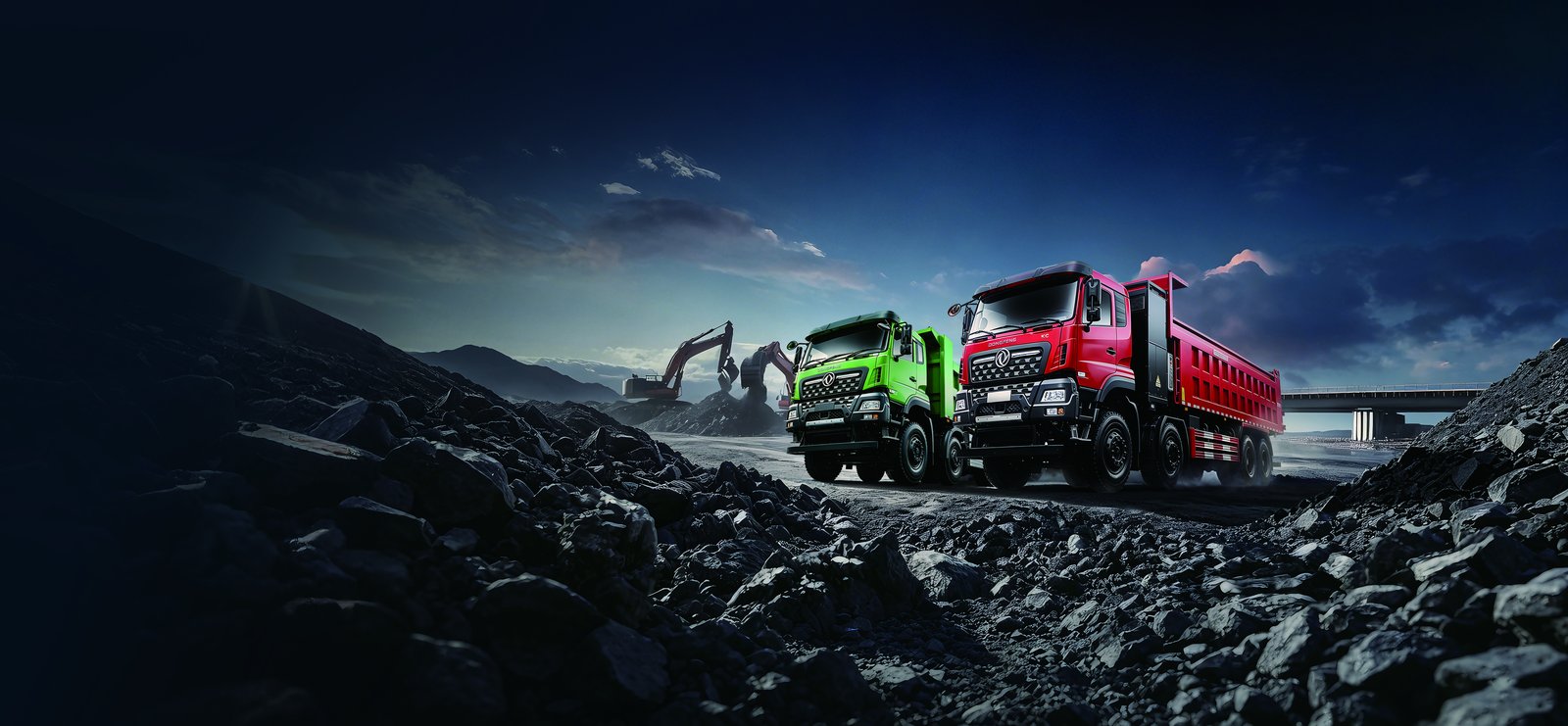
Municipal fleet managers across Kenya are asking a single budgeting question: does an electric truck really beat a diesel water truck over a five-year operating life? The Dongfeng KT3F electric sprinkler truck is purpose-built for dust suppression on haul roads, quarry perimeters, landfills and municipal streets. This article puts the KT3F side by side with a conventional diesel water truck so procurement teams can see where the savings come from, where the trade-offs sit, and which duty cycles favor an electric sprinkler truck over a diesel unit. We focus on the numbers that survive contact with a real operating budget: fuel versus energy, maintenance, downtime, emissions and the quieter working environment that an electric truck delivers to the neighborhoods it serves.
Dust control is a fixed-loop, return-to-depot duty that plays directly to the strengths of battery-electric vehicles. Unlike long-haul line work, a sprinkler truck rarely needs 500 kilometers of range in a day. It needs cheap energy, low noise, and reliable uptime on a predictable route. That is exactly the profile where the total cost of ownership of an electric truck inverts against diesel, often inside the first three years of service. The rest of this comparison quantifies that inversion with figures relevant to Kenya's municipal and port fleets.
The strongest argument for an electric truck is the lifetime cost curve, not the sticker price. Diesel water trucks look cheap to buy but bleed cash through fuel, exhaust after-treatment, engine servicing and brake wear. The KT3F carries a CATL LFP pack of 282 kWh, draws roughly 0.9 to 1.3 kWh per kilometer in sprinkler duty, and recharges overnight at depot tariffs of USD 0.07 to 0.15 per kWh. Over a 250-kilometer daily route across Nairobi County or a coastal municipality, the energy bill collapses versus diesel, and the gap widens every year diesel prices climb.
Maintenance is the second pillar. A diesel chassis has a turbo, diesel particulate filter, selective catalytic reduction system, injectors and a multi-speed gearbox that all require scheduled service. The electric truck removes almost all of that. Fewer moving parts means fewer failure modes, and regenerative braking carries most of the slowing duty, so friction brakes last far longer. The combined effect is a maintenance bill roughly one-third the size of the diesel equivalent over five years.
| Cost item (5 years / 450,000 km) | Diesel water truck | KT3F electric truck |
|---|---|---|
| Energy / fuel | USD 148,500 (38 L/100km @ USD 0.85/L) | USD 49,000 (1.1 kWh/km @ USD 0.10/kWh) |
| Scheduled maintenance | USD 22,000 (oil, filters, DPF, turbo) | USD 6,500 (gearbox oil, brakes, coolant) |
| Brake wear | USD 5,500 | USD 1,800 (regen dominant) |
| Exhaust / emissions compliance | USD 4,200 | USD 0 |
| Battery warranty reserve | n/a | USD 0 (8-yr / 4500-cycle cover) |
| Total operating cost | USD 180,200 | USD 57,300 |
The table above shows a five-year operating gap of roughly USD 123,000 per vehicle. Even after the higher FOB price of an electric sprinkler truck in the USD 70k to 120k band versus a USD 45k to 85k diesel unit, the payback lands inside the third year for high-utilization municipal fleets. Low-mileage rural units will take longer, which is why duty cycle, not ideology, should drive the buying decision.
A dust-control truck works where people live and breathe. Swapping a diesel unit for an electric truck removes tailpipe NOx and particulate matter from exactly the neighborhoods that complain most about construction dust. For county governments with clean-air mandates, the accounting is not only financial; it is a public-health dividend that compounds across the fleet.
Kenya's grid is rapidly greening through geothermal and hydro capacity, which means the well-to-wheel CO2 figure for an electric truck keeps falling every year the fleet stays on the road. Municipalities can report Scope 1 emission removals directly to their climate commitments, and the zero local exhaust also protects the crew who sit in the cab for ten-hour shifts. There is no diesel smell, no soot film on surfaces, and no idling cloud of particulates at every standstill.
| Metric (per vehicle, 5 years) | Diesel water truck | KT3F electric truck |
|---|---|---|
| CO2 emissions | ~610 tonnes | ~95 tonnes (grid mix) |
| NOx | ~3.4 tonnes | 0 (tailpipe) |
| Particulate matter (PM2.5) | ~140 kg | 0 (tailpipe) |
| Local noise at idle | 78 dB(A) | 52 dB(A) |
Water trucks often run overnight to suppress dust when traffic is light. Diesel engines make that a neighborhood nuisance and a crew-fatigue problem. The KT3F flips the equation by eliminating combustion entirely. Key advantages for operators and residents include a dramatically quieter worksite and a calmer cab environment.
Range anxiety is the wrong lens for a sprinkler truck. These vehicles follow fixed loops and return to a depot every shift. The KT3F delivers 200 to 350 km of real-world range on a single charge, comfortably covering a full day of dust suppression. DC fast charging from 20 to 80 percent takes 1.5 to 2 hours, and most depots simply plug in overnight while the crew rests.
| Operational factor | Diesel water truck | KT3F electric truck |
|---|---|---|
| Typical daily distance | 180 to 260 km | 180 to 260 km |
| Refuel / recharge time | 15 min fill | 7 to 9 h depot charge or 2 h fast |
| Water tank volume | 8 to 12 m3 | 8 to 12 m3 |
| Expected uptime | 92 percent | 96 percent (fewer failure points) |
Because the electric truck has roughly one-tenth the moving parts in its driveline, scheduled downtime shrinks. Municipalities report fewer roadside recoveries, which matters when a single truck covers an entire ward and a breakdown means a dust complaint escalation. The 8-year / 4500-cycle battery warranty further protects the residual value that diesel resale traditionally erodes through engine wear.
Buyers should plan the total package, not just the chassis. A successful electric truck deployment starts with the depot, not the truck. Practical steps for a Kenyan municipality or contractor include sizing the electrical connection, training drivers, and structuring the warranty into the service contract.
The electric sprinkler truck is the clear winner for high-mileage municipal and quarry dust-control fleets in Kenya where electricity is cheap and routes are fixed. A low-utilization rural unit covering 40 km a day may still favor a used diesel truck on pure capital cost. For counties, ports and large contractors running multiple shifts, the KT3F electric truck pays back fast and removes the single largest source of local complaints: diesel noise and fumes. The decision is ultimately a math problem, and for most Kenyan dust-control duty the math now points firmly at battery electric.
Ready to electrify your fleet? Contact Shaanxi Fenghan Trading — authorized Dongfeng EV truck exporter. WhatsApp: +86 153 1943 1311 | Email: sales@fenghan-trade.com | dongfengevtrucks.com
🌐 Our Network: Fenghan Trade (SAGMOTO/SHACMAN Truck Export) · heavy duty trucks export China