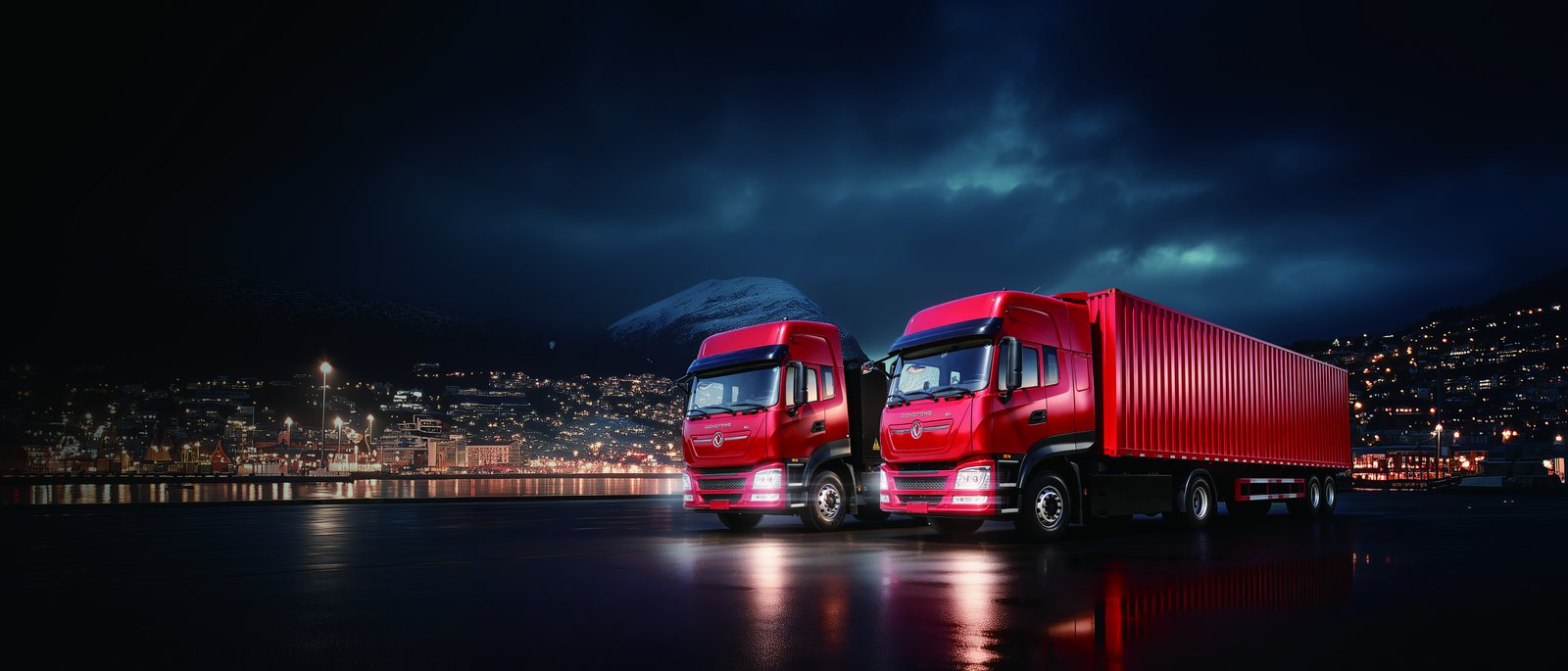
Eldoret sits at 2,100 m in the heart of the Rift Valley's food basket: the tea estates of Kericho and Nandi spill toward it from the south, the North Rift's maize and wheat belt runs from it toward Kitale, and Kenya's dairy processing giants concentrate around it. Everything is uphill-downhill, radius-bound agriculture — tea from the leaf collection centres to the factories, maize from the buying stores to the Eldoret mills, processed goods down to the Nakuru-Nairobi market chain. Kenya has East Africa's most developed EV policy (the National Electric Mobility Policy and duty exemptions for EVs), a grid that is majority-renewable in a good hydro year, and proven diesel prices near USD 1.30/litre. This article sizes the KT5M-class electric box truck opportunity on the Rift corridors, including the altitude question that Kenyan buyers always ask first.
A box truck working the Eldoret commercial radius runs 100-180 km per day: leaf or grain collection loops in the mornings, factory-to-market or mill-to-distributor runs in the afternoon, fixed routes with fixed origins — the profile an electric fleet manager dreams about. The KT5M electric box truck covers that band on a single overnight charge at 1.4-1.7 kWh/km loaded on the Rift's rolling grades, with the factory or mill compound serving as the charging depot. For the heavier beer, dairy and grain legs toward Iten, Kapsabet and the Kisumu road, the KTH3 electric cargo truck adds payload and box volume at the same depot rhythm. Altitude, the first question asked, is a quiet advantage: electric drivetrains lose nothing at 2,100 m where diesels lose 15-20% of their naturally aspirated power — Eldoret-based diesel fleets know this as the "underpowered on the Kericho climb" complaint. The electric motor's full torque at zero rpm does not care about air density.
The gradient profile is the second hidden advantage. The Rift is a staircase: descents into the Kericho escarpment and the long downhill into Nakuru are regenerative braking harvests. On telemetry from comparable highland duty, sustained descents return 8-15% of daily consumption — energy a diesel truck converts into brake heat and replacement brake shoes. Brake wear on Rift grades is the single biggest maintenance cost of diesel fleets around Eldoret; the electric drivetrain cuts brake consumption by more than half.
| 10-truck KT5M fleet, Eldoret corridors | Diesel | Electric |
|---|---|---|
| Daily energy cost per truck | USD 38-48 (28-35 l) | USD 12-17 |
| Annual maintenance per truck | USD 5,500 | USD 2,800 |
| Fleet annual saving (300 days) | — | USD 95,000-115,000 |
| Depot: 3 × 120 kW chargers at mill/factory | — | USD 50,000-65,000 one-off |
Kenya's industrial tariff runs KES 10-16/kWh (USD 0.08-0.12) with off-peak commercial contracts cheaper — and in strong hydro years the fuel-cost surcharge line on the bill drops, an advantage no diesel importer enjoys. The policy stack is the region's strongest: Kenya's budget framework exempts fully electric vehicles from import duty (a saving of roughly USD 4,000-6,000 per KT5M versus the diesel tariff line), and the Kenya Bureau of Standards' KEBS pre-export verification route — the PVoC programme — is the only paperwork gate, which our export package handles as standard. The national context, including the Mombasa-Nairobi corridors covered in earlier pieces, is on our Kenya electric truck market page.
One Eldoret-specific vertical deserves its own paragraph: highlands horticulture and dairy. Rift Valley dairy moves chilled milk twice daily from collection centres to processing plants; horticulture moves temperature-sensitive produce to Eldoret airport and onward. The KT5M's factory reefer body, with an electric compressor driven off the main pack, replaces the diesel compressor units that fail at the worst moments and burn fuel at collection-centre idle. On twice-dairy duty, the electric reefer saves USD 8-12 per day of compressor diesel on top of the drivetrain saving, and holds temperature with engine-off precision that the milk processors' quality audits reward. The flower and produce exporters flying out of Eldoret and Kisumu airports increasingly require documented cold-chain intervals from their contractors — the electric reefer's data log is a compliance instrument, not just a cooling device.
Our recommended entry for a Rift operator: four KT5M on the two densest fixed loops (mill-to-distributor and dairy collection), one dual-gun 120 kW charger at the mill compound, and a 90-day instrumented comparison against the incumbent diesel rigs on fuel, brake wear and downtime. Kenyan fuel-price volatility — which swings 15-20% with the shilling and global parity pricing — is the risk the electric fleet permanently hedges. The tea estates and maize millers of the Rift are sophisticated, cost-disciplined buyers with professional procurement teams; the numbers above close the sale. The competitive layer is arriving from the top down: Kenyan e-commerce and beverage majors have already begun electrifying Nairobi distribution, and the same procurement logic is moving upcountry. Eldoret's advantage is that its depot-return geometry and factory-anchor tenancies make the conversion simpler than in the capital — the plant gate is the charging point, and the leaf lorry queue is the opportunity-charge window. The Rift's fleet renewals this decade are the prize; the corridor math says electrify them.
Kenyan Rift operators can run a first-fleet conversion in five defined steps:
The Rift's advantages stack unusually high — altitude where electric outperforms diesel, gradients that feed the pack, factory-gate depots, and a national policy framework that discounts the trucks at the border. Eldoret's renewals this decade are the opportunity; the arithmetic above says electrify them.
Ready to electrify your fleet? Contact Shaanxi Fenghan Trading — authorized Dongfeng EV truck exporter. WhatsApp: +86 153 1943 1311 | Email: sales@fenghan-trade.com | dongfengevtrucks.com
🌐 Our Network: Fenghan Trade (SAGMOTO/SHACMAN Truck Export) · SAGMOTO cargo truck flatbed box stake