Importing EV Trucks to Central Asia: Dongfeng KTH3 Electric Cargo Truck for Kazakhstan and Uzbekistan
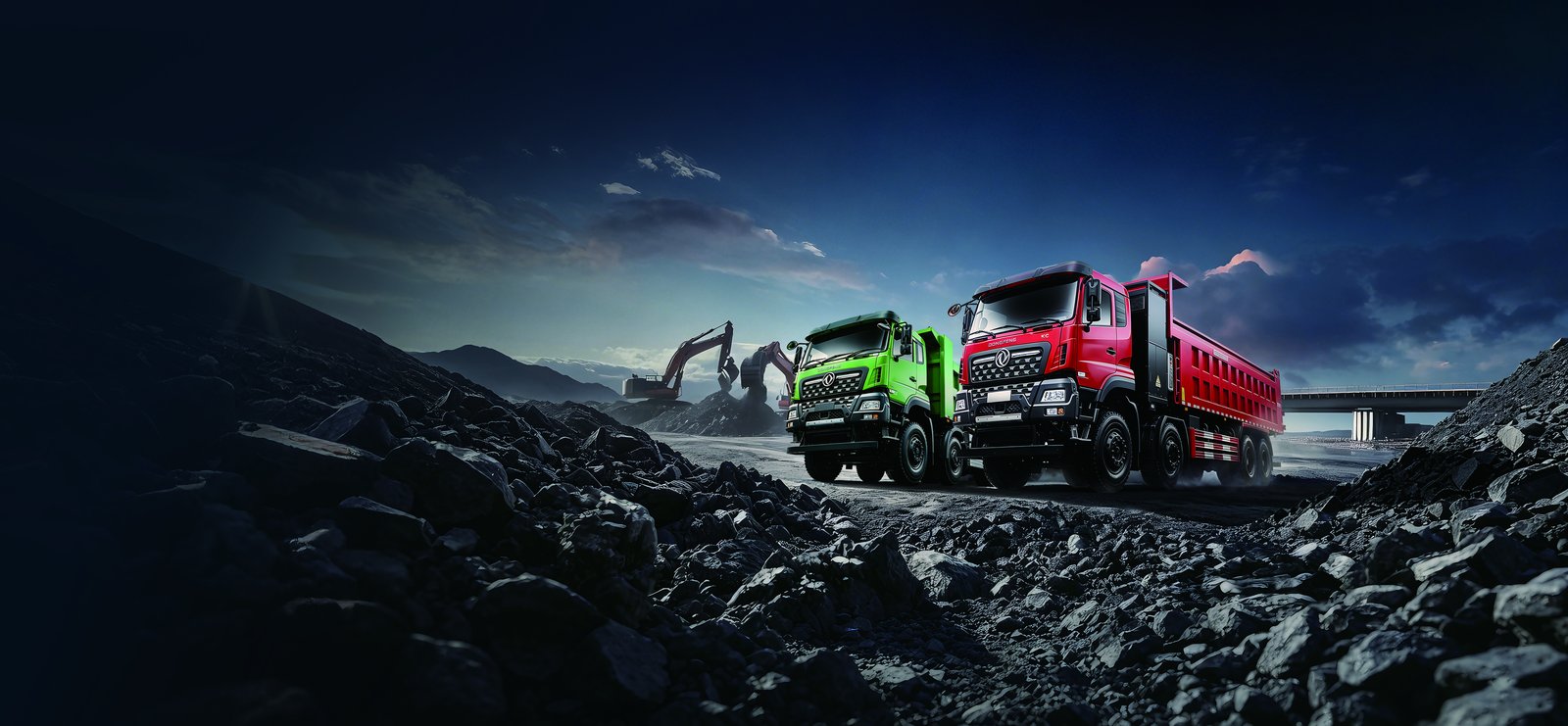
Central Asia is quietly becoming one of the most interesting EV truck markets on earth. Kazakhstan and Uzbekistan combine cheap electricity (much of it coal- and hydro-generated at USD 0.05–0.08/kWh for industrial users), heavy diesel dependence for road freight, extreme climates, and governments actively courting Chinese industrial investment. The Dongfeng KTH3 — our 8x4 long-box flagship cargo truck with CATL 400 kWh and 450 kW of pulling power — is the unit we most often specify for the region's Almaty–Tashkent–Shymkent freight triangle. This guide covers the complete import path from Xi'an to registration plate.
Why the KTH3 Fits Central Asian Duty
| Item | KTH3 specification | Regional relevance |
|---|
| Configuration | 8x4 rigid, long box up to 9.8 m | Maximum volume per trip on long intercity lanes |
| GVW | 31 t (38 t combination) | Matches regional loading practice |
| Battery | CATL LFP 400 kWh | 250 km+ laden legs between charging points |
| Motor | LvKong 450 kW | Passes and headwinds on steppe highways |
| Charging | GB/T dual-gun 600 A | Matches Chinese-standard chargers already installed region-wide |
| Indicative FOB | USD 105,000–135,000 | — |
Route One: Kazakhstan and the EAEU Frame
Kazakhstan imports under the Eurasian Economic Union customs code. Key practicalities for an EV truck importer:
- EAEU certification. Vehicles need TR CU (Technical Regulation of the Customs Union) conformity — for heavy trucks, TR CU 018/2011 on wheeled vehicle safety. We supply the factory technical file; local certification bodies convert it into the EAC mark via local representatives. Budget 4–8 weeks and USD 3,000–6,000 per vehicle type approval, amortised across the fleet.
- Import duty. Heavy trucks from China into the EAEU carry duty in the 10–15% band depending on classification; bilateral Kazakhstan–China agreements and evolving trade facilitation can reduce this. VAT (12% in Kazakhstan) applies on CIF + duty.
- Logistics. Rail via Khorgos/Altynkol or Dostyk is the workhorse route — a truck can be raked from Xi'an region to Almaty in 10–14 days. Road delivery under own power through Khorgos is possible for drives but battery vehicles usually ship as cargo on low loaders or in rail gondolas. Winter scheduling matters: allocate extra days December–February.
Route Two: Uzbekistan
Uzbekistan runs its own certification system with increasing appetite for electric transport — the country has aggressive EV adoption targets and preferential treatment in several categories:
- Vehicle conformity runs through UzStandard certification; we supply the full technical documentation pack including UN 38.3 for the CATL battery.
- Import channels favour established local importers with vehicle-import licences; we work with licensed partners in Tashkent who clear and register units.
- Uzbekistan's industrial electricity tariffs are among the region's lowest — the operating economics of an EV truck against diesel at USD 0.80–1.00/L are immediately positive.
The Winter Question — Answered Head-On
Buyers from Almaty to Almalyk ask the same question: how does an electric truck survive −25 °C? The honest engineering answer has three parts:
- Battery thermal management is mandatory, and ours is fitted as standard. The CATL pack's liquid heating circuit warms cells before charging and driving. Charging a frozen LFP pack directly damages it; the KTH3's battery management refuses charge currents until cell temperature rises to a safe window — the truck protects itself, and drivers learn to schedule preconditioning.
- Range drops in deep cold — realistically 15–25% at −20 °C and below, from cabin heating and battery conditioning loads. Spec the route on winter numbers, not brochure numbers.
- Depot discipline solves it. Trucks plugged in overnight in a heated or semi-heated depot start warm and stay efficient for the first hours of the shift. Every Central Asian deployment we quote includes this recommendation.
LFP chemistry itself is the strongest lithium-ion family for cold-temperature structural safety, and the 8-year/4,500-cycle warranty applies across the full temperature envelope the vehicles are sold into.
Landed Cost Stack (KTH3 to Almaty, indicative)
- FOB Xi'an region: USD 105,000–135,000
- Rail freight + insurance (railcar or container share): USD 3,000–5,500
- EAEU duty 10–15% + Kazakhstan VAT 12% on CIF+duty
- Certification (amortised) + clearance + local agent: USD 2,500–5,000
- Charger (one 180–350 kW DC per 3–4 trucks): USD 25,000–60,000 per site
Russian-language documentation, driver manuals and training materials are provided for the region, and our support engineers work Moscow-and-Almaty-compatible hours.
Deployment Recommendation
Start on the fixed intercity lanes — Almaty–Shymkent, Tashkent–Samarkand — where daily distances sit under 250 km and destination charging can be arranged at partner terminals. Kazakhstan's steppe corridors between cities are exactly the flat, predictable duty where the KTH3's 400 kWh pack covers the leg with margin. Build one charging point per lane endpoint, instrument the pilot for 90 days, then extend lane by lane. Fleets that follow this sequence in the region typically reach full-lane electrification within two procurement cycles.
Ready to electrify your fleet? Contact Shaanxi Fenghan Trading — authorized Dongfeng EV truck exporter. WhatsApp: +86 153 1943 1311 | Email: sales@fenghan-trade.com | dongfengevtrucks.com
🌐 Our Network: Fenghan Trade (SAGMOTO/SHACMAN Truck Export) · SAGMOTO Trucks (sagmoto-trucks.com)
← Back to Blog | Home