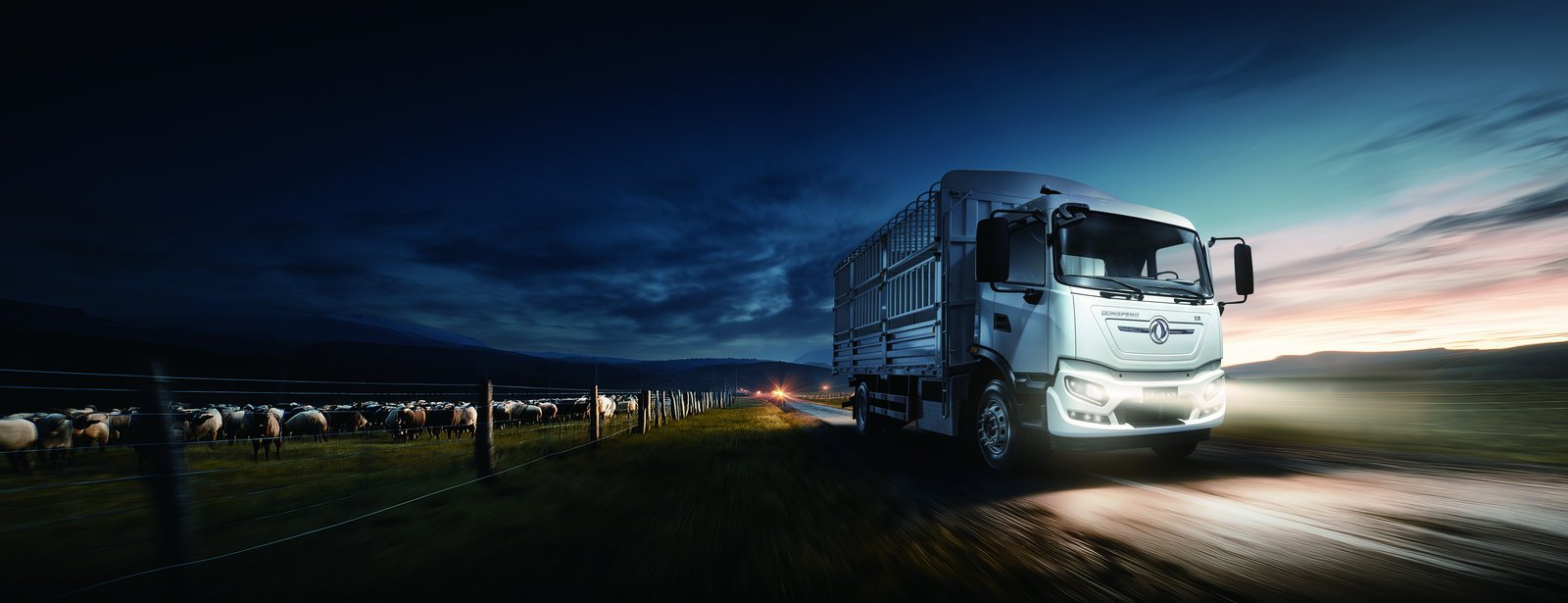
The question overseas fleet buyers ask most often is whether a Chinese electric truck can stand up to a premium European name, and for long-haul the comparison usually lands on Dongfeng EV against Volvo Electric. This verdict focuses on total cost of ownership for emerging markets, where the TE9L long-range electric tractor meets the Volvo FH Electric class, and where the Mexico electric truck market is a useful real-world laboratory because it blends US-spec expectations with import-price sensitivity.
The most obvious difference is sticker price. A Volvo FH Electric typically lands well above the Dongfeng TE9L on a like-for-like configuration once freight, import duty, and dealer margin are included. The TE9L's FOB band of $120k to $180k compares against a Volvo that often starts higher before options. For a fleet buying twenty tractors, that per-unit gap is millions in working capital, capital that can instead fund the charging depot that decides whether the trucks succeed at all.
| Factor | Dongfeng TE9L | Volvo Electric (typical) |
|---|---|---|
| FOB or landed price | $120k to $180k | Higher, premium band |
| Battery | 600 kWh CATL LFP | Proprietary NMC or LFP mix |
| Warranty | 8 yr / 4,500 cycles | Similar duration |
| Parts cost | Lower, China-sourced | Higher, dealer network |
| Service reach (emerging mkt) | Growing via exporter | Limited outside home regions |
Parts cost is where the gap widens over time. Premium European trucks carry premium parts, and in emerging markets those parts travel far and sit in few warehouses. Dongfeng's supply chain, centered on high-volume Chinese manufacturing, keeps spares affordable and broadly available through exporters like Fenghan Trading. For a Mexican fleet, the ability to source a suspension or thermal component locally or regionally, rather than waiting on a transatlantic order, is a direct uptime and cash-flow advantage.
Uptime depends less on the badge and more on how fast you can fix what breaks. Both trucks are electrically simple compared to diesel, which already lifts availability. The differentiator in emerging markets is service reach. A Volvo network is strong in its home regions but thin where emerging-market fleets actually operate. The Dongfeng route leans on an exporter-supported parts pipeline and the fact that the drivetrain shares components across the wider EV range, simplifying inventory.
Model a five-year horizon and the picture clarifies. Lower purchase price frees capital for chargers. Lower parts cost and faster supply cut downtime cost. The CATL LFP 8-year or 4,500-cycle warranty on the TE9L bounds the battery risk that worries many buyers. Over five years, the Dongfeng typically wins on total cost of ownership in emerging markets by a clear margin, provided the operator has charging and parts access sorted. Volvo wins on brand assurance and deepest home-region support where that is available.
The Mexico electric truck market illustrates the trade well. Cross-border and inter-city freight demands long range, which both the TE9L and Volvo supply, but the fleet operator cares about landed price, regional service, and the ability to scale quickly. The TE9L long-range electric tractor meets the range need with a 600 kWh pack and a 280 to 350 km realistic range, while leaving budget for the infrastructure that makes the range usable.
To be fair, Volvo remains the stronger choice where its service network is dense and the brand requirement is contractual, such as certain multinational dedicated contracts. The honest recommendation is to score each lane: if Volvo's local support and brand cover a specific high-value contract, use it there; for the bulk of emerging-market volume work, the TE9L's TCO case is hard to beat.
The weak point of any premium electric truck is residual value uncertainty, because the used market for high-end EVs is still thin outside home regions. The Dongfeng TE9L benefits from high volume and a broad emerging-market buyer base, which supports remarketing at year five. Fleets should negotiate a guaranteed buyback or a lease that caps residual risk, turning an unknown into a known line that the TCO model can absorb cleanly.
Drivers accept the TE9L quickly: the torque, the quiet, and the smoothness sell themselves, and the 600 kWh pack means range anxiety is rare on corridor work. Training focuses on energy display use and regenerative driving, the same half-day as any electric truck. Where Volvo has an edge is brand familiarity for drivers coming from a Volvo diesel fleet, but that gap closes within a week of operation and should not drive the buying decision.
Long-haul electric trucks live or die by charging access. In emerging markets the public network is sparse, so the fleet that wins is the one that builds its own corridor chargers. The TE9L's 280 to 350 km range means fewer sites than a shorter-range truck would need, lowering the infrastructure burden. Pair the purchase with a charger plan mapped to the top lanes, and the range advantage becomes usable rather than theoretical.
A proper five-year model lines up purchase, energy, maintenance, parts, downtime, and residual for both trucks on the same duty. On emerging-market duty the Dongfeng typically shows a lower all-in cost because the purchase and parts gaps compound every year. Volvo's case rests on contract brand requirements and deep local support, which are real but narrow. For the bulk of volume freight, the TE9L's TCO lead is the deciding factor.
Choose the TE9L for general emerging-market volume work where price, parts, and range dominate. Choose Volvo where a specific contract demands the badge or where its service network is genuinely dense on your exact lanes. Most fleets find the TE9L covers the majority and Volvo covers a minority, and running that split honestly beats forcing one name onto every route.
The 8-year or 4,500-cycle CATL LFP warranty on the TE9L removes the battery risk that inflates electric-truck finance rates elsewhere. Present that warranty with the route plan to the lender and the asset prices like a known quantity. Volvo offers a comparable duration, so on this axis the two are close; the deciding variables remain price, parts, and support reach, where the Dongfeng lead holds.
As the fleet grows, the Dongfeng's broad parts pool and exporter support scale better than a thin premium network. A twenty-truck TE9L fleet draws on one supply line and one workshop skill set, whereas a mixed premium fleet multiplies inventory and training. For emerging-market operators planning to scale, that operational simplicity is itself a TCO advantage that compounds with fleet size.
The five-year verdict for most emerging-market fleets is that the Dongfeng EV truck delivers the same operational simplicity and a lower total cost, with the Mexico electric truck market showing the pattern repeatably. The TE9L is not a compromise; on a balanced TCO scorecard it is often the rational winner, and the gap only widens as fleet scale grows and charging matures.
Ready to electrify your fleet? Contact Shaanxi Fenghan Trading — authorized Dongfeng EV truck exporter. WhatsApp: +86 153 1943 1311 | Email: sales@fenghan-trade.com | dongfengevtrucks.com
🌐 Our Network: Fenghan Trade (SAGMOTO/SHACMAN Truck Export) · heavy duty trucks export China