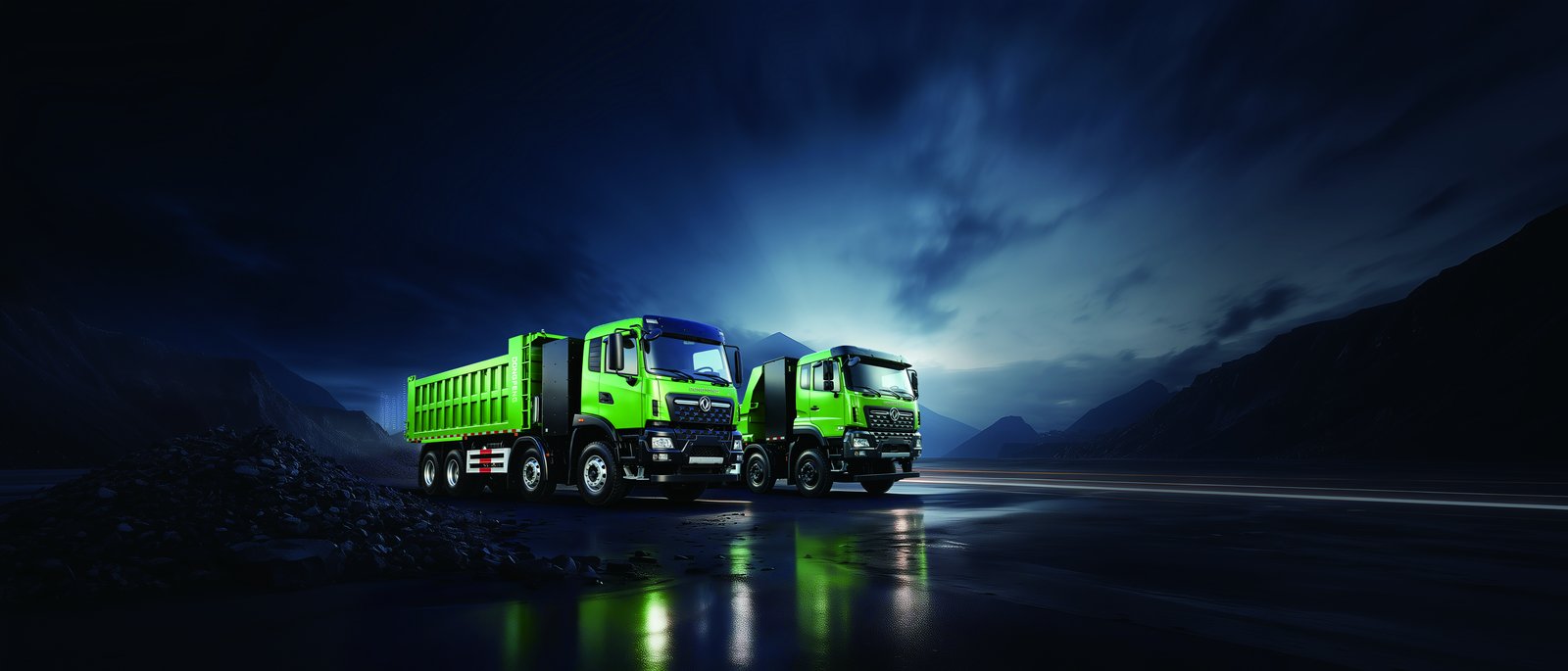
Quick answer: Yes, an electric truck costs 10-20% more to insure than a diesel truck today, driven by higher battery pack valuations and limited underwriter loss data. The gap is closing as telematics safety discounts, eight-year battery warranties and lower fire and rollover frequencies cut actual loss ratios for fleet operators buying coverage.
For a comparable 18-tonne rigid delivery truck, fleet operators in Europe and Africa currently see commercial motor premiums on an electric truck running roughly 10% to 20% above an equivalent diesel unit. On a vehicle with a declared value of $90,000, that difference is about $450 to $900 per year in base premium before any telematics or no-claims discount. The single largest driver is the battery pack: a 336 kWh CATL LFP pack on the KT5M electric cargo truck carries a replacement valuation near $28,000, and underwriters price the theft, fire and collision exposure of that component separately from the chassis.
The table below shows a representative premium build-up for three common Dongfeng EV configurations against a diesel baseline of the same payload class. Figures are annual commercial fleet premiums for a single vehicle with a $1,000 deductible and a clean loss history, quoted before any telematics credit is applied by the underwriter.
| Model | Declared value | Battery | Diesel baseline premium | EV premium | Delta |
|---|---|---|---|---|---|
| KT5M cargo 336 kWh | $90,000 | 336 kWh LFP | $2,400 | $2,760 | +15% |
| TZ8J mixer 350 kWh | $135,000 | 350 kWh LFP | $3,600 | $4,140 | +15% |
| TE8L tractor 422 kWh | $125,000 | 422 kWh LFP | $3,300 | $3,960 | +20% |
Three structural factors explain why an electric truck sits above diesel on the rate sheet. First, repair data is thin. Most global underwriters have decades of diesel collision and mechanical failure statistics but only a few years of high-volume EV claims, so they apply a conservative loading until their own loss curves mature. Second, the high-voltage system changes repair economics: a damaged 300 kW LvKong motor or a punctured pack requires trained technicians and often a factory-approved repair centre rather than a local bodyshop, lifting labour and courtesy-vehicle costs. Third, total-loss thresholds are different because the battery is a large share of vehicle value.
The counterweight is safety. Battery-electric trucks have fewer moving parts, no flammable fuel tank and a low centre of gravity from the floor-mounted pack. Real-world fleet data shows meaningful reductions in rollover and fire frequency, and regenerative braking cuts brake-wear incidents. Insurers that receive telematics feeds increasingly recognise these patterns and begin to shed the conservative loading.
Operators can recover most of the premium gap through structured risk-management programmes. The options below are the ones most commonly accepted by commercial fleet underwriters when a quotation is built for ten or more units:
Usually not as a standalone policy, but the pack is the dominant line item inside the comprehensive section. Underwriters segment the cover so that collision, theft and fire each attach to the battery valuation, and some carriers now offer a separate high-voltage component endorsement with a lower deductible for the pack alone. For the Kenya electric truck market and other African importers, this matters because local repair capacity for high-voltage packs is limited, so a lower pack deductible plus a regional spare-pack agreement is worth negotiating before delivery.
When a fleet submits a quotation for ten or more Dongfeng units, underwriters weigh declared value, operating radius, cargo type and depot security. A closed-yard municipal sweeper running 120 km per day presents far lower third-party exposure than a cross-border tractor, and the rate reflects that. Providing a written charging-safety standard, driver training records and a telematics contract at binding time is the fastest way to move from the +20% default band toward the +10% floor, and it signals to the underwriter that the operator controls its own risk.
Markets with mature EV bus and passenger-car fleets are normalizing first because underwriters already hold local loss data. The Kenya electric truck market is an interesting case: matatus and e-buses have built several years of telematics-backed claims history, and commercial truck products are beginning to inherit those rating models. Importers who present Kenyan-operated telematics evidence at renewal typically see the diesel gap shrink year over year as the local book of business proves itself.
A useful quote separates the chassis, the battery pack and the third-party liability lines so the buyer can see exactly where the +10% to +20% sits. Ask the underwriter to show the pack valuation, the deductible options for the high-voltage component and any telematics credit already applied. Comparing two quotes on total cost of risk rather than headline premium reveals that the KT5M electric cargo truck often lands within 8% of diesel once the warranty and safety credits are booked, even before the energy saving is counted in the operating case.
Premium is only one line in the total cost of risk. An electric truck removes diesel fuel volatility, cuts scheduled maintenance by roughly 40% against a diesel equivalent and extends brake life through regen. For the KT5M specifically, replacing a diesel 18-tonner with the KT5M electric cargo truck can offset the insurance delta within the first 18 to 24 months of operation once energy and maintenance savings are booked. Buyers should request a total-cost-of-risk comparison, not just a premium quote, before committing a fleet order, and they should revisit the rating at each renewal as local EV loss data accumulates.
Yes, electric trucks cost 10-20% more to insure than diesel today because a 336 kWh battery pack adds about $28,000 of declared value that underwriters rate separately. The gap narrows to roughly 10% once telematics discounts and the 8-year battery warranty are applied.
The battery pack is the biggest cost driver because it represents about 30% of vehicle value and carries a $20,000-$30,000 replacement exposure that insurers segment into collision, theft and fire cover. A 350 kWh mixer pack adds roughly $15-$20 per month to a commercial premium.
Yes, telematics cuts EV truck premiums by 5-12% once 90 days of clean driver-score data are shared with the underwriter. Fleets running 200 km per day on the KT5M typically reach the full 12% discount within two quarters of monitored operation.
EV and diesel premiums equalize within 3-5 years of local telematics data, as seen in bus-heavy regions where the gap fell from +18% to +6% in four years. Kenya and Morocco are tracking the same curve as their e-bus fleets mature.
No, fire risks are lower for electric trucks because there is no diesel fuel tank and regen braking reduces brake-fire incidents, cutting thermal events by an estimated 40% versus diesel. Insurers therefore grant a 2-4% fire-prevention discount for certified depot charging.
Ready to electrify your fleet? Contact Shaanxi Fenghan Trading — authorized Dongfeng EV truck exporter. WhatsApp: +86 153 1943 1311 | Email: sales@fenghan-trade.com | dongfengevtrucks.com
🌐 Our Network: Fenghan Trade (SAGMOTO/SHACMAN Truck Export) · heavy duty trucks export China