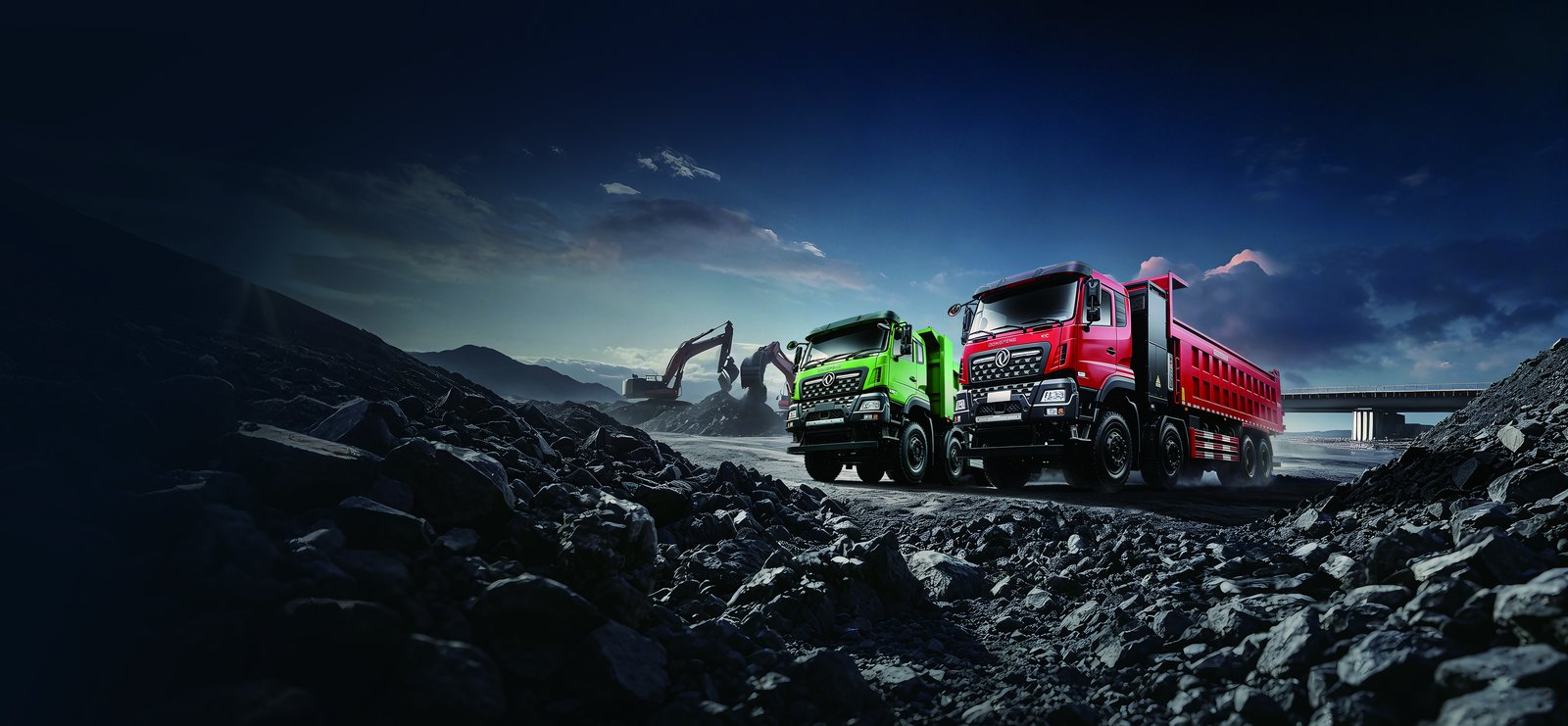
Senegal is in the middle of the biggest infrastructure build in its history. Diamniadio — the new urban pole between Dakar and the airport — keeps expanding; the Dakar Regional Express Train corridor reshaped mobility; TER extensions, industrial parks, port works at Ndayane, and thousands of housing units across Dakar, Rufisque, and Thiès all consume aggregates, sand, and laterite by the million of tonnes. Every tonne moves by dump truck on hauls of 20–80 km through hot, salty, congested coastal conditions. That is precisely the duty the TZ5E electric dump truck was engineered for, and it makes Senegal one of West Africa's most natural first markets for an EV truck fleet. This guide sets out the machine, the money, and the import mechanics — building on our broader West African market analysis.
Senegal imports all of its fuel. Diesel at the pump runs above USD 1.20/L, and the government's subsidy reforms have pushed prices toward import-parity — exactly the macro shift that flips commercial-vehicle economics toward electricity. Meanwhile Senegal's power mix is changing fast: gas-fired capacity from the Greater Tortue field and growing solar plants are stabilising the grid, and industrial tariffs are well below the per-kilometre cost of diesel on equivalent energy.
For a 6×4 dump truck hauling aggregates from the Diass quarries to batching plants in Diamniadio or Rufisque — a 30–50 km round trip repeated 6–10 times a day — the energy arithmetic looks like this:
| Daily cost line (250 km, loaded) | Diesel 6×4 tipper | TZ5E electric |
|---|---|---|
| Fuel / energy | USD 100–120 | USD 30–42 |
| AdBlue, oil, filters | USD 12–18 | USD 2–3 |
| Brake & clutch wear | USD 6–10 | USD 2–3 (regen) |
| Engine overhaul reserve | USD 10–15 | 0 |
| Daily total | USD 128–163 | USD 34–48 |
Across a 24-day month, that is USD 2,300–2,800 of operating savings per truck. Set against a TZ5E FOB price in the USD 95,000–130,000 range (configuration-dependent), a fleet running quarry duty pays back the electric premium in roughly 24–36 months — after which each truck holds a structural 55–70% cost advantage per kilometre over diesel.
The TZ5E 6×4 electric dump truck pairs a ~400 kWh CATL LFP pack with a LvKong electric drive rated up to 360 kW — full torque from standstill, which matters on the soft laterite ramps of Senegalese quarry faces and the saturated sand hauls of the coast. LFP chemistry is the right choice for this climate: it tolerates 45°C ambient heat far better than NMC alternatives, holds cycle life at high state of charge, and is thermally stable in a way that matters for trucks parked in the open at Ndayane or Bargny. The 8-year, 4,500-cycle cell warranty is the longest risk umbrella in the segment.
Real-world range on loaded aggregate duty runs 180–220 km — a full two-shift day on the Diamniadio circuit — and the pack recharges 20–80% in about an hour on a 240 kW DC charger. Fleets running longer hauls, such as the Thiès–Dakar corridor, add a mid-day top-up during the driver changeover.
Senegal is a UEMOA member applying the common external tariff; electric vehicles have attracted preferential duty discussion in the region, and classification of the battery-inclusive value materially affects landed cost, so a Dakar customs broker is essential at contract stage. Shipping from China runs 32–40 days to the Port of Dakar, RoRo being simplest for complete units. French-language documentation — facture commerciale, certificat de conformité, fiche technique — is expected, and Fenghan supplies these as standard together with pre-shipment inspection coordination.
After-sales is the second pillar of a Senegalese EV programme. Fenghan supports fleet customers with a parts pipeline, remote diagnostics, and commissioning visits that include high-voltage safety training for the workshop team. Local fleet operators should plan a first-line service bay — insulated tools, HV gloves, lockout kit — from day one; the training requirement is modest but non-negotiable.
The recommended entry is three units: two TZ5E on the highest-density quarry circuit and one on the urban concrete run, all sharing a single 240 kW charger plus a solar canopy at the depot. Six months of shift data usually settles the boardroom debate — operators then extend into tractor units for cement and clinker distribution and box trucks for FMCG, building an all-electric logistics cluster around Diamniadio. Senegal's construction decade is just beginning; the haulers who lock in electric economics now will price every future bid with a margin their diesel competitors cannot follow.
The single most common sequencing error in first-time electric fleets is ordering the truck and thinking about the charger afterwards. In Senegal, the correction is easy to describe and worth its own section: the grid application goes in the day the truck order is signed. A 240 kW DC charger plus a future-proof second position at a Diamniadio or Rufisque depot is a 400–630 kVA service — a routine industrial connection in Senegal's grid, but one with a lead time measured in weeks to months, and the vessel always beats the connection unless someone starts the paperwork early. The successful Senegalese deployments we have structured all share one trait: the depot's switchboard was energised before the trucks were built.
The depot layout follows the duty cycle. Quarries feeding the Diamniadio circuit mean trucks home every 10–14 hours to the same yard, so charging positions sit along the wall the tippers back against, one stall per two trucks on overnight AC plus a single DC stall for the midday rotation. Solar belongs in the plan from the start: Senegal's irradiance is among the best in West Africa, a 300 kWp canopy over the charging row offsets 40–60% of annual charging energy, and every panel's output is worth more here than in almost any market we serve because of the diesel price it displaces.
A final Senegal-specific note on dust. Harmattan season loads every air filtration system in the region, and while the electric drivetrain is sealed — no air filter, no turbo to choke — the charger's cooling and the truck's radiator loops still want monthly inspection in January and February. It is a twenty-minute task, and fleets that put it on the calendar (rather than hoping) see zero seasonal effect on charge times. The diesel trucks in the same yard spend the same months in the workshop for exactly the same weather.
Ready to electrify your fleet? Contact Shaanxi Fenghan Trading — authorized Dongfeng EV truck exporter. WhatsApp: +86 153 1943 1311 | Email: sales@fenghan-trade.com | dongfengevtrucks.com
🌐 Our Network: Fenghan Trade (SAGMOTO/SHACMAN Truck Export) · heavy duty mining dump truck 6x4 8x4