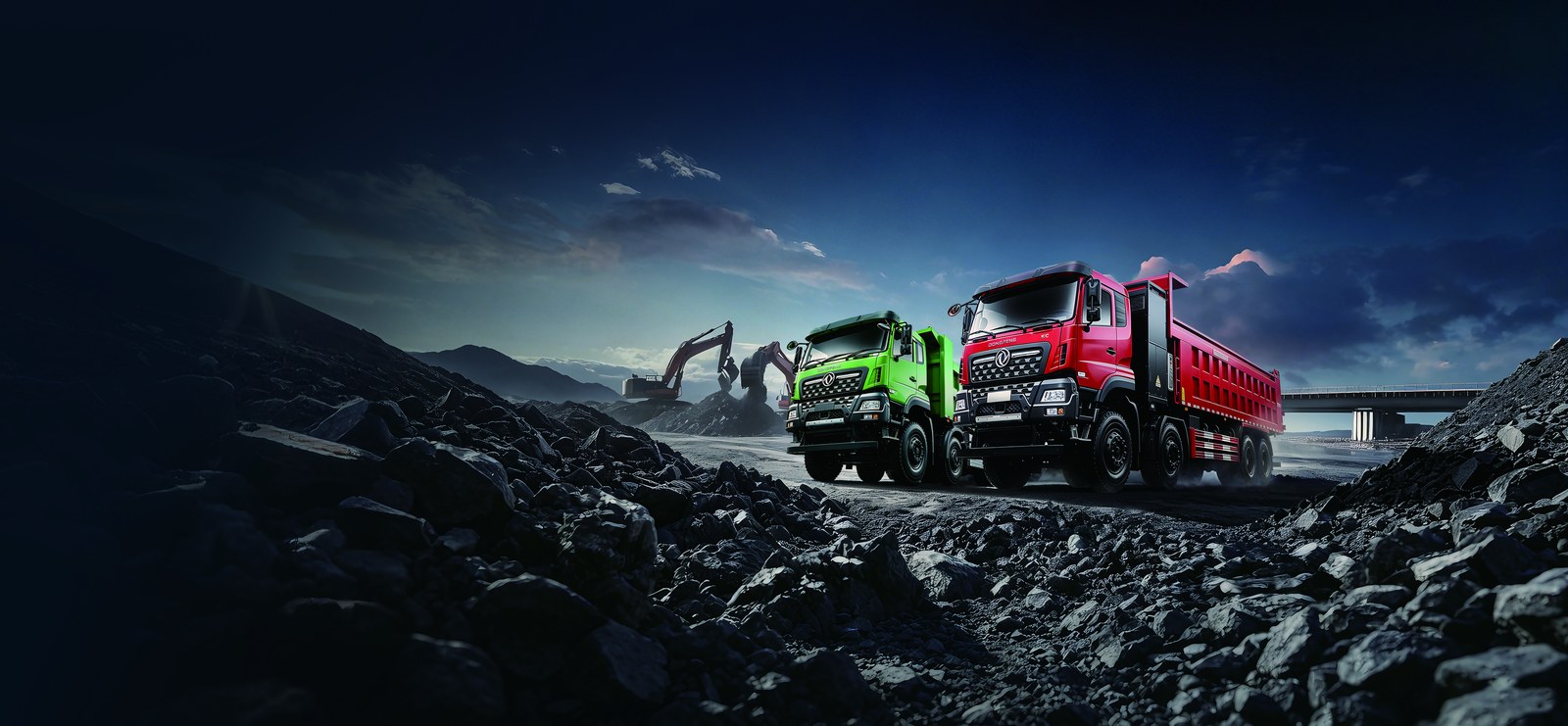
Colombia’s Coffee Cultural Landscape is a UNESCO treasure and one of the world’s great specialty-coffee origins, but its geography is brutal for freight. The Coffee Triangle — Manizales, Armenia and Pereira — sits in the Andean cordillera, and the road to the Pacific port of Buenaventura climbs, falls and climbs again through grades that punish conventional diesel. For cooperatives and exporters, a heavy electric truck with strong regenerative braking turns those descents into free energy. The KTH3 electric cargo truck is built for exactly this mission. Our Colombia electric truck market guide covers the national context.
The dominant export path carries parchment and green coffee from the triangle down to Buenaventura, Colombia’s largest Pacific port and the gateway to Asia and the US west coast. The challenge is not distance — it is relief. From Pereira to Buenaventura is roughly 230–280 km, but it crosses the Western Cordillera with sustained 6–10% grades. A diesel truck burns fuel fighting gravity uphill and wastes it as heat through the brakes downhill. An electric truck does the opposite on the descent, and because the route is a fixed daily loop, the energy balance is predictable enough to plan charging precisely.
This is where the KTH3 earns its keep. On the long descents toward the Pacific, the LvKong permanent-magnet motor runs as a generator, recovering kinetic energy back into the 282–350 kWh CATL LFP pack. On a 280 km triangle-to-port run with major descents, regenerative recovery can return 15–25% of the energy consumed on the climb — effectively a free partial recharge delivered by the mountain. For co-ops running the same route daily, that recovered energy is pure margin, and it also means the truck reaches the port with far more charge than a simple distance calculation would suggest.
| Specification | KTH3 value |
|---|---|
| Battery | CATL LFP 282–350 kWh |
| Motor | LvKong PMSM 282–350 kW |
| GCW | 49 t |
| Real-world range | 280–350 km (with regen) |
| DC charge | 20–80% in 35–60 min |
| Battery warranty | 8 years / 4,500 cycles to 70% SOH |
| FOB China price | US$88,000–105,000 |
Colombian coffee moves through cooperatives (cooperativas) that pool harvest from hundreds of small growers. Shared ownership makes the per-km saving of an electric truck especially powerful, because the cooperative absorbs both the fuel bill and the maintenance bill collectively. Colombian diesel for transport runs near US$0.95–1.05/litre; cooperative-scale electricity tariffs near the triangle and at Buenaventura are near US$0.12–0.15/kWh.
| Cost element | Diesel 30t rigid | KTH3 EV truck |
|---|---|---|
| Energy / km | 0.34 L × US$1.00 = US$0.34 | 1.3 kWh × US$0.14 = US$0.18 |
| Maintenance / km | US$0.12 | US$0.05 |
| Total operating / km | US$0.46 | US$0.23 |
| Annual saving at 55,000 km | — | US$12,650 |
Against the US$88,000–105,000 FOB price, the cooperative recovers the EV premium in roughly four to five years, and the regen bonus on the mountain grades accelerates that on every descent-heavy trip. Because the cooperative already aggregates capital, financing the upfront premium is straightforward compared with an independent transporter.
Running an electric heavy truck over Andean passes is different from driving diesel, and the savings depend on discipline. We train Colombian drivers on regenerative descent technique: selecting the correct retardation level, reading the live state-of-charge gauge, and avoiding hard friction braking so the motor captures maximum energy. Drivers also learn to manage the climb efficiently — steady power rather than surges — so the pack arrives at the port with the expected reserve. The result is a truck that, on the mountain leg, is both safer and cheaper than its diesel counterpart.
The simplest deployment places a 120–180 kW DC charger at the cooperative’s dry-mill and another at the Buenaventura logistics yard. Trucks arrive at the port with a depleted pack from the climb, recharge during the loading window (20–80% in 35–60 minutes), and return to the triangle partly or fully charged — the descents doing the rest. Battery swap is available for operations needing continuous rotation, completing a pack exchange in 5–6 minutes.
Cooperatives already aggregate risk and capital, so the upfront EV premium is easier to finance collectively than for an individual transporter. They also carry the sustainability story that specialty roasters in Europe, North America and Asia increasingly demand: Colombian coffee whose transport leg is verifiably low-carbon. The KTH3 makes that claim credible and measurable, and the regen advantage on the mountain grades is a story cooperatives can tell their member growers with pride.
The triangle-to-Buenaventura run is predictable but unforgiving, so we help cooperatives plan it precisely. Using the loaded weight, the grade profile and the regen recovery estimate, we model the state of charge at each waypoint and confirm a comfortable margin at the port. Drivers carry a simple escalation procedure for rare faults, and our Colombian service partners can reach the main corridor within a few hours. Because the KTH3 charges at the cooperative mill and at Buenaventura, the truck is rarely far from a known charger, and the battery-swap option provides a backup for any unit that cannot wait a charging window. This planning discipline is what turns a mountain-grade electric trial from a risk into a routine, and it is why the first Colombian coffee cooperatives to adopt the KTH3 report confidence rather than anxiety about the climb.
Buenaventura is one of the busiest and most congested ports on the Pacific, and a diesel truck can idle for hours in the container queue, burning fuel and accruing engine hours with no payload moving. The KTH3 turns that dead time into a non-event: an electric driveline draws almost nothing while waiting, and the driver can run the cab climate and brake-retardation checks without the engine turning. For a cooperative running several triangle-to-port trips a week, the eliminated idle alone is a measurable line item — often 8–12% of total diesel use on this corridor is standstill burn that simply disappears. Combined with the regen recovery on the descent, the round trip to Buenaventura can net a lower effective energy cost than the distance suggests. We plan the charge stop at the port yard precisely so the truck leaves Buenaventura recharged for the climb home, converting the worst part of the route into a routine top-up rather than a fuel-cost surprise.
Shaanxi Fenghan Trading delivers the KTH3 electric cargo truck to Colombian operators with Spanish manuals, L/C payment terms, and support for mountain-grade commissioning. Our Colombia EV truck market guide details import and homologation. For the Coffee Triangle, the KTH3 is not just cleaner — on these roads it is simply the smarter truck.
Taken together, the grade-climbing torque, the regen recovery on the descent, and the cooperative ownership model make the KTH3 a natural fit for Andean coffee freight. The route is hard, but it is also predictable, and that predictability is exactly what lets an electric truck replace diesel without drama or guesswork on the long climb to the Pacific.
Ready to electrify your fleet? Contact Shaanxi Fenghan Trading — authorized Dongfeng EV truck exporter. WhatsApp: +86 153 1943 1311 | Email: sales@fenghan-trade.com | dongfengevtrucks.com
🌐 Our Network: Fenghan Trade (SAGMOTO/SHACMAN Truck Export) · SAGMOTO cargo truck flatbed box stake