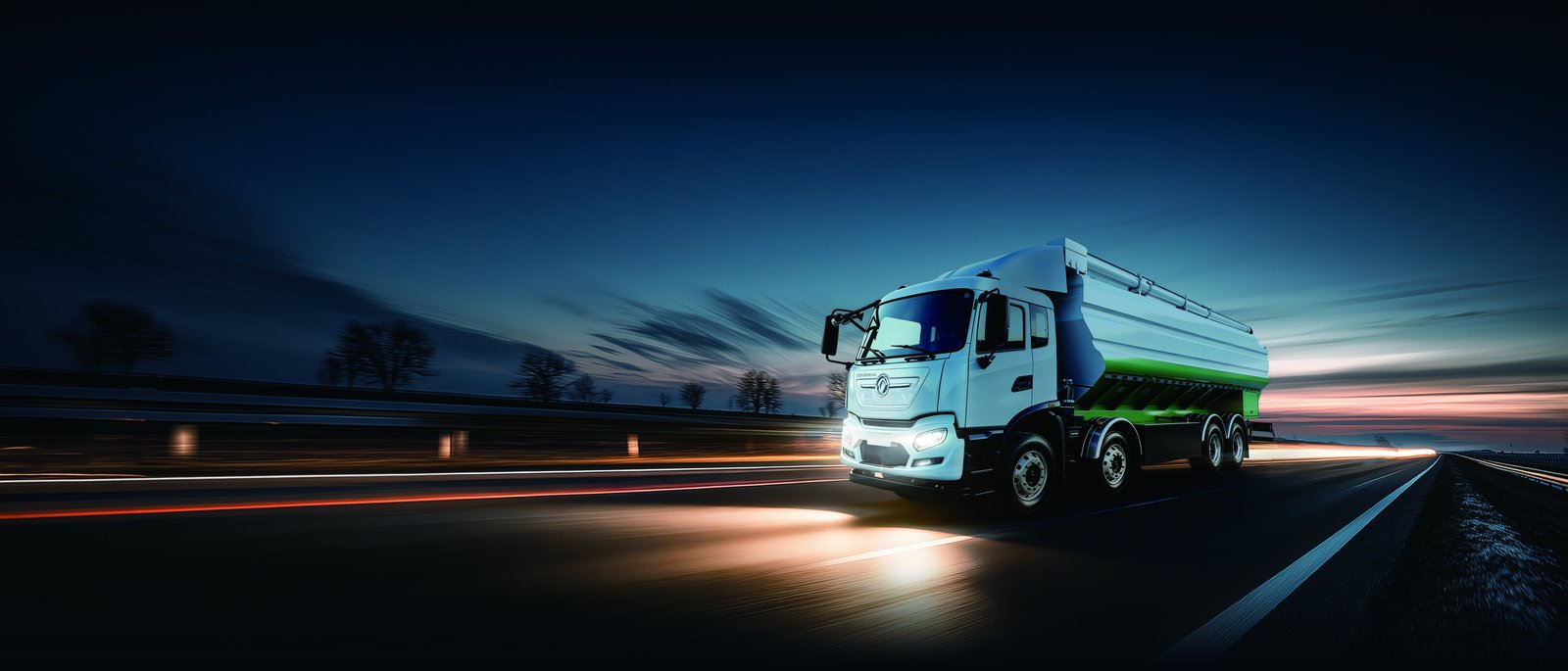
Cebu is the Philippines' logistics heart outside Metro Manila — a single island that anchors the distribution of the entire Visayas and much of northern Mindanao. The Cebu-based operator runs a distinctive geography: a dense city core around Cebu City and Mandaue, industrial zones from Lapu-Lapu to Liloan, the Cebu International Port and the sprawling CFI depot complex, and the nautical highway — the ro-ro network that stitches Cebu to Bohol, Negros, Leyte and beyond. Distances are short, loops are fixed, and the island's road network keeps daily duty inside ranges that electric trucks cover with ease.
This is a KT5J electric delivery truck and KT5L electric cargo truck market. Both ride on CATL 262 kWh LFP packs with 18 t-class GVW chassis, both are LHD as Philippine standards require, and both slot directly into the vehicle class that Cebu's distributors, wholesalers and e-commerce operators already run in diesel form. The national policy picture — EVIDA incentives and the Electric Vehicle Industry Development Act's fleet requirements — is covered in our Philippines market guide; this article is the island playbook.
Cebu's freight day is dominated by four patterns:
Every one of these patterns is fixed-route with a known nightly return point. That is the single most important precondition for profitable fleet electrification, and Cebu has it in full.
| Parameter | KT5J | KT5L |
|---|---|---|
| Battery | CATL 262 kWh LFP | CATL 262 kWh LFP |
| GVW | 18 t | 18 t |
| Rated range | ~300 km | ~300 km |
| Body options | Box, curtain, stake, reefer-ready | Box, refrigerated, high-cube |
| Best Cebu duty | City multi-drop, e-commerce, port drayage | Provincial runs, cold chain, FMCG trunk |
| Indicative FOB | USD 45,000–55,000 | USD 46,000–58,000 |
In practice the two vehicles share a platform and the choice is about body and duty assignment rather than capability: KT5J units wear box and curtain bodies for the drop-count-heavy city work, while KT5L units take reefer and high-cube bodies for the island trunk runs where cold chain and volume lead the specification.
Cebu's industrial power supply through the Visayas grid is comparatively stable, with generation increasingly geothermal and renewable. Commercial tariffs sit around PHP 10–13/kWh (about USD 0.18–0.23), among the higher rates in our markets — yet the diesel comparison still lands firmly in electric's favour because Philippine diesel is taxed heavily and retails near PHP 60–70 per litre.
The savings rate is lower than in African markets because of Philippine electricity prices, which is why we specify solar augmentation aggressively in Cebu: a 50–80 kWp depot array charging through the midday hours cuts effective energy cost by 25–35% and pulls payback closer to 2.5 years.
Yes — and the nautical highway is a natural electric-truck environment. Ro-ro sailing is dead time for a diesel truck's depreciation and a free charging opportunity for an electric one: longer sailings (Cebu–Ormoc at five hours, Cebu–Manila overnight) allow port-side or onboard opportunity charging where terminals offer it, and the short island distribution legs at each end sit comfortably within a 262 kWh pack. Our export documentation package for Philippine-bound units includes the IMDG-compliant battery declarations that ro-ro operators require, and we pre-coordinate state-of-charge paperwork with the shipping lines.
A first-phase Cebu fleet of ten trucks needs:
Budget USD 150,000–200,000 including civil works. Charging the fleet during off-peak windows whenever the tariff structure rewards it — and the Visayas grid's time-of-use rates increasingly do — completes the cost stack.
Cebu-bound units ship from China in 14–20 days, the shortest transit in our network, which simplifies logistics considerably. Philippine import treatment of EVs under EVIDA includes duty exemptions on completely knocked-down and fully built electric vehicle imports and favourable excise treatment; registration through LTO requires the standard Philippine documentation set, which we prepare with every consignment — including the Import Commodity Clearance process and Bureau of Customs entry. Driver training materials in English and Tagalog, and a spares kit sized to fleet volume, complete the handover.
Manila's congestion is famous but its freight geography is sprawling and its depot economics complicated by land cost. Cebu offers a compact, bounded test bed: one island, one dominant port, one metro distribution core, and a business community that has always had to be logistics-smart because it sits at the centre of an archipelago. A ten-truck KT5J/KT5L deployment in Cebu proves the full model — charging, driver adoption, maintenance economics, ro-ro operations — at a scale most Filipino distribution groups can fund from operating cash flow. And with EVIDA's corporate fleet electrification requirements now in force, the proof point has a compliance value that compounds.
Ready to electrify your fleet? Contact Shaanxi Fenghan Trading — authorized Dongfeng EV truck exporter. WhatsApp: +86 153 1943 1311 | Email: sales@fenghan-trade.com | dongfengevtrucks.com
🌐 Our Network: Fenghan Trade (SAGMOTO/SHACMAN Truck Export) · SAGMOTO cargo truck flatbed box stake