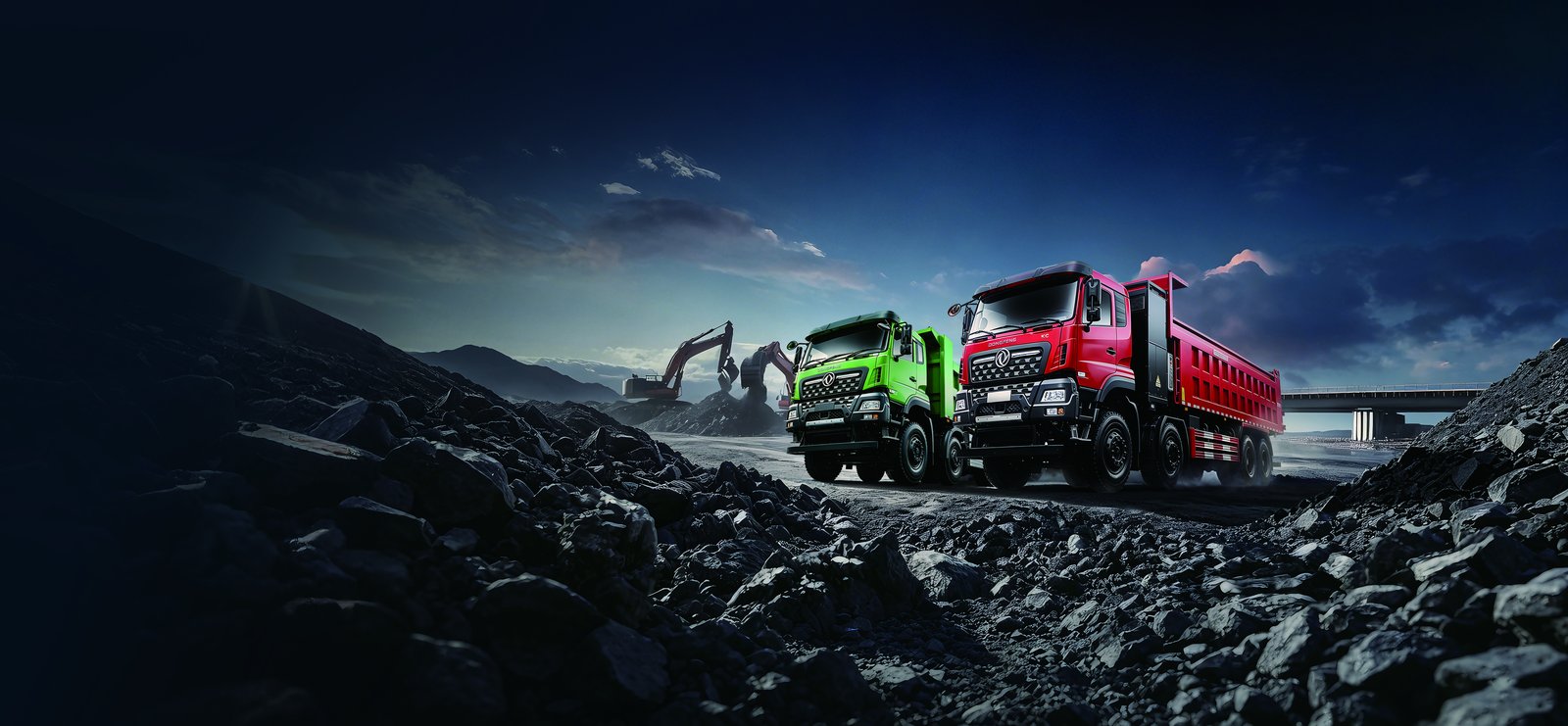
The Astana–Almaty corridor is Kazakhstan’s busiest trunk freight route: roughly 1,200 km of steppe, mountain pass and border-fed logistics linking the capital to the commercial south. For long-haul operators, the electric truck was until recently unthinkable on such distance — but the Dongfeng TE9L 6x4 long-haul tractor, with 300–350 km of loaded range and a 35–90 minute DC charge, turns the corridor into a planned, relay-style electric operation. This article lays out the charging plan, the TE9L specs, the TCO against diesel, and a deployment path for Kazakh fleet operators, linking them to the wider Central Asia market context.
A single-charge 1,200 km run is still beyond any tractor, but relay charging changes the maths. The corridor has predictable stops — Karaganda, Balkhash, and the Zhambyl depots — where a 350 kW DC post restores 20–80% during the mandatory rest and customs windows. Run the tractor as a relay: charge at each node, swap drivers, keep the freight moving. The flat steppe east of Astana and the graded climbs toward Almaty are well understood, so energy per km is forecastable and the charge plan is deterministic rather than hopeful. A relay also lets a single tractor serve far more tonne-km than a one-charge mindset would suggest.
The TE9L electric tractor is a 6x4 prime mover built for exactly this long-haul, loaded corridor duty, pairing a CATL LFP pack with a LvKong permanent-magnet motor.
| Parameter | TE9L Specification |
|---|---|
| Configuration | 6x4 long-haul tractor |
| Battery | CATL LFP, 424 – 500 kWh |
| Drive motor | LvKong permanent-magnet, 282 – 350 kW |
| Loaded range | 300 – 350 km |
| DC fast charge (20–80%) | 60 – 90 min |
| Battery warranty | 8 years / 4,500 cycles to 70% SOH |
| FOB price (China) | US$110,000 – 145,000 |
The 424–500 kWh LFP pack is sized for the 300–350 km leg between nodes with buffer; the 282–350 kW LvKong motor holds grade on the Almaty approach. LFP chemistry tolerates the deep discharge cycles long-haul demands and the continental temperature swing from −30 °C winters to +35 °C summers.
The right model is opportunity charging at the fixed nodes rather than one mega-hub. A 350 kW DC station at Karaganda, Balkhash and Zhambyl restores 20–80% during the rest and document window. Pair each with grid power and, where available, a container storage buffer so the marginal energy cost stays manageable. Stagger the relay so no tractor queues at a node during peak. Crucially, pre-condition the pack in winter: warming it before the charge event cuts the 20–80% window and protects cell life through the cold.
A 6x4 diesel tractor on the corridor burns ~36 l/100 km over ~120,000 km/year — 43,200 l. Kazakh diesel at ~US$0.65/l is ~US$28,080. The TE9L at ~1.5 kWh/km draws 180,000 kWh; at a depot tariff of US$0.12/kWh that is US$21,600. Energy saving ~US$6,480/year, plus ~US$4,000 maintenance (no engine, no DPF, regen brakes) — ~US$10,480 annual advantage per tractor. Against the FOB step from a diesel 6x4, payback lands inside 40–54 months on the corridor, faster where node solar and two-shift relay operation apply. The longer the annual km, the stronger the case.
One TE9L on the Astana–Karaganda leg, 300 km round trip, 200 duty days a year, drives 60,000 km and draws ~90,000 kWh. At depot grid US$0.14/kWh that is US$12,600; at node solar US$0.09/kWh it is US$8,100 — a US$4,500 annual energy saving on this single leg before maintenance. Scale to a relay fleet and the node-solar advantage funds the charger capex inside a few years. Add the ~US$4,000 per-tractor maintenance avoidance and the corridor-wide case is compelling, particularly for operators running two shifts where the tractor never sits idle.
Siting the corridor chargers is a grid-engineering task, not an afterthought. The Karaganda, Balkhash and Zhambyl nodes each need a 350 kW connection, and the lead time for that utility work is the gating item on the whole rollout, longer than the truck delivery. Engage the utility early, budget the transformer and cabling as part of the vehicle order, and where the HV connection lags, deploy a containerised DC charger with local storage so the relay starts on schedule. Pairing each node with a modest solar-plus-storage buffer also smooths the winter demand peak and protects the marginal energy cost that the TCO depends on.
The disciplined rollout is a pilot of three TE9L units on the Astana–Karaganda leg for 120 days, with kWh/km and relay-time telemetry, then an extension to Almaty once the node chargers are proven. Build the node chargers first — that capex gates the trial, not the tractors. Once the leg proves out, replicate node by node toward the south. Hold a spare motor and inverter at the Almaty workshop to keep availability above 95%. Train drivers on single-pedal control and SOC-aware routing before the first long run.
Kazakhstan is the logistics hinge of Central Asia, and the Kazakhstan electric truck market guide covers Almaty and Astana clearance, the conformity path, and corridor charging standards. For Kazakh operators, the TE9L is the EV truck that turns a 1,200 km trunk route into a planned,
The Astana–Almaty corridor sees −30 °C winters, and LFP chemistry handles the swing better than NMC, but the operator still needs a cold-climate routine. Pre-condition the pack while it is still on the charger so the first kilometres draw from a warm cell rather than a frozen one; a warm pack accepts charge faster and delivers more usable range, which protects the relay schedule when the node gap is at its tightest. Log pack temperature against ambient and against kWh/km so the next procurement is sized from real Kazakh data, not vendor claims from a milder climate.
Driver behaviour matters more in the cold. Coach the relay crews on smooth single-pedal control; abrupt acceleration wastes the heat the pack needs to retain, and aggressive regen on ice is its own hazard. Cabin heating should draw from the traction pack through a rated DC-DC rather than a separate burner, keeping one chemistry and one warranty across the vehicle. At the node, a container storage buffer charged from grid off-peak overnight lets the morning charge event start from a stored surplus, smoothing the winter energy cost.
The payoff is a corridor that runs year-round. Operators who treat winter as a planning variable — wider node spacing tolerance, pre-conditioning, and a telemetry loop — keep the TE9L utilisation high through the cold months, while those who discover the range drop on the first frost scramble for diesel back-up. Cold-climate discipline is the difference between a seasonal pilot and a permanent electric trunk route across Kazakhstan.
low-carbon relay. Shaanxi Fenghan Trading supplies the TE9L with a cold-climate build, node-charger engineering, and a corridor TCO model sized to your annual tonne-km.Ready to electrify your fleet? Contact Shaanxi Fenghan Trading — authorized Dongfeng EV truck exporter. WhatsApp: +86 153 1943 1311 | Email: sales@fenghan-trade.com | dongfengevtrucks.com
🌐 Our Network: Fenghan Trade (SAGMOTO/SHACMAN Truck Export) · 4x2 6x4 tractor truck prime mover