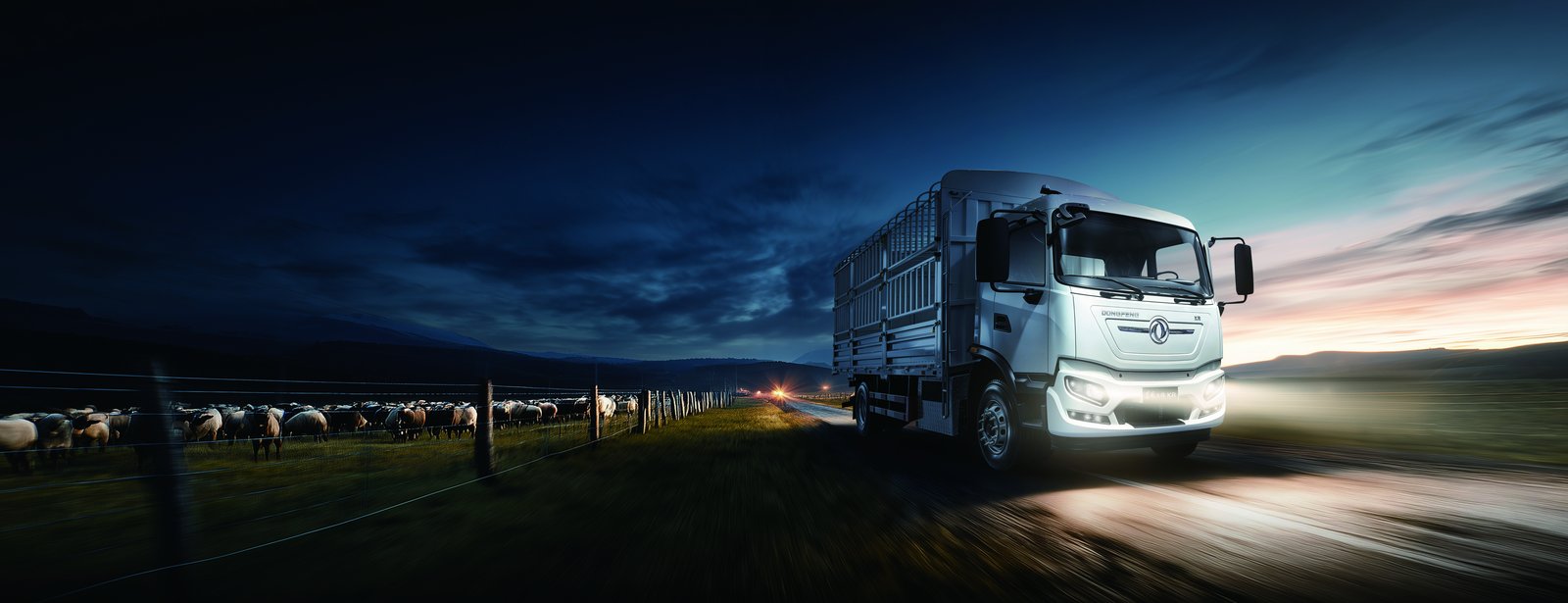
Quick answer: Yes — electric trucks cost 40–60% less to maintain than diesel trucks over an 8-year life. Regenerative braking makes brake pads last 2–3 times longer, and the sealed electric drivetrain removes engine oil, injectors, the DPF, turbo and clutch from the service schedule entirely. The only new line items are low-cost battery thermal and HV checks, which the 8-year / 4,500-cycle warranty already covers. Below is the per-km math and the honest caveats.
A diesel truck spends most of its workshop budget on the engine and aftertreatment it does not need for propulsion — it needs them because it burns fuel. An electric truck has no combustion engine, so that entire cost category disappears. The Dongfeng TZ3V electric dump truck (560–600 kWh CATL LFP pack, LvKong permanent-magnet motor 380–510 kW, 200–280 km real-world range) replaces roughly 2,000+ serviceable diesel components with a motor, a reduction gear and a battery. Fewer parts, fewer fluids, fewer failure modes — that is the whole answer in one sentence. The count of moving parts is not a trivia point; every deleted part is a part that cannot fail on a bench at 2 a.m., which is exactly when diesel drivetrain faults are most expensive.
Regenerative braking recovers kinetic energy into the pack and does most of the slowing, especially for a 40–60 tonne dump truck descending loaded from a quarry bench. The friction brakes barely engage, so pads and discs last 2–3 times longer. A diesel dump truck replaces pads every 60,000–90,000 km; a TZ3V typically runs 150,000–250,000 km between replacements. At mining duty that single change removes a recurring, labour-heavy service event and the disc-machining cost that goes with it. The brake saving is the most visible line on the maintenance ledger, but it is not the largest — the deleted engine service programme usually outweighs even the brake gain over a full life.
| Item | Diesel dump truck | Electric (TZ3V) |
|---|---|---|
| Engine / oil / filters | High, continuous | None |
| Injectors / turbo / DPF | Frequent failures | None |
| Brake pads / discs | Every 60–90k km | Every 150–250k km |
| Clutch / transmission | Wear item | Single-speed, minimal |
| Battery HV / thermal checks | n/a | Low-cost scheduled |
| Total per km (8 yr) | USD0.18–0.28 | USD0.09–0.14 |
Over 8 years and about 480,000 km, the difference is USD40,000–70,000 per truck — a 40–60% maintenance saving that flows straight to operating margin, independent of fuel or carbon policy. For a 30-truck fleet that is USD1.2m–2.1m of avoided cost over the ownership period — enough on its own to fund a meaningful share of the battery upgrade or the charging build-out.
None of these approaches the cost of the diesel items they replace, and the TZ3V’s 8-year, 4,500-cycle battery warranty to 70% SOH covers the pack’s health through the whole ownership period. The new items are also predictable and scheduled, which is the operational gift of electrification: downtime moves from reactive failures to planned windows.
In mining and construction, availability is everything, and the electric truck’s edge is precisely the systems diesel loses to. No turbo lag, no DPF regen stalls, no injector faults, no overheated aftertreatment on a hot bench — the sealed powertrain also shrugs off dust and shock loads better than an open engine bay. Fleets in South Africa running electric dump trucks report availability equal to or better than their diesel fleet once the depot charging routine (overnight charge, 35–60 min DC top-up to 80%, or battery swap in 5–6 min) is set. The TZ3V’s 560–600 kWh pack is large enough for a full shift on most quarry cycles. The shift-length match is what makes the truck a drop-in replacement rather than a re-engineering project for the mine’s dispatch system.
Maintenance saving is rarely the only reason to electrify, but it is the most certain. Fuel, carbon and noise benefits vary with policy and grid; the 40–60% lower upkeep is engineering, not subsidy, and it shows up from the first service interval. For a fleet running the TZ3V on 200–280 km daily dump cycles, the maintenance math alone shortens payback materially — and when you add diesel fuel inflation and the 8-year battery coverage, the electric dump truck is the lower-risk asset across its life. The fleets that win are the ones that model this line honestly and stop treating maintenance as a fixed, unchangeable cost.
The honest summary: electric trucks are not maintenance-free, they are simply cheaper to maintain because they deleted the expensive half of a diesel truck. The TZ3V proves it where it is hardest — on the bench, in the dust, over 480,000 km.
Yes. Electric trucks cost 40–60% less to maintain than diesel over 8 years because regenerative braking doubles or triples brake-pad life and there is no engine oil, injectors, DPF, turbo or clutch to service. The Dongfeng TZ3V (560–600 kWh, 200–280 km range) removes the diesel truck’s most expensive failure modes while adding only scheduled HV-battery health checks.
Brake pads on an electric truck last 2–3 times longer than on a diesel because regenerative braking does most of the slowing, especially on a 40–60 t dump truck like the TZ3V descending loaded. Fleets typically replace pads once per 150,000–250,000 km instead of every 60,000–90,000 km, cutting a major recurring brake-and-disc cost roughly in half to two-thirds.
Electric trucks add a small set of new line items: periodic HV isolation and battery thermal checks, coolant service for the pack and inverter loop, and software/BMS updates. On the TZ3V these are low-cost scheduled inspections covered under the 8-year / 4,500-cycle battery warranty to 70% SOH, and they do not approach the cost of the diesel items they replace.
Over 8 years and roughly 480,000 km, a diesel dump truck averages about USD0.18–0.28 per km in maintenance while a comparable electric truck like the TZ3V runs about USD0.09–0.14 per km — a 40–60% saving worth USD40,000–70,000 per truck. Charging the 560–600 kWh pack from 20% to 80% in 35–60 min costs far less than the deleted diesel fuel and service combined.
Yes. The TZ3V electric dump truck (560–600 kWh CATL LFP, LvKong motor 380–510 kW, 200–280 km range) deletes the diesel drivetrain failures that dominate mining and construction downtime — no turbo, DPF or injector faults — and its sealed electric powertrain shrugs off dust and shock loads. Fleets in South Africa report availability equal to or better than diesel once the depot charging routine is set.
Ready to electrify your fleet? Contact Shaanxi Fenghan Trading — authorized Dongfeng EV truck exporter. WhatsApp: +86 153 1943 1311 | Email: sales@fenghan-trade.com | dongfengevtrucks.com
🌐 Our Network: Fenghan Trade (SAGMOTO/SHACMAN Truck Export) · heavy duty trucks export China