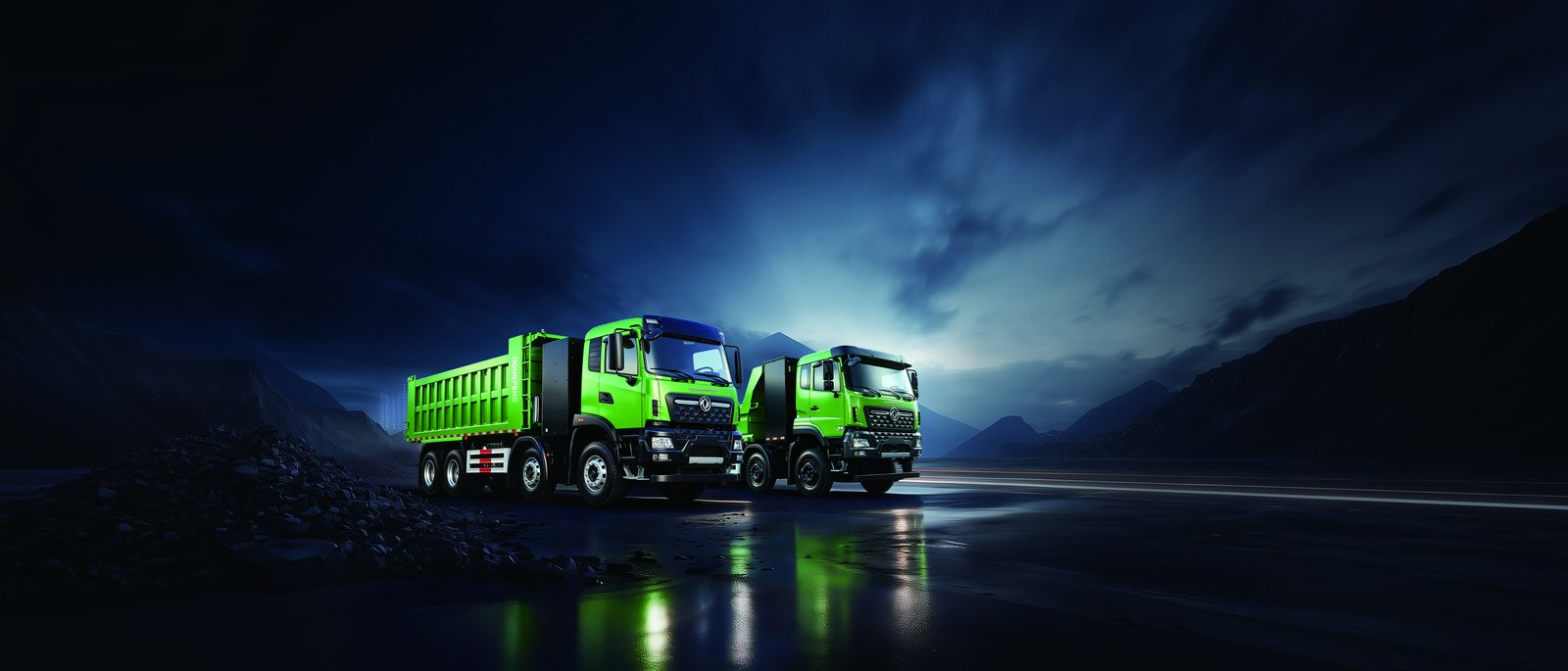
Abidjan is one of West Africa's fastest-growing metro areas — over five million people across the city and its surrounding districts, generating some 4,000+ tonnes of household waste daily, hauled by a fleet of collection vehicles through dense communes like Yopougon, Abobo and Treichville, much of it running two shifts under a 30 °C-plus equatorial climate. Collection economics in that environment are brutal: heavy stop-start duty destroys diesel drivelines, fuel is imported at full price in CFA francs, and compactor hydraulics idle through half the shift. It is also, precisely for those reasons, one of the strongest electric garbage truck cases in West Africa — a duty cycle where a battery-electric compactor out-earns diesel by its second year. This article builds that case around the KT3E electric garbage truck, as the fleet-focused companion to our Côte d'Ivoire electric truck market guide.
Refuse collection is the most stop-start heavy mission in road transport:
| Duty stress | KT3E engineering response |
|---|---|
| 30–35 °C with 85% humidity, year-round | Liquid-cooled CATL LFP pack with condensation-managed enclosures; tropical-validated cooling circuits |
| Corrosive leachate wash-down | Sealed IP68 HV compartments rated for daily pressure washing; e-coated chassis; stainless fasteners at the body interface |
| Continuous compactor cycling | Electric PTO hydraulic drive sized for 100% duty cycle at full packing pressure |
| Rough unpaved commune roads | Heavy-duty suspension spec; sealed connectors with abrasion-protected harness routing |
| Two-shift operation | Pack sized for two shifts plus 120 kW midday depot top-up between them |
Diesel in Côte d'Ivoire trades around USD 1.15–1.30/litre at commercial rates while industrial electricity runs near USD 0.08–0.12/kWh on a grid with substantial gas and hydro generation. For one collection truck running two shifts, 300 days:
For a contractor operating 25 collection trucks, the annual swing approaches USD 220,000–280,000 — in a business where contracts are won and lost on collection cost per tonne.
Abidjan's waste operations run through concession and service-contract structures where operators bid against cost-per-tonne performance. The electric fleet enters those bids with three advantages our documentation supports directly: a lower operating cost per tonne that shows in the financial model; the emissions and noise profile that municipal scoring frameworks increasingly reward; and the data trail — per-truck kWh, per-round tonnage, route telemetry — that concession oversight can audit without estimating. Our tender documentation for West African municipal clients includes the duty-cycle modelling behind the bid, the maintenance programme schedule, and the training plan for operators and commune-based crews.
What is true in Abidjan is true, with adjustments, across West Africa's major metros: Dakar, Accra, Lagos and Douala all run the same stop-start, fuel-import-priced, depot-anchored collection pattern. The first fleets to electrify a couple of collection rounds in each city will have the reference data everyone else in the region borrows — and the KT3E's deployment pattern, documentation set and training programme travel between them with only tariff and climate adjustments. Our West African support structure is built on exactly that repeatability.
The route from this article's business case to a running fleet in Abidjan follows a sequence our West African municipal deployments have refined. Phase one, the pilot communes: two adjacent collection rounds, 8–10 KT3E units, depot charging at the existing transfer-station or depot connection — chosen deliberately on communes whose terrain and density represent the fleet's average duty rather than its easiest, because the pilot's data must describe the fleet the full order would be. Phase two, the evaluation quarter: collection-per-shift, energy-per-round, availability and the maintenance logbook, against the diesel units running the same rounds — with the driver rotation that lets the full roster form opinions and the depot charging schedule that the real shift structure dictates. Phase three, the concession bid: the electric fleet's cost-per-tonne and the emissions and noise documentation folded into the tender file — the data trail that concession oversight can audit without estimation, which is precisely what the evaluation committees of structured waste contracts reward. Phase four, scale: depot-by-depot conversion across the communes, each following the template the pilot wrote.
Two Ivorian specifics belong in the plan. The import timing: vehicles arriving through the Port of Abidjan before the main rainy seasons land into commissioning windows where the electrical work and driver training are not racing the calendar. And the franc-zone financing: for concession operators, the electric fleet's monthly operating saving against diesel is the line that services the equipment finance — a structure our commercial team documents for Ivorian clients because it converts the procurement question into a cash-flow answer, which is the language concession economics speaks.
The regional note to close: every West African metro running this pattern — and most are studying it — faces the same stop-start, fuel-import-priced, depot-anchored arithmetic. Abidjan's fleets will not be the first to prove it in the sub-region, but they have every structural reason to be among the strongest.
Ready to electrify your collection fleet? Contact Shaanxi Fenghan Trading — authorized Dongfeng EV truck exporter. WhatsApp: +86 153 1943 1311 | Email: sales@fenghan-trade.com | dongfengevtrucks.com
🌐 Our Network: Fenghan Trade (SAGMOTO/SHACMAN Truck Export) · SAGMOTO heavy duty diesel trucks